Battery capacity is one of the key factors determining how long an electric scissor lift can remain productive between charging cycles. The capacity listed on the specification sheet represents the amount of stored electrical energy available to the machine, but actual operating time depends on how quickly that energy is consumed. Lifting frequency, drive distance, load, platform height, terrain, temperature, and accessory use can all increase energy demand, meaning two scissor lifts with similar battery ratings may deliver different working hours in the field.
Selecting the right capacity requires looking beyond the advertised battery size and considering the actual duty cycle. This guide explains how battery capacity relates to usable operating time, which jobsite conditions can accelerate energy consumption, and how to estimate the capacity needed for a typical shift. Understanding these factors helps operators avoid premature shutdowns, reduce charging interruptions, and select an electric scissor lift that can sustain the required workload throughout the working day.
How Does Battery Capacity Translate to Working Time?
Actual working time is determined by the rate of energy consumption, not simply the battery’s stored capacity. An electric scissor lift experiences different power demands throughout a work cycle. Platform lifting typically creates the highest electrical load because the drive system must raise the machine’s mass and payload against gravity, while holding the platform at height requires comparatively little energy. Travel demand also varies with distance, surface conditions, slope, and load, whereas lowering generally consumes less power because gravity assists the descent. As a result, the same battery pack can deliver very different shift durations depending on how frequently the platform is raised, how far the machine travels, and how heavily it is loaded. A lift used mainly at one working height may operate much longer than an identical machine performing continuous lift, lower, and reposition cycles. In practical terms, battery runtime is governed by the duty cycle and energy demand of the job, not just the capacity printed on the battery label.
What Drains a Scissor Lift Battery Faster Than Expected?
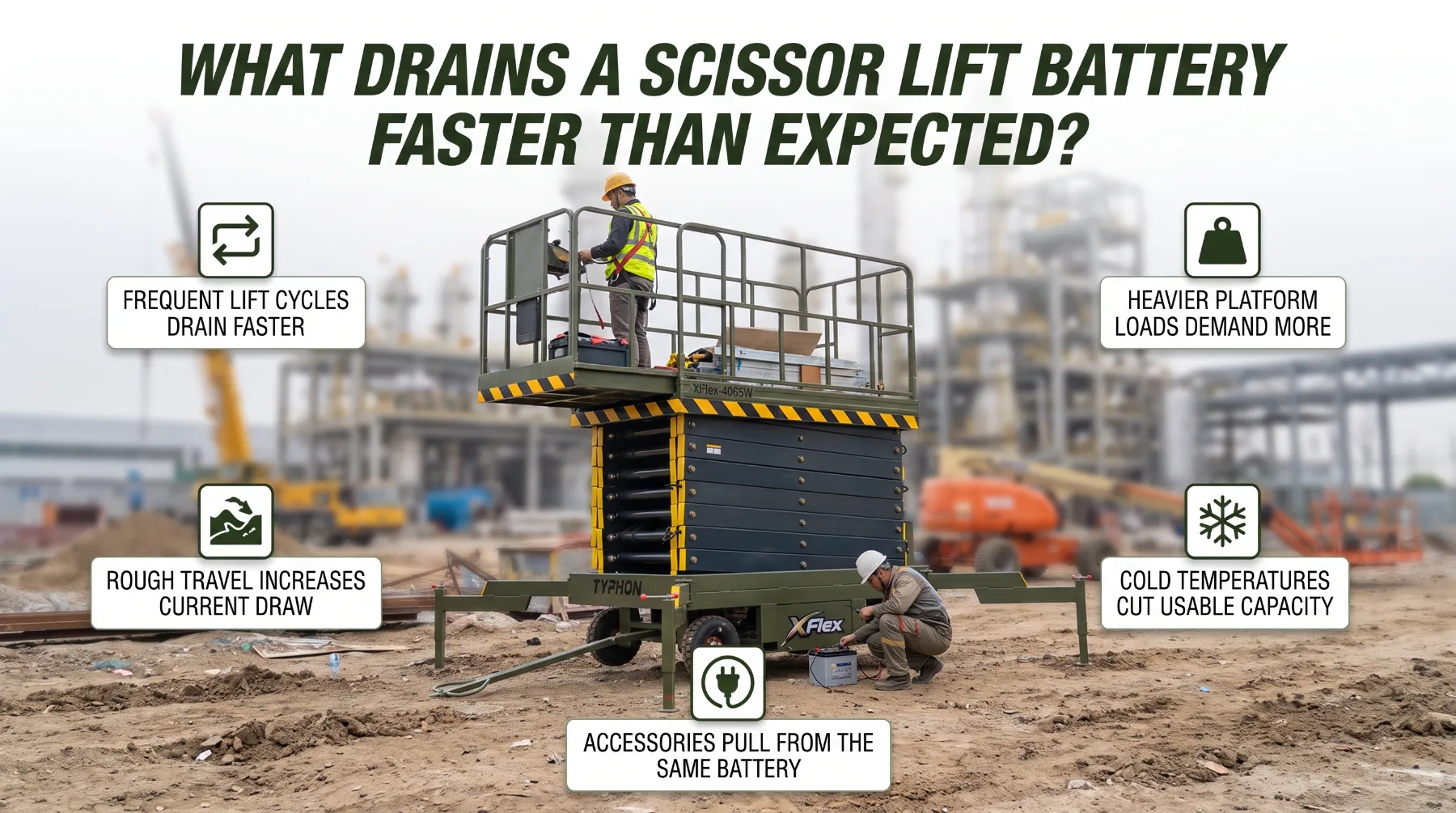
Several operating conditions can push an electric scissor lift’s actual runtime well below the figure shown on its specification sheet. Lift-cycle frequency is one of the largest factors because every platform raise requires the drive system to overcome gravity, making a lift that repeatedly raises, lowers, and repositions far more demanding than one that remains at a working height for longer periods. Platform load also increases energy consumption, since lifting multiple workers, tools, and materials requires more power than raising a lightly loaded platform. Travel conditions add another demand on the battery, with rough surfaces, slopes, frequent starts and stops, and extended driving increasing current draw from the traction motors. Temperature can further affect available runtime, particularly in cold environments where battery performance and usable capacity may decline. Auxiliary equipment, onboard outlets, lighting, and other electrical accessories also consume energy from the same battery, leaving less available for lifting and driving. When these demands occur together, the difference between rated battery capacity and actual shift runtime can become significant, which is why a scissor lift should be evaluated according to its real duty cycle rather than the battery rating alone.
Key takeaway: Brochure runtimes assume moderate, mixed use. Stack several of these factors and your actual working time can fall well below the estimate.
Lead-Acid vs. Lithium-Ion: Which Delivers More Working Time?
Getting the most from your battery depends on more than its rated capacity. Battery type, charging habits, depth of discharge, and operating conditions all affect how long the battery can work and how many charge cycles it can provide. Frequent lifting, driving, and repositioning can use more energy, especially when the lift is working near its rated capacity.
To extend battery life, avoid fully draining the battery whenever possible and follow the recommended charging procedure. Keep the battery properly maintained and avoid unnecessary heavy loads or extended operation when the charge is low. Good charging and operating habits help the battery deliver reliable power for longer and reduce the need for early replacement.
Usable Capacity and Depth of Discharge
Lead-acid batteries are commonly operated at a more conservative depth of discharge, often around 50%, because repeatedly using a deeper portion of the battery can accelerate capacity loss and reduce service life. A 200 Ah lead-acid pack may therefore provide roughly 100 Ah of routinely usable capacity. Lithium-ion batteries generally tolerate much deeper discharge, often allowing around 80–100% of their rated capacity to be used, depending on the battery management system and manufacturer specifications. This gives lithium-ion a larger usable energy window from the same nominal rating and can extend working time between charging periods.
Voltage Under Load
Voltage stability also affects how the scissor lift performs as the battery discharges. Lead-acid batteries typically experience greater voltage sag under load, so lifting and driving performance can gradually decline as the state of charge drops. Lithium-ion batteries generally maintain a more stable voltage through most of the discharge cycle, allowing the lift to deliver more consistent motor performance until the battery approaches its lower charge limit. For this reason, comparing batteries by Ah rating alone can be misleading; usable capacity and voltage behavior provide a better indication of how much working time and performance the scissor lift can deliver during an actual shift.
The bottom line: Compare usable capacity, not just the rated figure. Chemistry decides how much of the tank you can safely spend.
How to Tell If Your Scissor Lift Battery Is Undersized
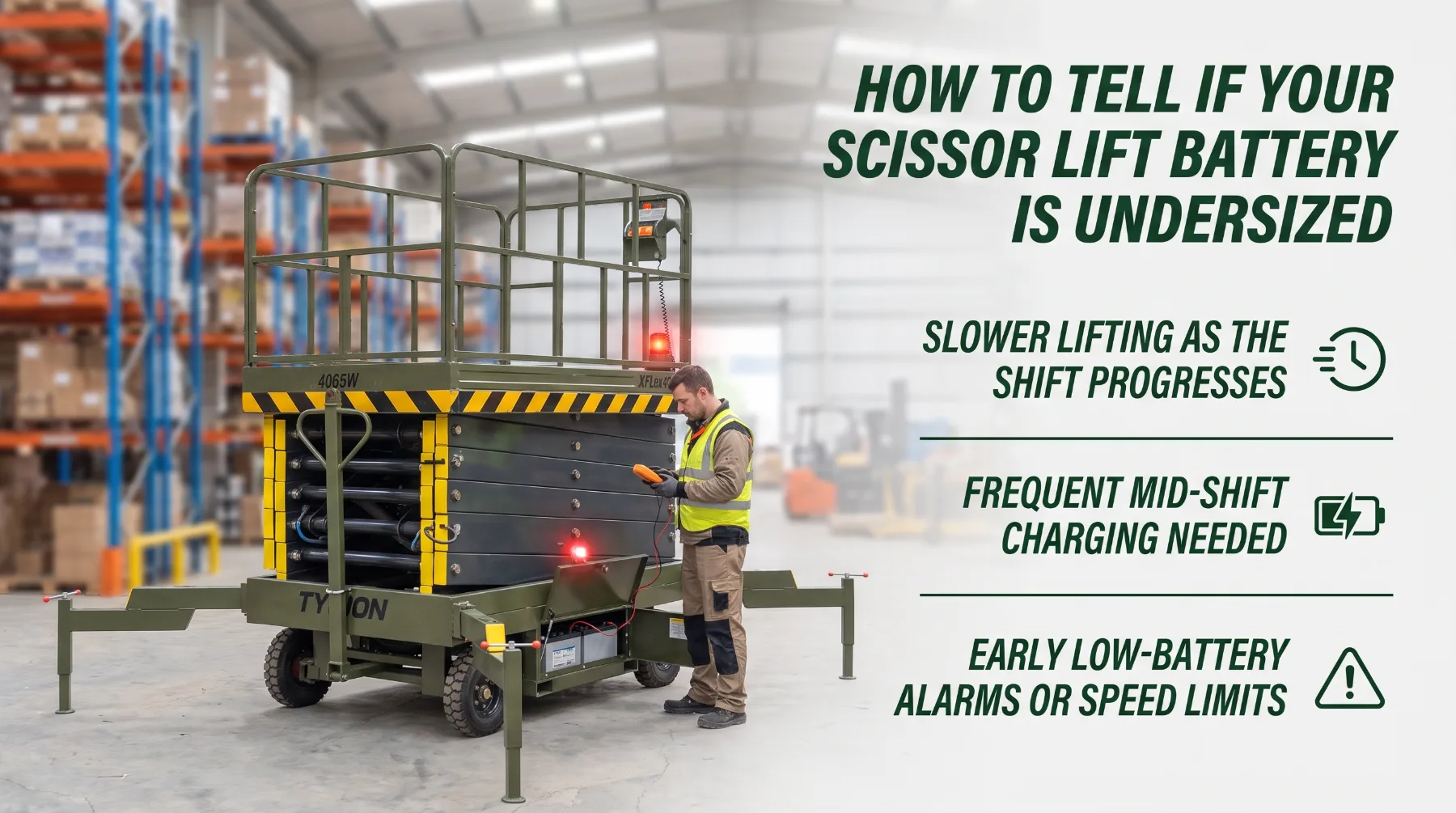
An undersized battery often shows warning signs through declining performance before it causes a complete shutdown. Slower platform lifting as the shift progresses can indicate increasing voltage drop or insufficient remaining capacity, especially with lead-acid batteries. Frequent mid-shift charging is another strong indication that the battery cannot support the lift’s actual duty cycle, particularly when the machine is used for repeated lifting and repositioning rather than stationary work. Early low-battery alarms, reduced drive speed, or automatic performance limits can also mean that usable capacity is being depleted too quickly. Cold temperatures may make the problem more noticeable because battery performance can decline in low temperatures, leaving less energy available for the same workload. Heavy platform loads, frequent travel, and repeated lift cycles can further increase energy consumption and shorten runtime. Together, these symptoms suggest that the battery capacity is not properly matched to the scissor lift’s workload.
Common mistake to avoid: blaming the operator or charger when the underlying issue is insufficient battery capacity. If the same runtime problems occur across different operators and normal charging procedures, the pattern points more strongly toward a battery that was sized for lighter work than the crew actually performs. The correct solution is to evaluate the lift’s real duty cycle, load, operating conditions, and required shift duration before determining whether greater battery capacity is needed.
Conclusion
Battery capacity is one of the most important specifications when determining whether an electric scissor lift can complete a full shift without an unplanned recharge, because actual working time depends on how quickly the job consumes stored energy rather than the battery rating alone. Frequent platform lifting, repeated repositioning, heavier platform loads, rough or sloped terrain, low temperatures, and auxiliary accessories can all increase energy demand and shorten runtime, while battery chemistry determines how much of the rated capacity can be used effectively. Lead-acid batteries typically provide a smaller usable portion of their rated capacity and experience greater voltage drop as they discharge, which can gradually reduce lift and drive performance, whereas lithium-ion batteries generally allow deeper discharge and maintain more stable voltage through most of the operating cycle. Selecting the right battery therefore starts with the lift’s actual duty cycle: estimate how often the platform will be raised and lowered, account for the typical personnel, tools, and materials carried, consider travel conditions and operating temperatures, and then size the battery around usable capacity with enough reserve to handle demanding periods. Matching the battery to the workload rather than relying only on the nominal Ah rating gives the scissor lift a better chance of maintaining consistent lifting, driving, and control performance throughout the entire shift.
Frequently Asked Questions
How do I calculate how long my scissor lift battery will last on a shift?
Begin with usable battery capacity rather than the nominal rating. For lead-acid batteries, plan around 50% of the rated capacity for routine use, while lithium-ion batteries can typically provide about 80–100%. Next, estimate the number of platform lift cycles required per hour, since frequent raising and lowering consumes significantly more energy than holding the platform at a working height. Finally, allow additional capacity for heavier loads, cold temperatures, rough surfaces, and frequent travel, as these conditions increase energy demand and can shorten runtime.
Why does a lithium battery outlast a lead-acid battery with the same amp-hour rating?
Because usable capacity differs by chemistry. Lead-acid should only be discharged to about 50 percent to protect its service life, so a 200 Ah pack delivers roughly 100 Ah of practical energy per shift. Lithium tolerates 80–100 percent discharge, delivering significantly more usable energy from the same headline number. Lithium also holds a steady voltage as it drains, keeping lift performance consistent until the pack is nearly empty.
What is the most common reason a scissor lift battery dies before the shift ends?
A battery that repeatedly falls short during the shift may simply be mismatched to the lift’s duty cycle. A pack sized for light, stationary work may not support frequent lifting and repositioning, where repeated platform raises consume substantially more energy. Heavy platform loads and cold temperatures can further reduce available runtime. If the scissor lift consistently requires a mid-shift recharge under normal operating conditions, the issue may be insufficient battery capacity rather than a battery fault.
Equipment Guidance
Need help choosing equipment for your next job?
Contact KONSTRUCTZ support and get practical guidance before comparing machines, attachments, or jobsite requirements.Contact SupportReader Comments
Join the equipment discussion
Related Posts
No published comments yet.