Stone Crushers Lineup

KONSTRUCTZ Stone Crushers

Compact mobile jaw crushing plants engineered to recycle concrete, brick, masonry rubble, and river rock on-site — eliminating dumping tipping fees and virgin aggregate purchase costs.

Feature 1Three Output Capacities: K1 (2–4 TPH), K2 (2–5 TPH), K3 (5–10 TPH)
Feature 2High-Manganese Steel Jaw Dies for Hard Rock & Reinforced Concrete
Feature 3Adjustable Discharge Output: 0.20-inch to 2.36-inch Aggregate
Feature 4Mobile Configurations: Towable Highway Hitch or Rubber Crawler Tracks
Production Lineup

Available Stone Crushers

Engineered with proven Tier 4/Euro 5 powertrains, standard auxiliary hydraulics, and nationwide USA parts support.

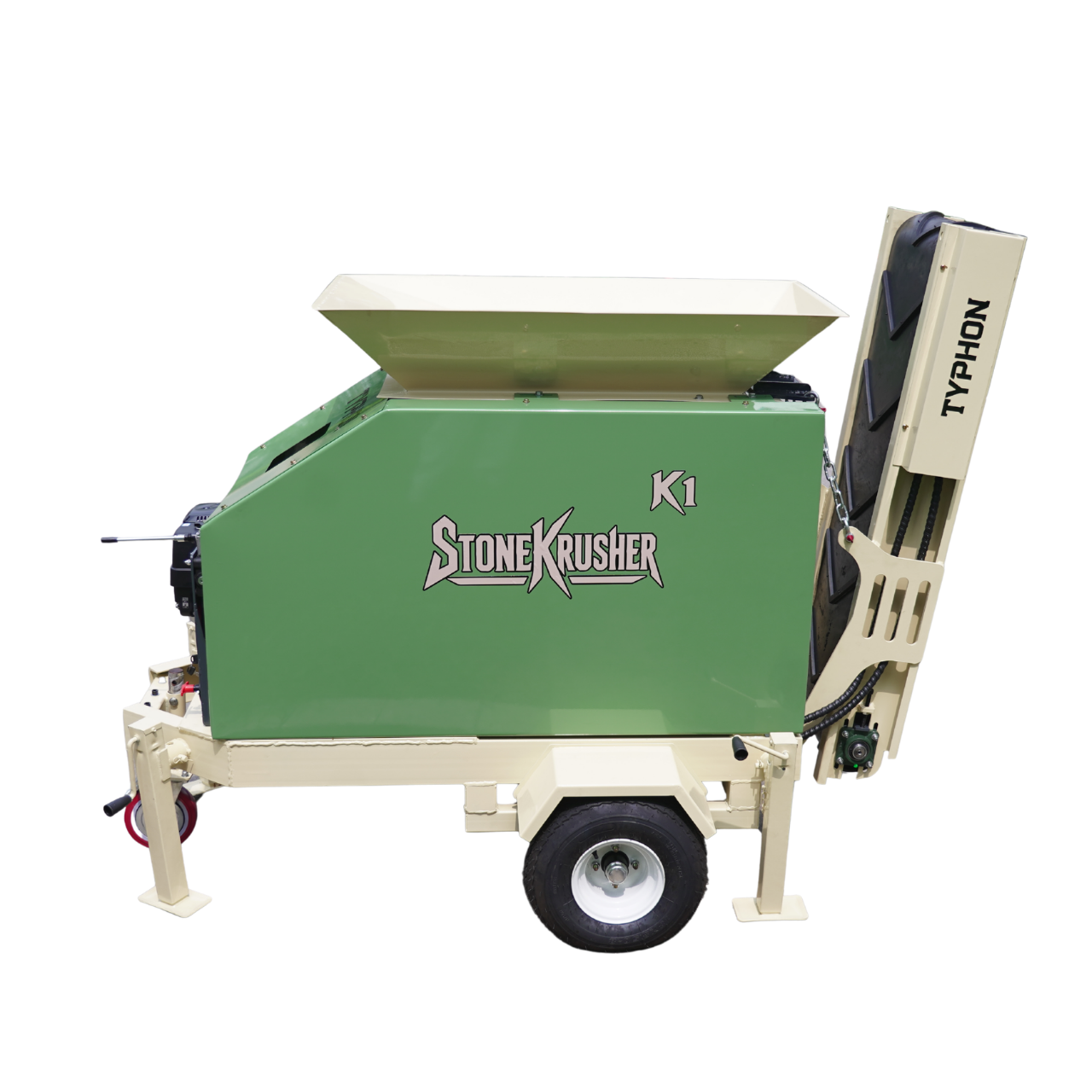
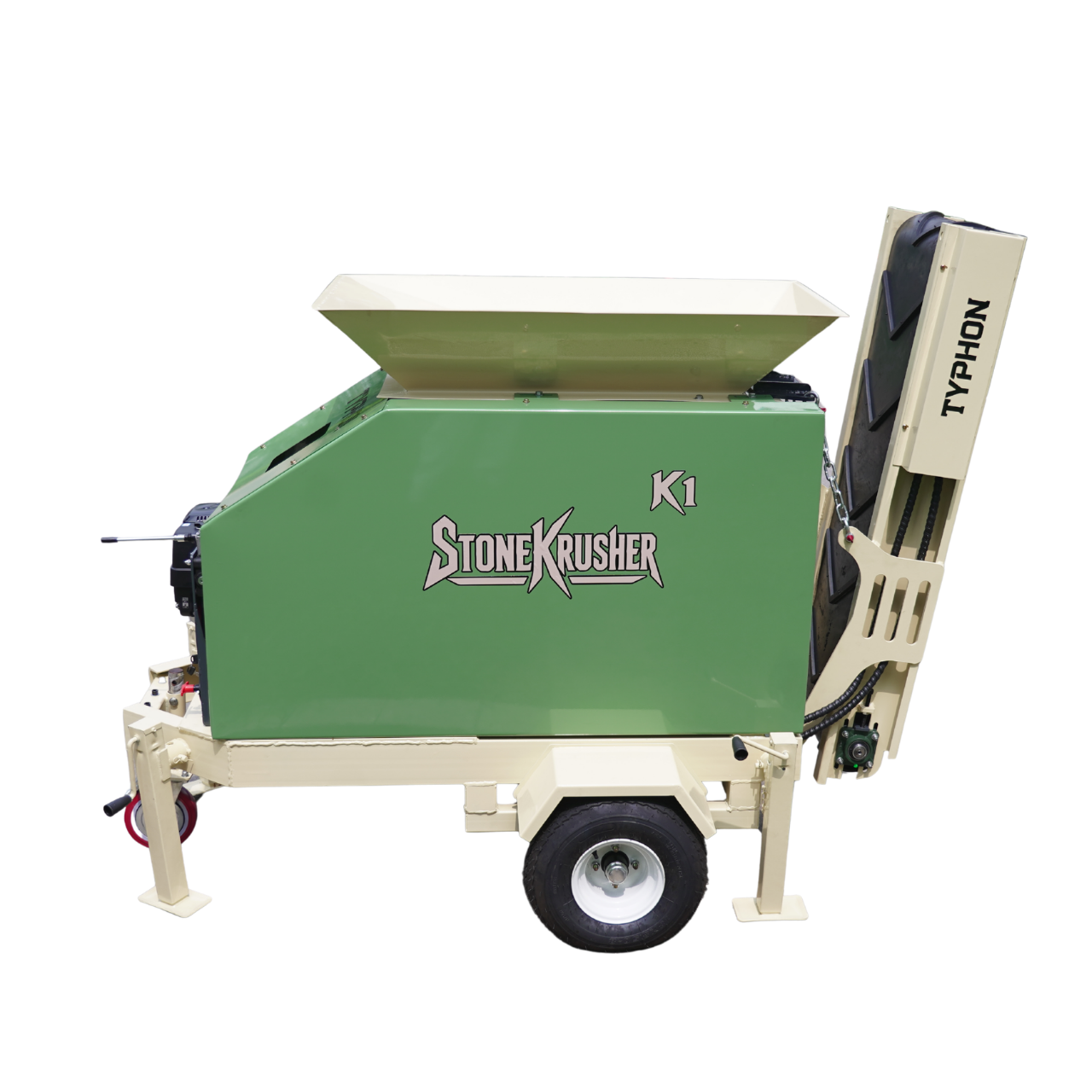
TYPHON StoneKrusher K1 – KONSTRUCTZ Series
Stone Crushers

StoneKrusher K1

Towable Compact Jaw Crusher for On-Site Residential Rubble Recycling

Operating Weight2,205 lbs
Engine ModelHonda GX390
Production Capacity2 to 4 Tons/hr
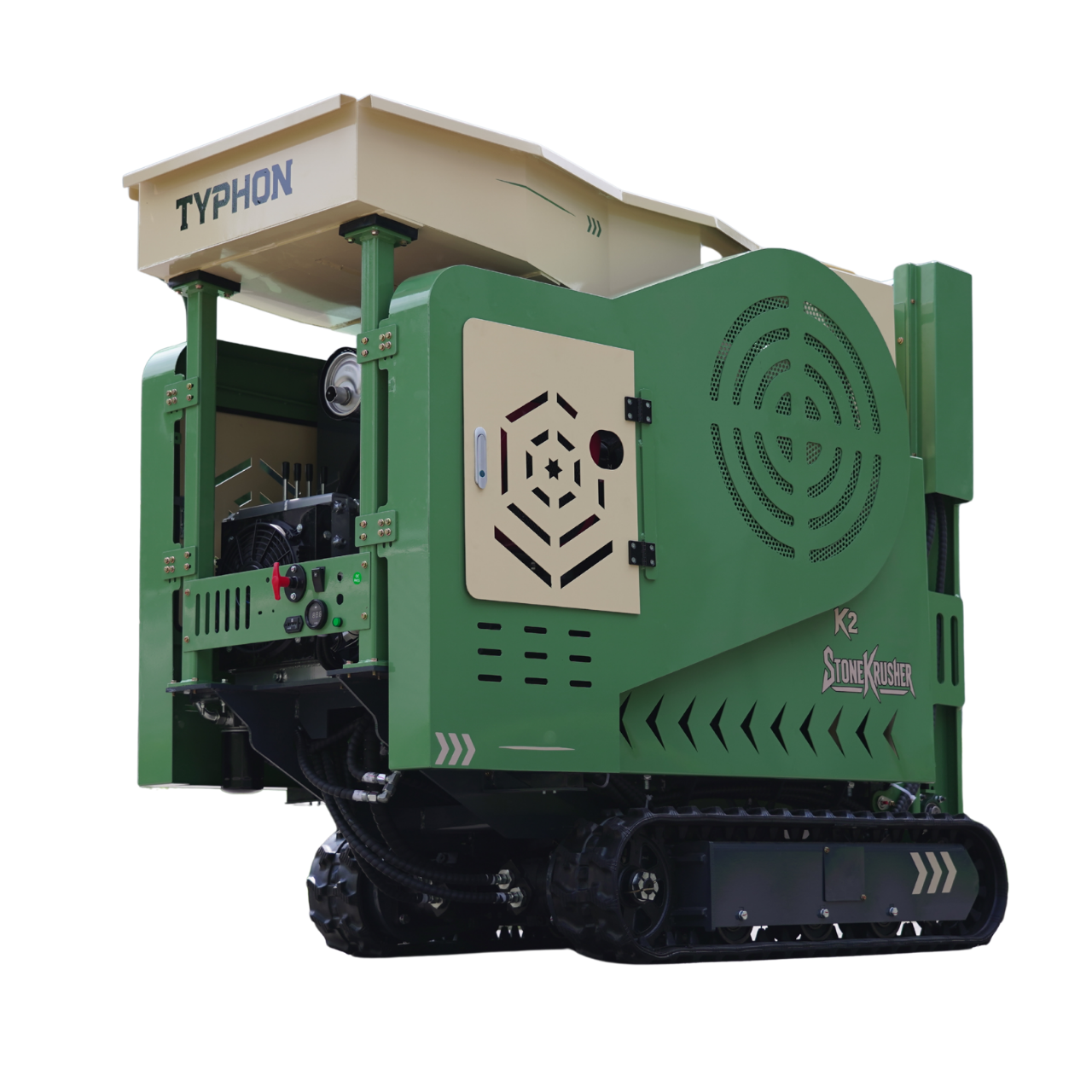
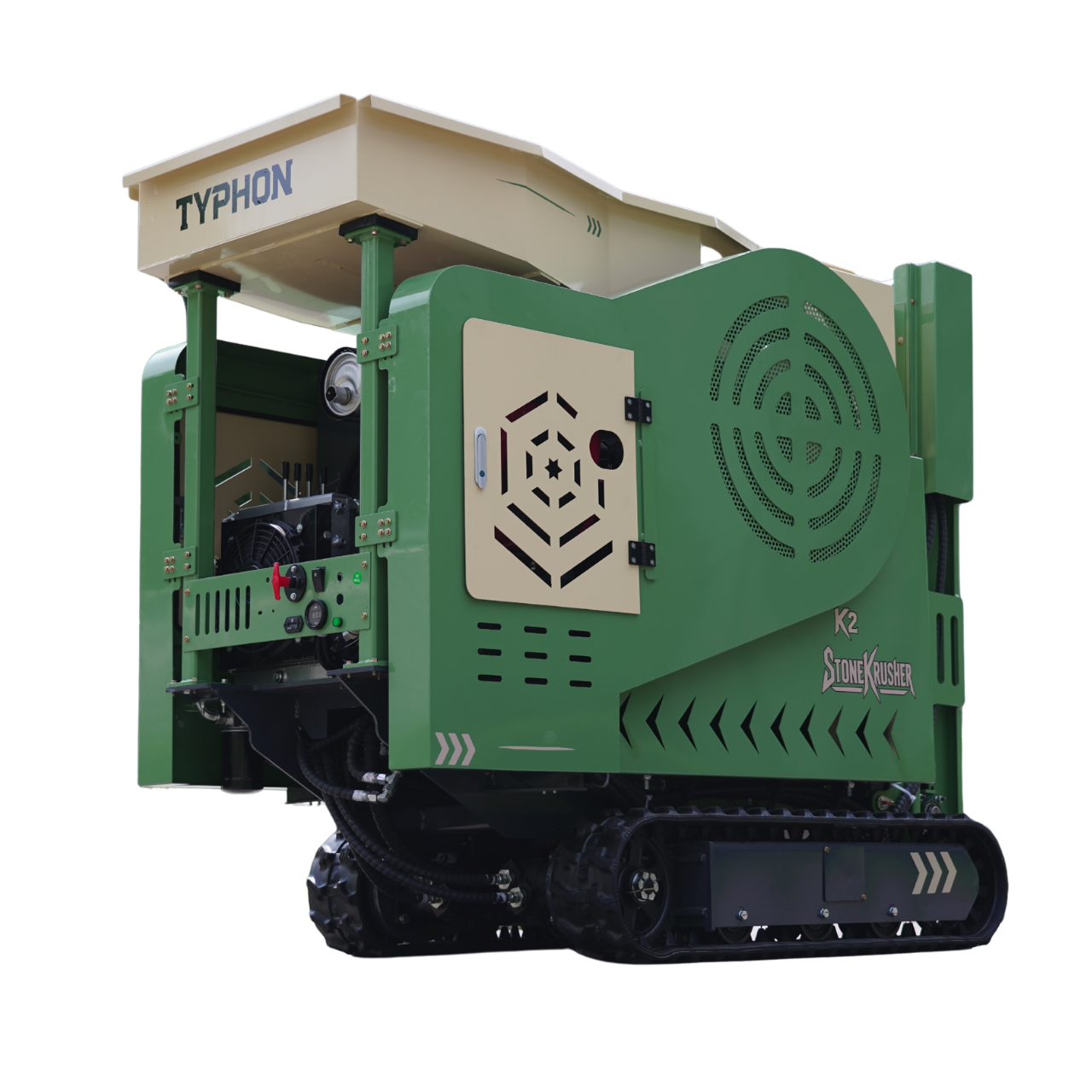
TYPHON StoneKrusher K2 – KONSTRUCTZ Series
Stone Crushers

StoneKrusher K2

Self-Propelled Tracked Jaw Crusher with Honda GX690 V-Twin Power

Operating Weight3,307 lbs
Engine ModelHonda GX690
Max Feed Stone7.9 in
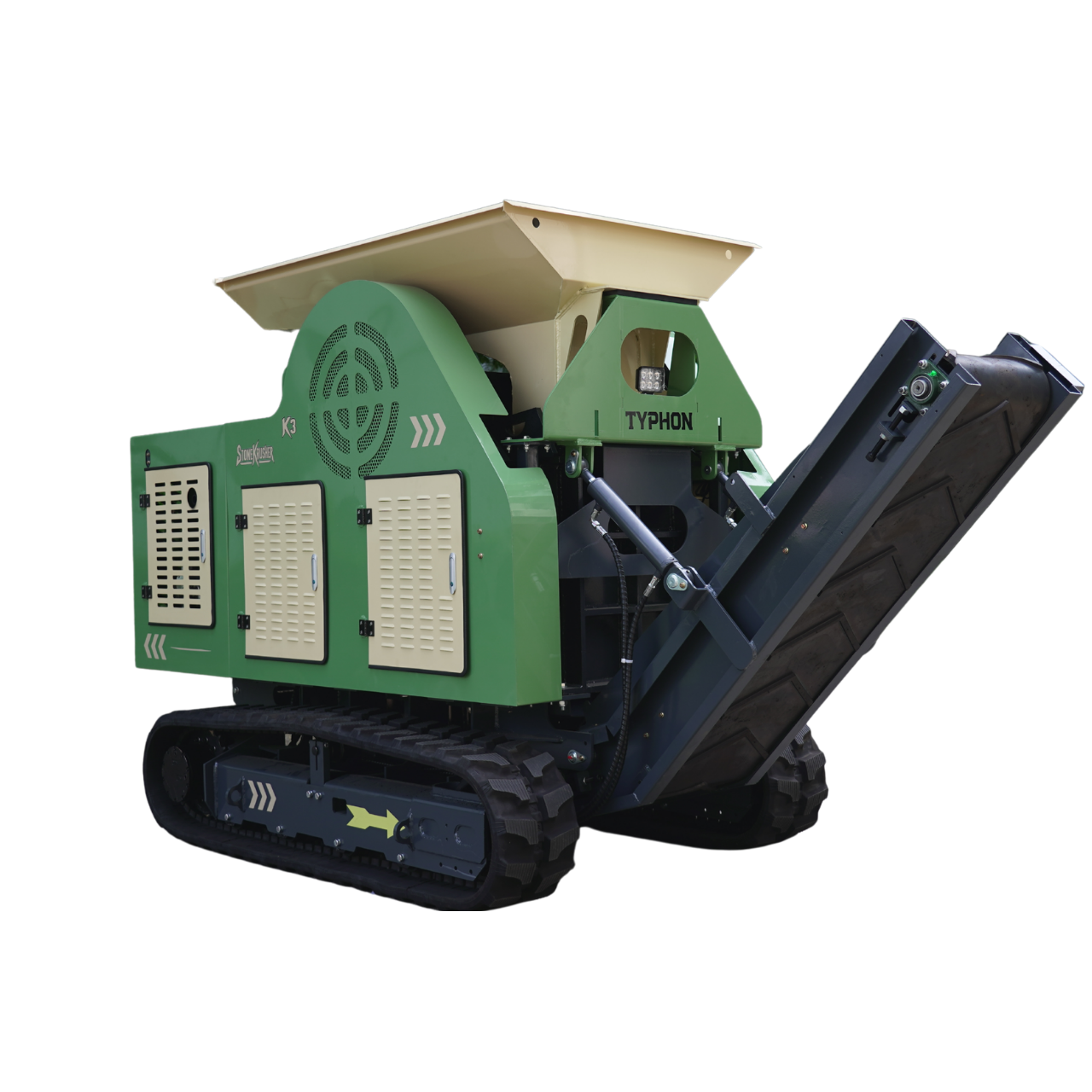
TYPHON StoneKrusher K3 – KONSTRUCTZ Series
Stone Crushers

StoneKrusher K3

Commercial High-Capacity Tracked Jaw Crusher with Kubota Diesel Power

Operating Weight8,378 lbs
Engine ModelKubota D1105
Inlet Opening9.84 × 15.75 in
Why Process Material On Site? The Commercial Economics
Payback Example

Processing just 400 tons of demolition rubble on a single commercial project can recover over $25,000 in tipping fees and aggregate purchase costs.

Eliminating the Double Cost of Demolition: Haul-Off Fees & Quarry Purchases

Why Process Material On Site? The Commercial Economics

Traditional demolition contractors pay twice for aggregate: first to haul concrete rubble to a landfill (tipping fees), and second to buy virgin crushed stone from a quarry.

A KONSTRUCTZ StoneKrusher closes the loop. Concrete chunks from a torn-up patio or foundation are fed directly into the heavy-duty manganese jaw inlet. The machine fractures the material into clean, angular, road-base spec gravel (e.g. 0.6–2.0 inch output).

Instead of paying $40–$60 per ton in landfill fees plus $35–$50 per ton for virgin 3/4-inch crushed gravel, the contractor processes 20 to 50 tons per day on-site, using the crushed aggregate immediately as sub-base for the new driveway or slab.

1

Input: Feed concrete, cinder block, brick, and natural stone.

2

Crush: Adjustable manganese jaw plates exert high hydraulic compressive force.

3

Output: Discharge conveyor stacks clean, compactable aggregate ready for reuse.

Contractor Applications

Where These Machines Deliver Maximum ROI

Field-tested applications across residential construction, excavation, landscape contracting, and municipal maintenance.

01

Concrete Slab & Patio Recycling

Crush broken residential driveways, sidewalk slabs, and foundation footings into reusable base gravel.

02

Brick, Block & Masonry Rubble

Reduce demolished brick walls, CMU cinder blocks, and pavers into compact pipe bedding and road sub-base.

03

On-Site Gravel & Rock Production

Transform excavated natural field stone, river rocks, and boulders into graded gravel for pathways.

04

Trench Backfill Production

Crush excavated rock on-site to produce clean, angular backfill directly adjacent to the utility trench.

05

Demolition Waste Volume Reduction

Reduce bulky construction demolition debris volume by up to 70%, slashing dumpster haul costs.

06

Asphalt Shingle & Pavement Processing

Crush reclaimed asphalt chunks into compactable recycled asphalt product (RAP) for rural driveways.

07

Nursery & Landscaping Rock Sizing

Process landscape fieldstone into custom aggregate sizes for retaining wall fill and drainage beds.

08

Remote Off-Grid Building Sites

Crush native rock on remote homesteads where delivery trucks cannot haul commercial quarry gravel.

Specification Comparison

Compare Stone Crushers Specifications

Side-by-side engineering metrics to select the right weight class and breakout force for your fleet.

ModelDrive TypeEngineOperating WeightProduction CapacityMax Input SizeOutput RangeAction
StoneKrusher K1Towable HitchHonda GX390 (11.7 HP)2,205 lbs (1,000 kg)2 to 4 Tons / hr5.9 × 9.8 in0.20–1.0 in (5–25 mm)Specs →
StoneKrusher K2Rubber TracksHonda GX690 (22.1 HP)3,307 lbs (1,500 kg)2 to 5 Tons / hr7.9 in max (200 mm)0.6–2.0 in (15–50 mm)Specs →
StoneKrusher K3Rubber Tracks (HD)Kubota D1105 (25.5 HP)8,378 lbs (3,800 kg)5 to 10 Tons / hr9.0 × 15.0 in0.79–2.36 in (20–60 mm)Specs →
Buyer's Checklist

StoneKrusher Lineup Guide: K1 vs K2 vs K3

Select your crusher based on daily output volume, material feed size, and whether you need self-propelled tracks.

Step 01

K1 — The Compact Towable Specialist

Best for residential landscapers, small masonry crews, and rental yards. Tows behind any standard truck, operates on a quiet 11.7 HP Honda engine, and processes 2 to 4 tons per hour.

Step 02

K2 — The Contractor Tracked Workhorse

Features independent rubber crawler tracks to walk directly up to rubble piles. Powered by a 22.1 HP Honda GX690 V-twin engine with an integrated 15.7-inch discharge conveyor belt.

Step 03

K3 — Commercial Heavy-Duty Production

Equipped with a Kubota D1105 industrial diesel engine, dual-speed travel motors, and a massive 9.84 × 15.75 inch jaw opening. Crushes up to 10 tons per hour with wide aggregate sizing.

Factory Procurement Recommendation

Choose K1 for mobile transport convenience. Choose K2 for active residential/commercial jobsites with rough ground. Choose K3 for continuous commercial demolition and aggregate recycling yards.

Technical FAQs

Stone Crushers Questions & Answers

Answers directly from our engineering and maintenance service personnel.

What materials can a KONSTRUCTZ stone crusher process?
KONSTRUCTZ StoneKrushers easily process cured concrete, cinder blocks, red brick, mortar, asphalt pavement, bluestone, limestone, granite, and field rock. Metal rebar should be trimmed before feeding.
How many tons per hour can a compact stone crusher produce?
Production depends on model and output setting: the K1 delivers 2 to 4 tons/hr, the K2 delivers 2 to 5 tons/hr, and the heavy-duty K3 produces 5 to 10 tons/hr of finished aggregate.
Can I adjust the finished gravel output size?
Yes. All three StoneKrusher models feature adjustable jaw settings allowing operators to calibrate output size from fine gravel (0.2 inch) up to coarse 2.36-inch road sub-base.
Can these machines crush reinforced concrete with rebar?
Yes, provided concrete is broken down to fit the inlet opening. Rebar emerges intact from the jaw without crushing and can be sorted from the conveyor discharge belt with an overband magnet.
Do I need special air quality permits to operate a compact crusher?
Compact crushers under 10 tons per hour are typically classified as small jobsite utility tools rather than industrial mining plants in most U.S. jurisdictions, though local dust suppression rules may apply.
What engines power the StoneKrusher series?
The K1 features a Honda GX390 (11.7 HP), the K2 features a Honda GX690 V-twin (22.1 HP), and the heavy-duty K3 features a commercial Japanese Kubota D1105 diesel engine (25.5 HP).
Compare ModelsSide by SideChat on WhatsApp+1 (323) 532-5703