How a Spider Excavator Works & Where It Outperforms Tracks
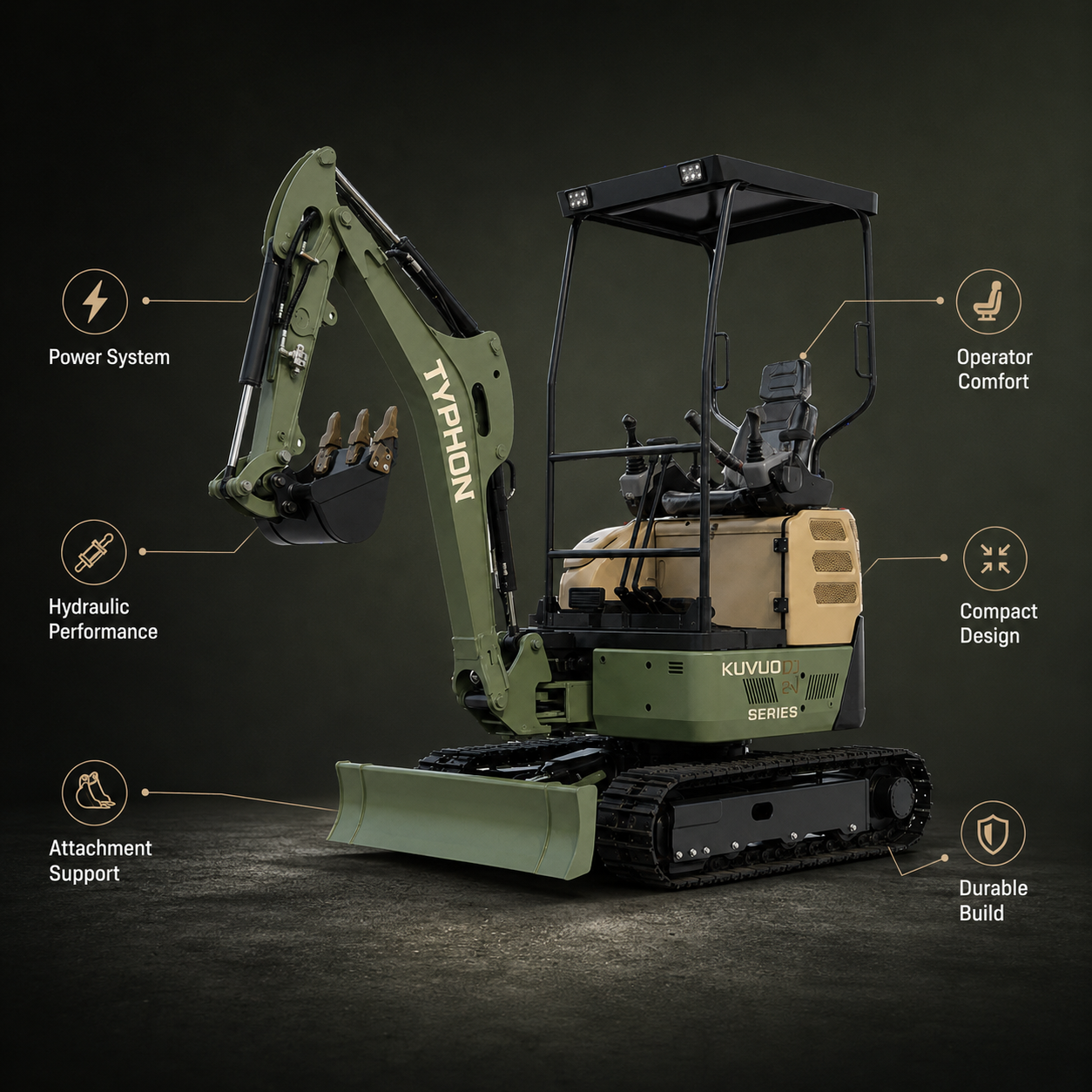
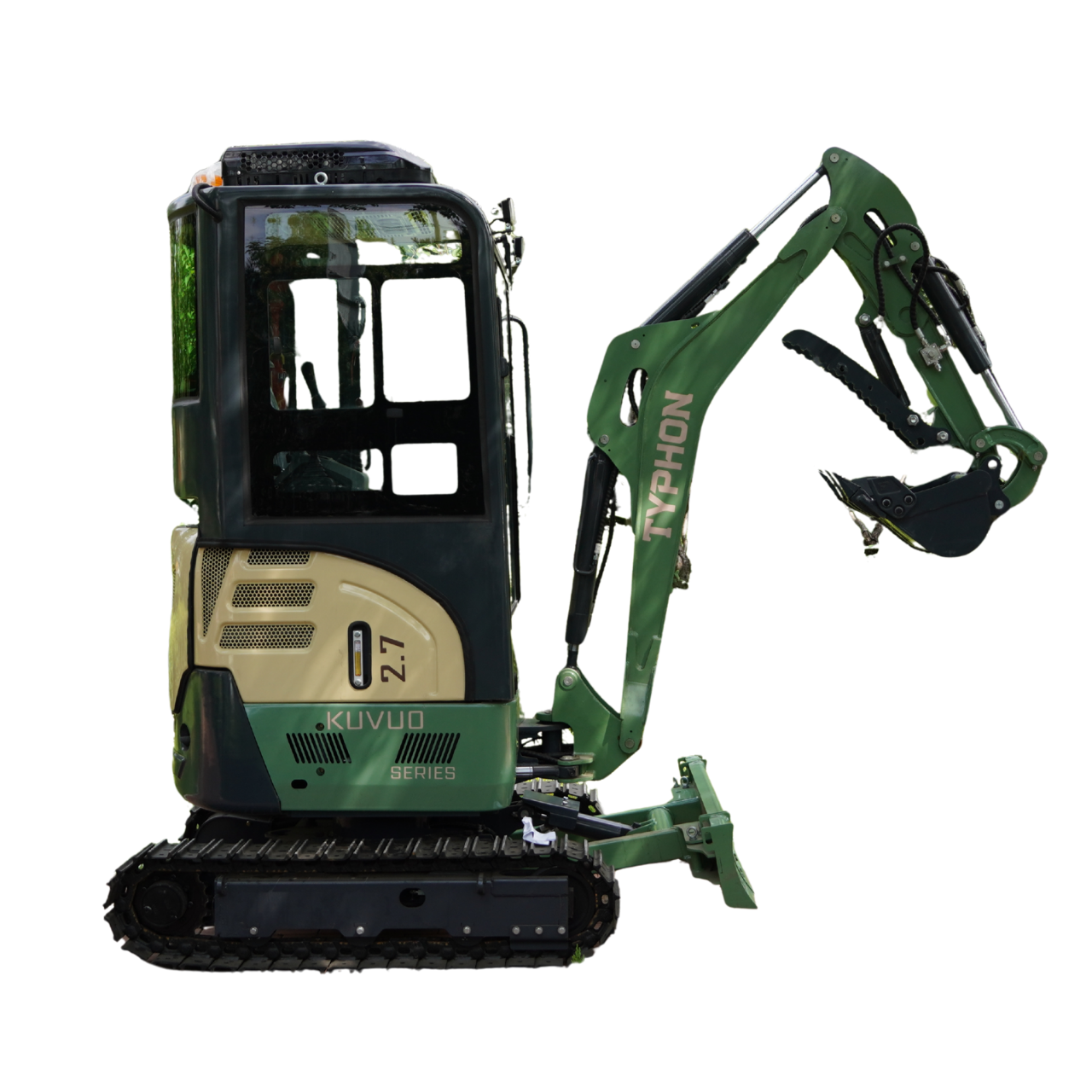
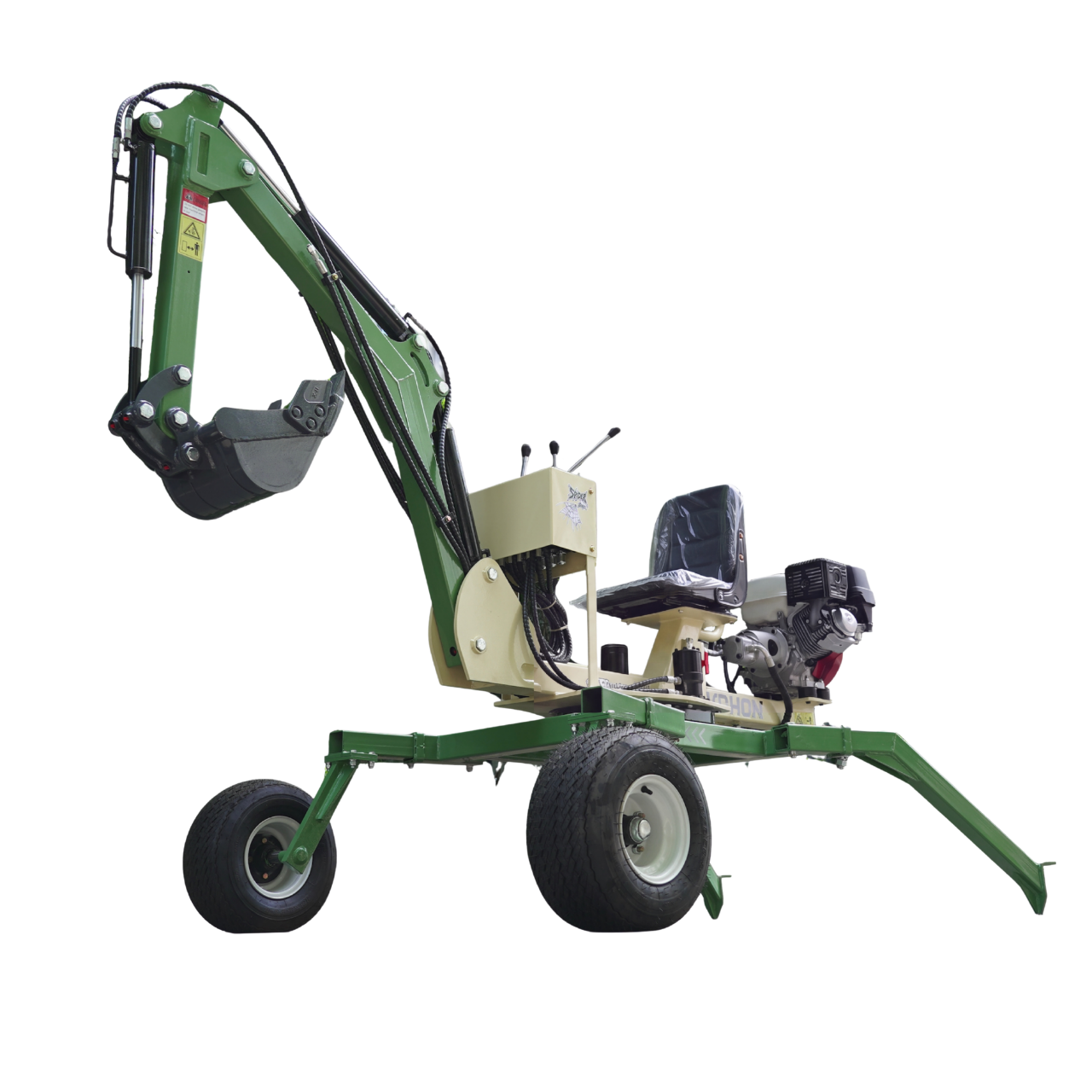
A spider excavator is not simply a small tracked digger without tracks — it is an entirely distinct engineering architecture built around structural outriggers and mechanical walking capability.
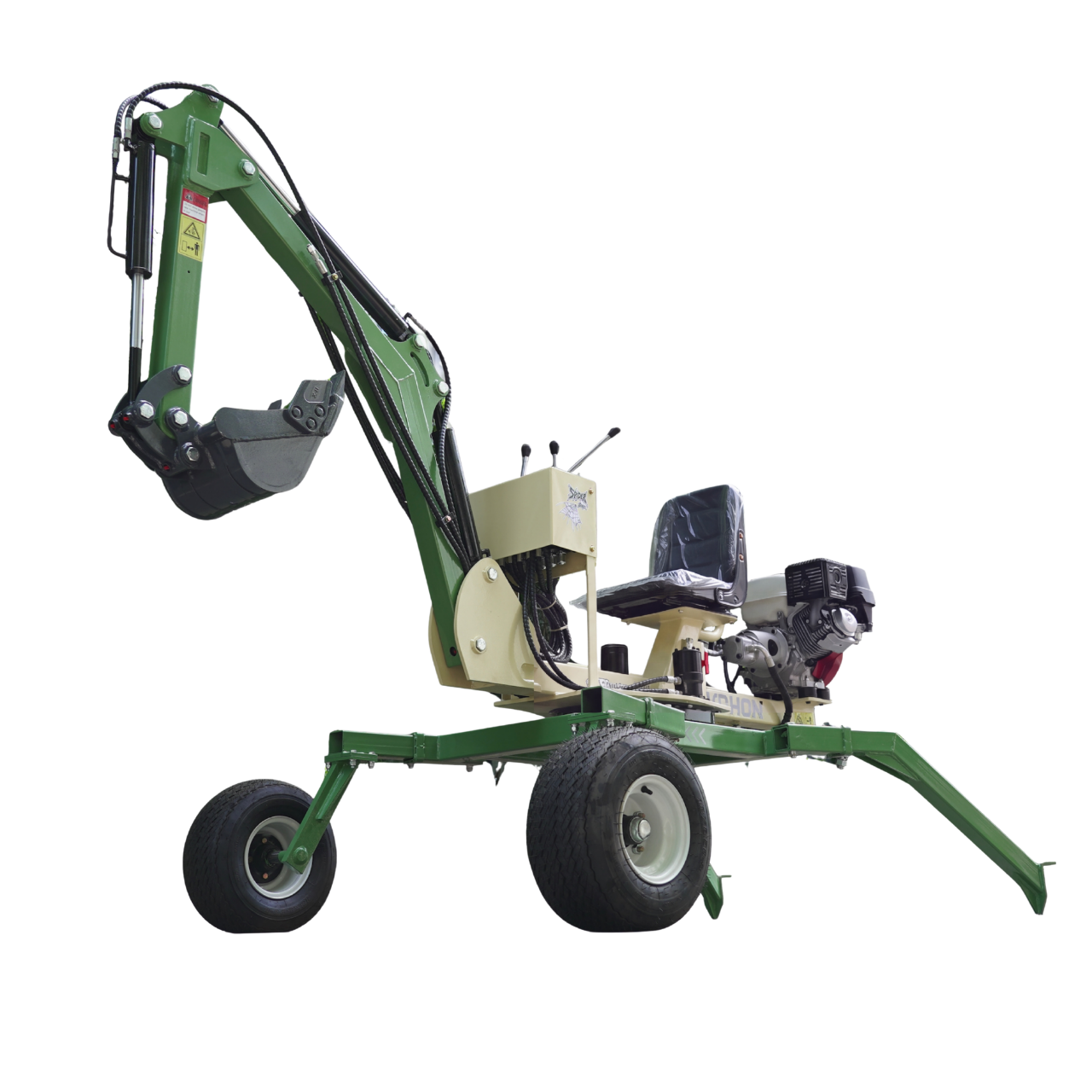
The TYPHON SPIDER ONE uses its hydraulic digging arm in coordination with wide stabilizer outriggers to move and anchor itself. By pushing or pulling with the boom while lifting the chassis, the operator 'walks' the machine across rough ground, over logs, and across muddy ditches where tracked machines frequently throw tracks.
Weighing only 904 lbs (410 kg), the SPIDER ONE generates virtually zero ground compaction. It is powered by an ultra-reliable Honda GX390 commercial gasoline engine, which starts easily in cold weather, requires no diesel exhaust fluids, and can be serviced with standard tools by any small-engine mechanic.
Can be towed behind an ATV, side-by-side (UTV), compact tractor, or light pickup via standard ball hitch.
Delivers 6.66 ft (2,030 mm) digging depth, rivaling 1.5-ton traditional tracked excavators.
No heavy steel tracks, final drives, or track tensioners to maintain or replace.