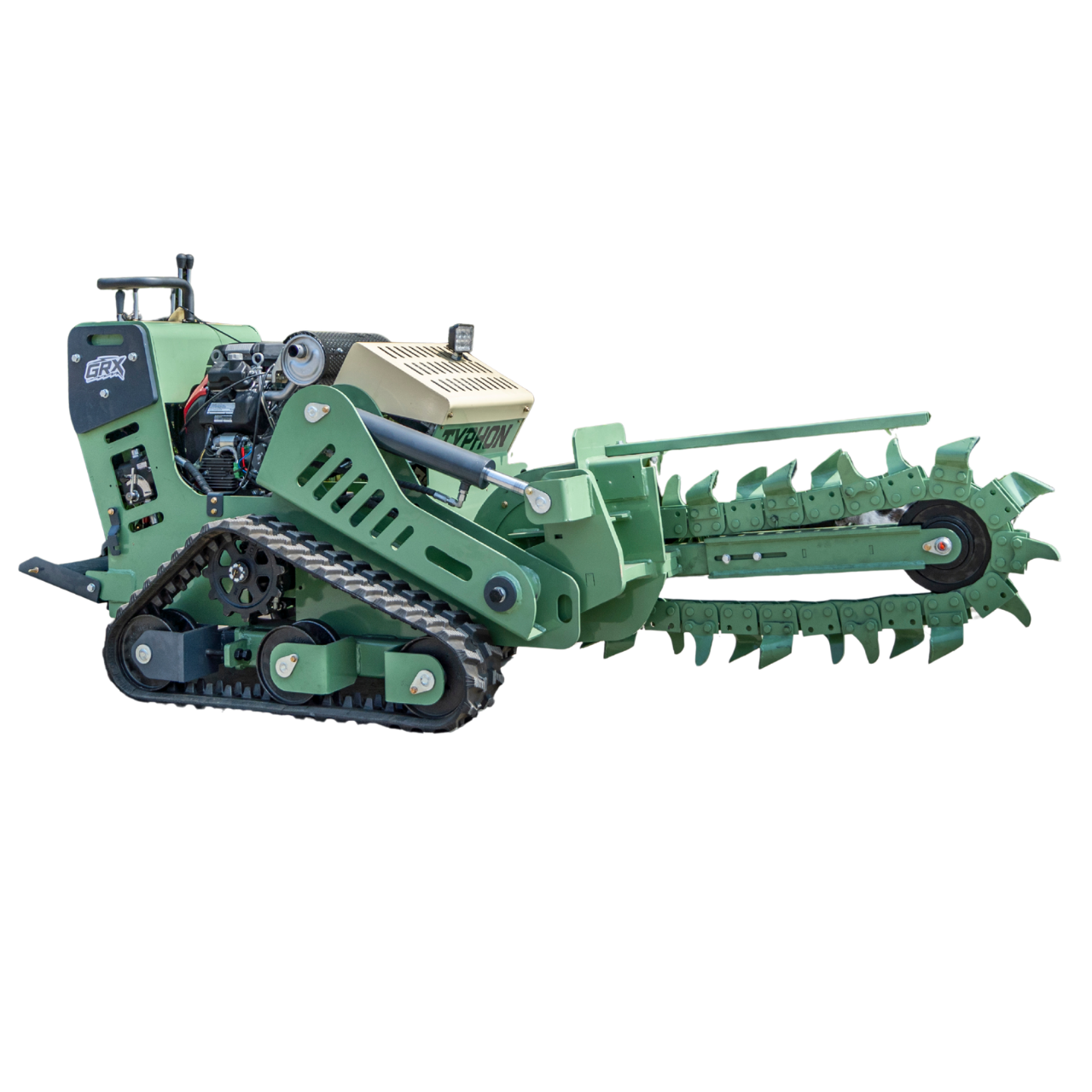
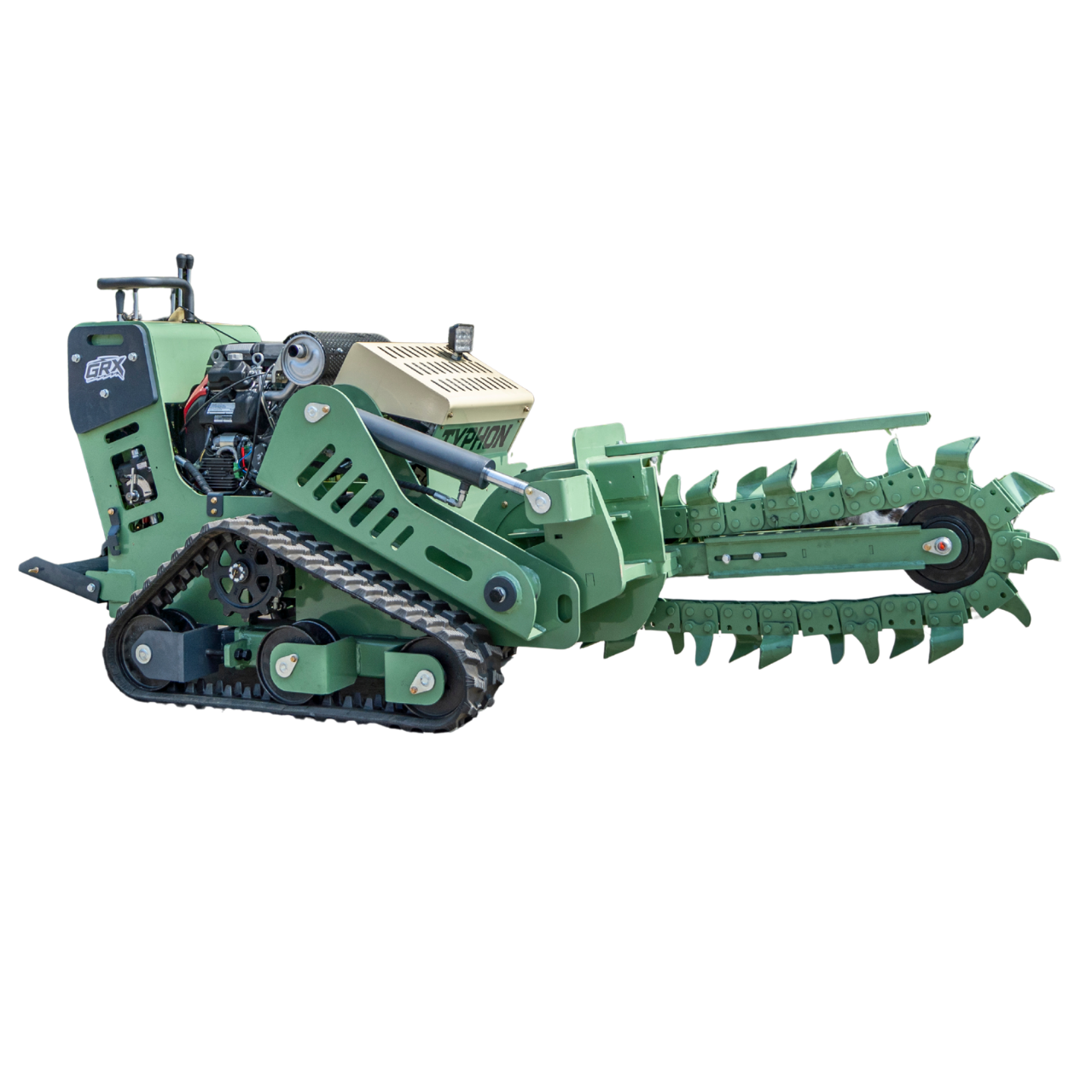
Trenchers Lineup

KONSTRUCTZ Trenchers

Dedicated walk-behind and tracked trenching machines engineered to cut uniform, flat-bottomed utility trenches for irrigation, electrical conduit, fiber optic cables, and drainage lines with maximum speed.

Feature 1Honda GX690 Commercial V-Twin Gas Engine (22.1 HP / 16.5 kW)
Feature 2Continuous Digging Depths up to 29.5 inches (750 mm)
Feature 3Uniform Trench Widths up to 6.0 inches (152 mm)
Feature 4High-Traction Track Drive with Load-Sensing Hydraulic Feed
Production Lineup

Available Trenchers

Engineered with proven Tier 4/Euro 5 powertrains, standard auxiliary hydraulics, and nationwide USA parts support.

TYPHON GroundRipper GRX1 Trencher
Trenchers

GroundRipper GRX1

Commercial Walk-Behind Tracked Trencher with Honda GX690 V-Twin Power

Engine ModelHonda GX690
Max Trench Depth29.5 in
Trench Width6.0 in
Why Use a Dedicated Trencher Instead of a Mini Excavator?
Production Metric

Cutting a 200-foot irrigation run takes under 30 minutes with the GRX1, compared to half a day with an excavator.

Speed, Uniformity, and Reduced Backfill Labor

Why Use a Dedicated Trencher Instead of a Mini Excavator?

While a mini excavator can dig a trench, it excavates a wide, irregular 'V' shape that creates excessive spoils, destroys lawn turf, and requires hours of hand-shoveling and compaction.

The TYPHON GroundRipper GRX1 uses a dedicated digging boom with carbide-tipped cutter teeth rotating at up to 185 RPM. It cuts a crisp, vertical-walled, flat-bottomed trench up to 6.0 inches wide and 29.5 inches deep at speeds up to 164 ft/min.

An integrated screw auger continuously sweeps excavated soil neatly to one side in an even windrow. When pipe or conduit is laid, backfilling takes minutes with a simple shovel or compact blade, and soil settles evenly without leaving unsightly sunken ruts across the customer's lawn.

1

Up to 3× to 5× faster linear trenching speed compared to a mini excavator bucket.

2

Minimal turf disturbance: leaves surrounding grass untouched right up to the trench lip.

3

Flat, uniform trench bottom supports pipe evenly without point-loading or sagging.

Contractor Applications

Where These Machines Deliver Maximum ROI

Field-tested applications across residential construction, excavation, landscape contracting, and municipal maintenance.

01

Landscape Irrigation & Sprinkler Lines

Cut clean, continuous 8-to-12 inch trenches for PVC irrigation lateral lines and master valves with minimal turf disruption.

02

Underground Electrical & Conduit Runs

Dig precise 18-to-24 inch deep code-compliant trenches for residential electrical feeds, sub-panels, and EV chargers.

03

Fiber Optic & Telecom Installations

High-speed linear trenching for rural fiber broadband, security camera lines, and low-voltage landscape lighting.

04

Agricultural Water Lines & Livestock Feeders

Trench long rural runs to install freeze-proof water lines connecting barns, hydrants, and stock tanks.

05

Sub-Surface French Drains & Sump Lines

Excavate uniform drainage channels to lay perforated drain pipe, geotextile fabric, and clean stone.

06

Gas Line & Propane Pipe Burial

Trench consistent sub-grade depths for yellow poly gas lines connecting generators, pool heaters, and outdoor kitchens.

07

Retaining Wall Base Trenching

Cut flat, level base trenches for gravel leveling pads under segmental concrete retaining walls.

08

Golf Course & Sports Field Drainage

Install athletic field drainage with precise auger spoil placement, allowing clean and rapid backfilling.

Buyer's Checklist

Trencher Depth, Width & Soil Considerations

Matching trencher capabilities to local soil conditions and utility codes.

Step 01

Code Depth Requirements

Most electrical codes require 18–24 inches of soil cover, while water lines in freeze zones require deeper placement. The GRX1 accommodates depths up to 29.5 inches (750 mm).

Step 02

Soil Composition & Carbide Teeth

The GRX1 chain features durable carbide-tipped cutter teeth capable of cutting through hard clay, compacted gravel, tree roots, and shale. (Solid ledge rock requires specialized rock saws).

Step 03

Track Drive vs Wheel Drive

Track drive provides superior tractive pull into hard soil without wheel slip, maintaining consistent chain feed pressure.

Factory Procurement Recommendation

Deploy the GroundRipper GRX1 for high-volume irrigation contractors, electrical utilities, fencing crews, and plumbers who require fast, uniform linear trenching.

Technical FAQs

Trenchers Questions & Answers

Answers directly from our engineering and maintenance service personnel.

What is a dedicated trencher used for?
A dedicated trencher is built specifically to cut narrow, straight, flat-bottomed trenches for utility lines, irrigation pipes, electrical conduits, and French drains much faster and cleaner than an excavator bucket.
How deep and wide can the GroundRipper GRX1 trench?
The GroundRipper GRX1 cuts trenches up to 29.5 inches (750 mm) deep and up to 6.0 inches (152 mm) wide.
How fast does it trench through typical soil?
Depending on soil hardness and depth, the GroundRipper GRX1 trenches at chain speeds up to 164 ft/min (50 m/min) with self-propelled machine travel speeds up to 2.8 mph.
Can the trencher cut through tree roots and hard clay?
Yes. The heavy-duty chain is fitted with commercial carbide-tipped bullet teeth that chew through tough tree roots, caliche, compacted gravel, and dense clay soils.
Why is a trencher better than an excavator for irrigation?
A trencher produces a clean 6-inch wide channel with excavated soil neatly deposited in a row by the auger. It avoids the wide 16-inch craters made by excavators, making pipe laying and backfilling far faster and leaving minimal lawn scarring.
What engine powers the GroundRipper GRX1?
The GRX1 is powered by a commercial Honda GX690 V-twin gasoline engine delivering 22.1 HP (16.5 kW) @ 3,600 RPM with electric start.
Compare ModelsSide by SideChat on WhatsApp+1 (323) 532-5703