

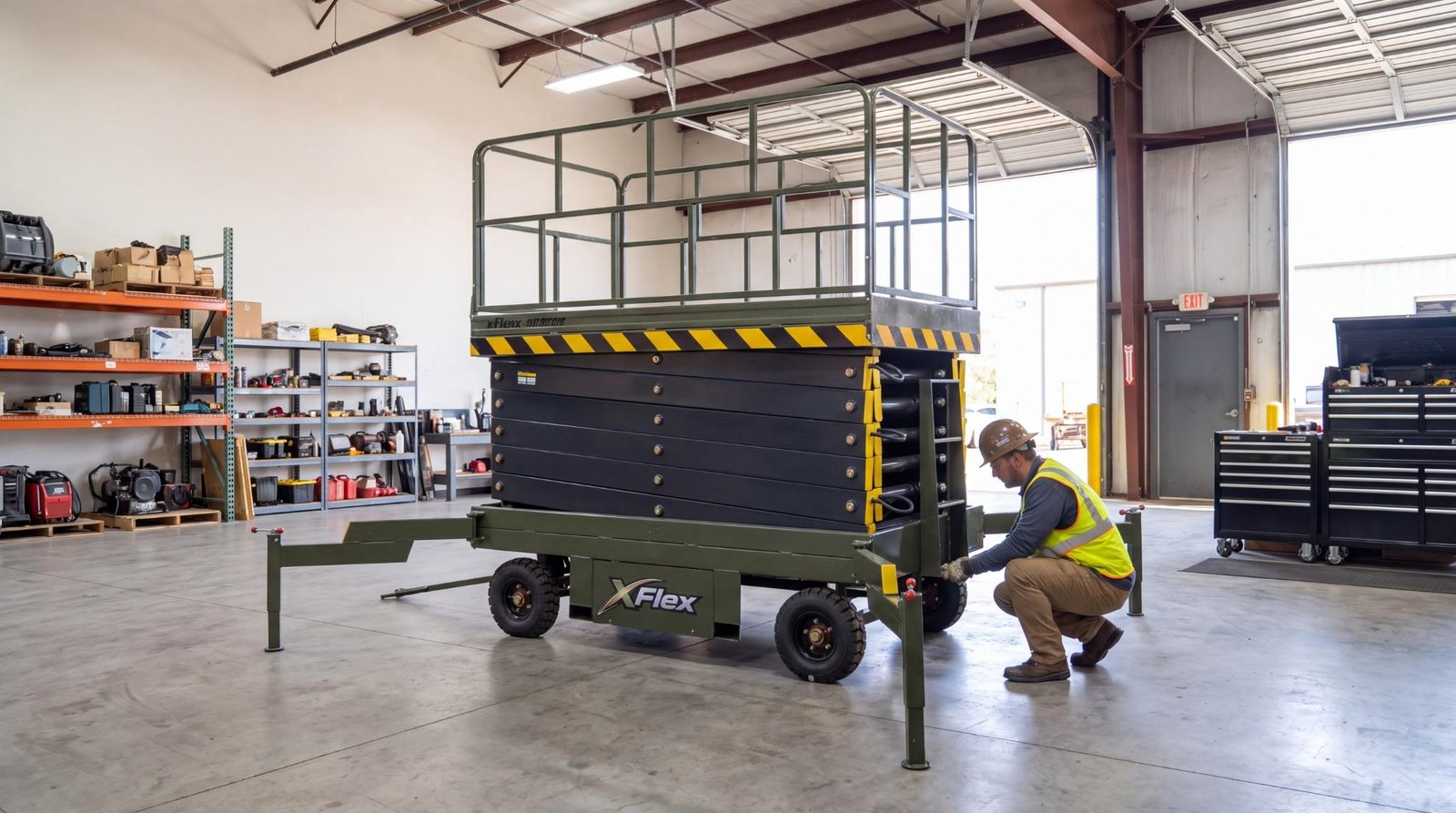
Scissor lifts provide a stable, efficient platform for installation, maintenance, inventory, finishing, and construction work at height. They are common because the platform can lift workers and tools vertically without the reach pattern of a boom lift. That simplicity can create false confidence. Tip-over, falls, crushing, collision, electrocution, dropped objects, and unintended movement remain serious hazards when the lift is placed on an unsuitable surface, used by an untrained operator, overloaded, or moved without adequate clearance.
This guide is an educational planning resource. It does not replace the operator’s manual, employer safety program, applicable regulations, site rules, or machine-specific training. Owners and employers should use the manufacturer’s instructions as the controlling source and consult qualified safety professionals when work conditions are unusual.
Understand the Machine and Its Limits
A scissor lift raises a platform using a folding support mechanism. Electric slab models are common on smooth indoor floors. Rough-terrain models may use larger tires, outriggers, leveling systems, or combustion engines for outdoor sites. Some lifts can be driven while elevated within defined limits, while others require the platform to be lowered. Capacity, maximum occupants, platform-extension limits, wind rating, slope allowance, and indoor or outdoor approval differ by model.
Before work begins, identify the exact machine and read the data plate, warning labels, manual, and control descriptions. Do not assume that experience with one lift applies to another. Control response, emergency-lowering systems, pothole protection, tilt alarms, drive cutouts, and outrigger procedures can vary.
Operator Training and Authorization
Only trained and authorized workers should operate a scissor lift. Training should cover the specific equipment type, controls, safety devices, inspection, workplace hazards, load limits, travel, emergency procedures, and the manufacturer’s instructions. Practical evaluation is essential because a worker must demonstrate correct operation, not only complete a classroom session.
Retraining or refresher instruction may be needed after unsafe operation, an incident or near miss, a change in workplace conditions, a different machine type, or evidence that the operator lacks necessary skill. Employers should document authorization and make it clear who can operate, supervise, inspect, and maintain the equipment.
Pre-Use Machine Inspection
Inspect the lift at the beginning of the shift and whenever a new operator assumes responsibility. Follow the manufacturer’s checklist. The inspection normally includes tires or wheels, wheel fasteners, steering, brakes, guardrails, entry gate or chain, platform extension, controls, emergency stop, alarms, pothole protection, scissor stack, pins, hydraulic cylinders, hoses, batteries or fuel system, charger cable, fluid leaks, decals, manuals, and structural damage.
- Check for bent, cracked, loose, missing, or improvised parts.
- Confirm that guardrails and gates are complete and secure.
- Test ground and platform controls in a clear area.
- Verify emergency stop and emergency-lowering functions according to the manual.
- Inspect tires, wheels, brakes, steering, and drive response.
- Look for hydraulic leaks, damaged cables, battery problems, or fuel leaks.
- Confirm that alarms and safety devices have not been bypassed.
- Remove the lift from service when a defect affects safe operation.
A quick visual walk-around is not enough when the manual requires functional tests. Never use tape, wire, tools, or body weight to defeat an interlock. Repairs should be performed by qualified personnel using approved parts and procedures.
Work-Area Hazard Assessment
Inspect the route and work position before moving the lift. Look for floor openings, trenches, loading docks, ramps, soft soil, uncompacted fill, slopes, curbs, debris, cords, hoses, wet surfaces, weak covers, and overhead obstructions. Identify traffic from forklifts, cranes, vehicles, doors, conveyors, and other equipment. Indoors, verify floor loading and clearance around sprinkler systems, lights, ducts, beams, and energized conductors.
Outdoors, evaluate ground firmness, weather, wind, rain, ice, lightning, and changing surface conditions. A hard-looking surface can hide a void or recently backfilled trench. Barricade the work zone when pedestrians or vehicles could enter. Use a spotter when visibility or clearance is limited, but make sure the operator and spotter agree on signals and stopping rules.
Correct Setup and Leveling
Position the lift on a firm, level surface within the manufacturer’s limits. Do not level the machine with loose blocks, scrap lumber, stacked materials, or improvised supports. If the model uses outriggers, deploy them exactly as described in the manual and confirm that pads or supporting surfaces can carry the load. Chocks may be required in certain situations, but they do not make an unsuitable slope acceptable.
Keep adequate distance from edges, excavations, floor openings, and unsupported soil. The weight of the lift and dynamic movement can cause an edge to fail. Never use the platform against a wall, beam, or structure to brace or stabilize the machine.
Fall Prevention on the Platform
Keep the guardrail system complete and the entry gate or chain closed. Stand on the platform floor. Do not climb, sit, or stand on rails, ladders, buckets, planks, boxes, or materials to gain extra height. Do not lean out far enough to shift the center of gravity or defeat the protection provided by the rail system. Reposition the lift instead.
Fall-restraint or personal fall-arrest requirements depend on the machine, employer program, work activity, and applicable rules. Follow the manufacturer’s instructions and the site’s competent person or safety lead. Never attach a lanyard to an unapproved point or to a nearby structure in a way that creates an ejection, crushing, or tip-over hazard.
Load Capacity and Platform Organization
The platform capacity includes people, tools, materials, and anything placed on an extension deck. Distribute the load as directed and keep compact items low and stable. Long materials can catch wind, strike structures, or create side loads. Do not use the lift as a crane, push or pull compact objects from the platform, or suspend loads unless the manufacturer specifically approves the method.
Organize tools to prevent tripping and dropped objects. Use approved tool tethers or containers when appropriate. Keep controls and the entry clear. Materials should not block the operator’s view or prevent emergency exit.
Safe Elevation and Work at Height
Before raising, look above and around the platform. Elevate slowly and stop if the machine shifts, an alarm activates, or clearance becomes uncertain. Maintain safe distance from energized electrical conductors according to the applicable rules and site plan; a scissor lift is not automatically insulated. Treat unknown lines as energized until the responsible utility or qualified authority confirms otherwise.
Watch for crushing points between the platform rails and ceilings, beams, pipes, door frames, or equipment. The operator should keep hands and body inside the rails and use deliberate control inputs. A spotter can help where overhead visibility is limited, but the operator remains responsible for stopping when communication is lost.
Traveling With the Platform
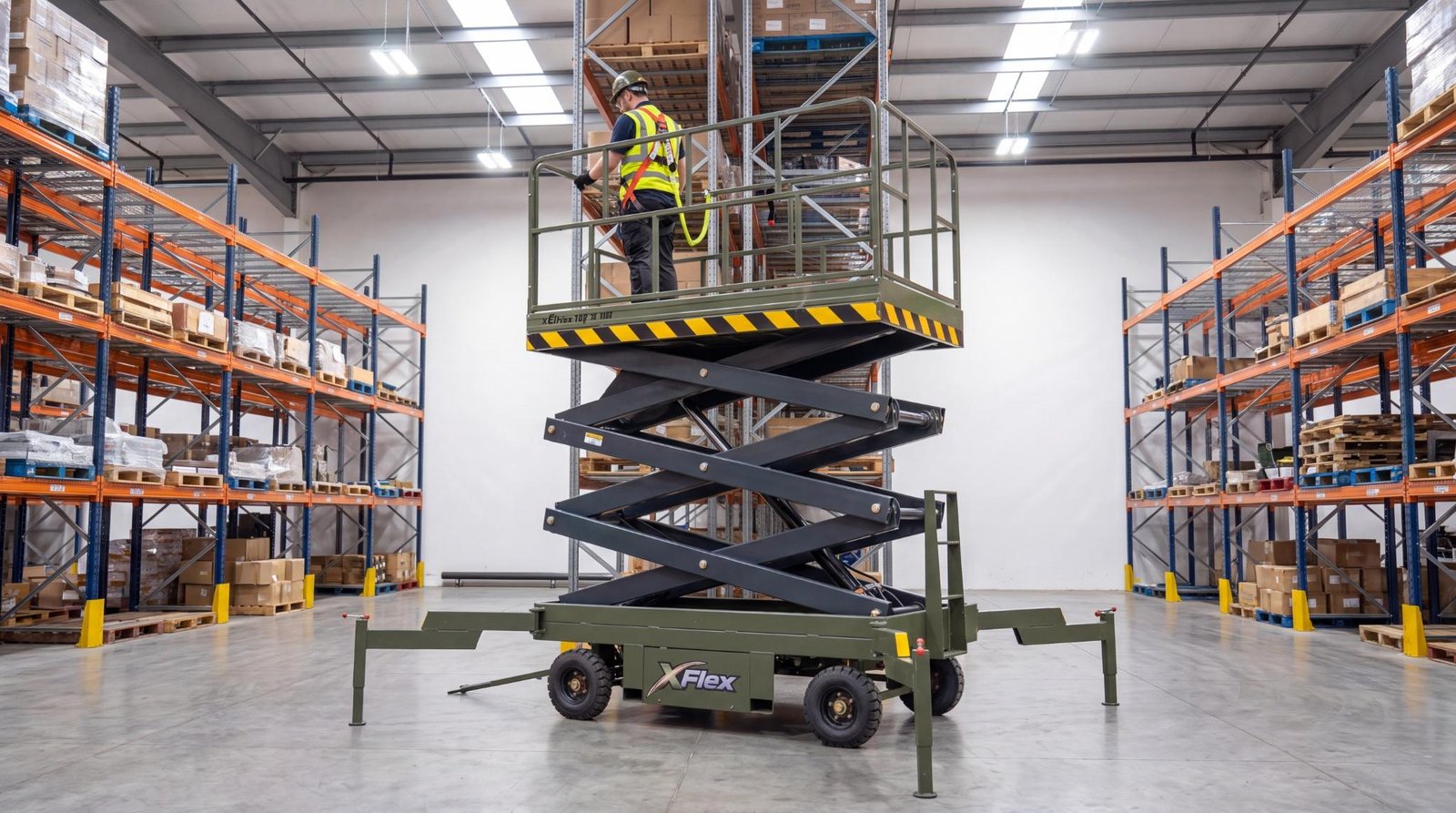
Travel only as allowed by the manufacturer and the worksite plan. Lower the platform when crossing thresholds, ramps, debris, uneven surfaces, or areas where visibility is poor. When elevated travel is permitted, drive slowly, keep the route clear, avoid sudden turns and stops, and watch both the base and the platform. The elevated platform amplifies movement and reduces stability margin.
Never use the lift as a personnel shuttle through a busy site without controlling traffic. The operator should face the direction of travel when possible and confirm steering orientation, especially on machines where the control position changes relative to the chassis.
Wind, Weather, and Outdoor Use
Use outdoor-rated equipment when the work is outdoors. Do not rely on a general weather forecast alone; wind can accelerate around buildings, openings, rooftops, and large structures. Stop operation when wind approaches the machine’s limit or when gusts, storms, rain, ice, or lightning create unsafe conditions. Large panels, signs, ductwork, or sheet materials can act like sails and may require a different lifting plan even below the stated wind limit.
Cold temperatures affect batteries and hydraulic systems. Heat can affect battery charging, operators, and components. Inspect the manufacturer’s environmental limits and adjust the work plan rather than forcing the lift to operate outside its design range.
Emergency Lowering and Rescue Planning
Someone at ground level should know how to use the emergency-lowering system and where the manual is stored. Before work, establish how assistance will be summoned, how the area will be controlled, and what to do if the platform becomes trapped, power fails, an operator is incapacitated, or the lift contacts an energized source. Calling emergency services may be part of the plan, but site personnel still need to prevent additional workers from entering the hazard area.
Do not climb down the scissor stack or attempt improvised rescue. If the machine is entangled with electrical conductors, ground personnel should keep away and follow emergency electrical procedures. Rescue actions should not create a second victim.
Parking, Charging, and End-of-Shift Care
Lower the platform fully, park in an approved area, set controls as required, remove the key or disable unauthorized use, and connect charging equipment according to the manual. Keep chargers and cables away from damage and water. Battery charging may create electrical, chemical, fire, or ventilation hazards depending on battery type, so the facility should use an appropriate charging area and trained personnel.
Report defects, impacts, alarm events, unusual noises, fluid leaks, and damaged rails before leaving the machine. Clean mud or debris that could hide damage, but do not pressure-wash electrical components unless the manufacturer allows it.
Common Unsafe Practices to Eliminate
- Standing on the guardrails or using a ladder on the platform.
- Driving elevated over holes, ramps, debris, or uneven ground.
- Working too close to energized conductors.
- Exceeding capacity or using the lift to push, pull, or crane loads.
- Using blocks or improvised supports to level the chassis.
- Bypassing alarms, tilt systems, gates, or other safety devices.
- Operating in wind or weather outside the approved limits.
- Allowing untrained workers to operate or use ground controls.
- Failing to establish an emergency-lowering and rescue plan.
Daily Scissor Lift Safety Checklist
1. Verify the exact machine, manual, inspection status, and operator authorization.
2. Inspect the machine and test controls and emergency functions.
3. Evaluate the travel route and work area for surfaces, edges, traffic, and overhead hazards.
4. Confirm capacity, number of occupants, tools, materials, and wind limits.
5. Set up on a firm, level surface and use outriggers only as instructed.
6. Close the gate, keep feet on the platform floor, and maintain clearances.
7. Travel slowly and only within the manufacturer’s elevated-travel rules.
8. Stop work when conditions change or any alarm, defect, or uncertainty appears.
9. Lower, secure, charge, and report problems at the end of the shift.
Frequently Asked Questions
Can I stand on a ladder inside a scissor lift? No. Standing on a ladder, box, rail, or other object defeats the intended guardrail protection and raises the center of gravity. Lower and reposition the lift or use equipment with sufficient platform height.
Can a scissor lift be used on a slope? Only within the machine’s limits and procedures. Many models require a level surface for elevation. A tilt alarm is a warning device, not permission to continue operating on an unsuitable slope.
Can I drive while elevated? Some models allow limited elevated travel under defined conditions. Others do not. Follow the manual and site rules, and lower the platform for transitions, uneven surfaces, and uncertain routes.
Does a scissor lift protect against electrical contact? Do not assume insulation. Maintain required clearance from energized conductors and follow the worksite electrical safety plan.
What should happen when a defect is found? Stop using the machine, tag or control it against unauthorized operation, report the defect, and have qualified personnel complete the required repair and return-to-service process.
Safe Use Starts Before Elevation
Safe scissor lift use depends on four connected actions: trained people, a functional machine, a controlled work area, and disciplined operation. Skipping any one can turn a simple elevated task into a serious incident. Before selecting or using a lift, confirm the exact manual, training requirements, inspection procedures, capacity, surface limits, indoor or outdoor rating, working height, and service support.
Safety Resource
Equipment Guidance
Need help choosing equipment for your next job?
Contact KONSTRUCTZ support and get practical guidance before comparing machines, attachments, or jobsite requirements.Contact SupportReader Comments
Join the equipment discussion
Related Posts
No published comments yet.