


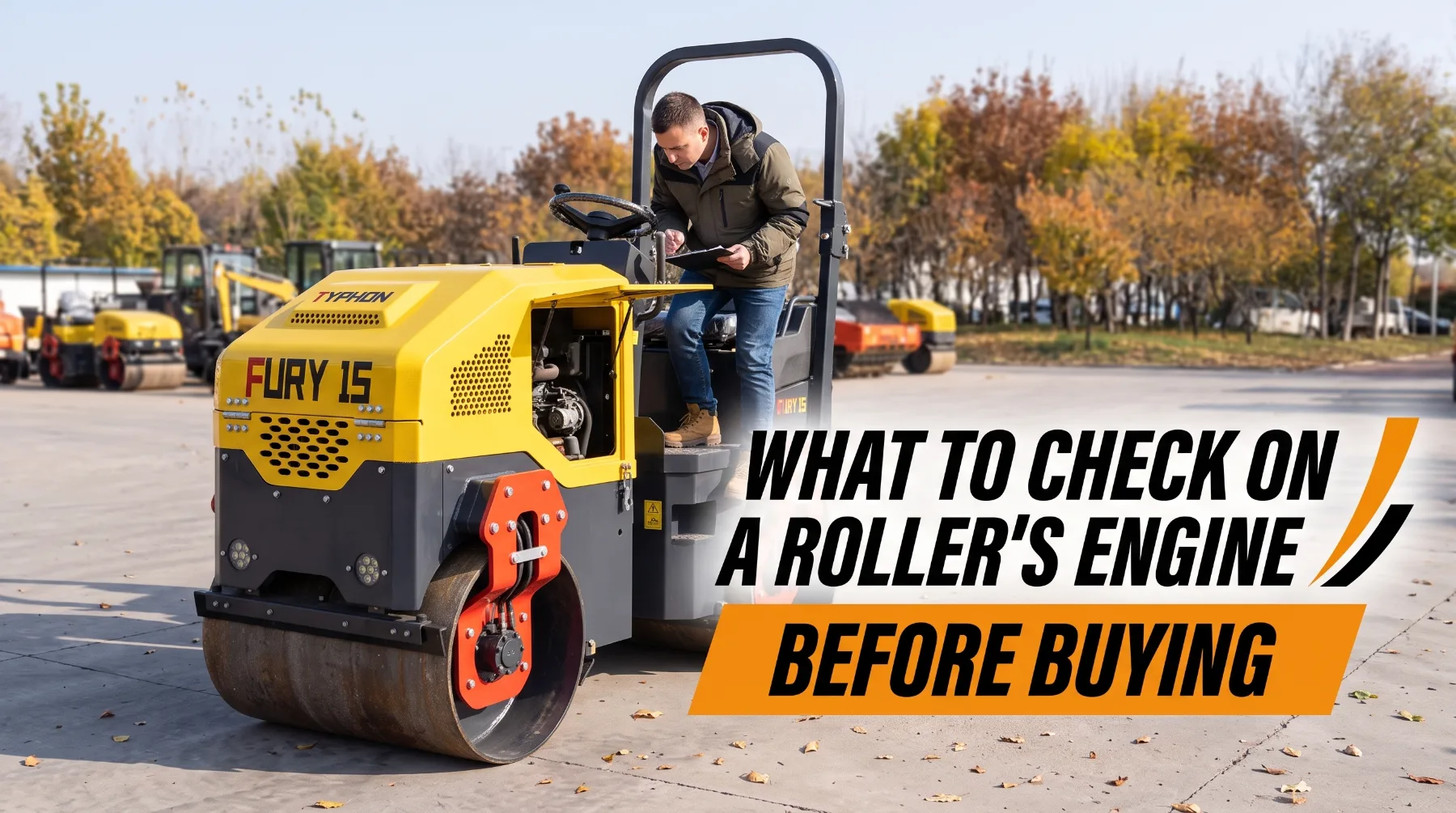
The engine plays a major role in determining how much value you get from a road roller over its working life. A dependable, properly matched powerplant delivers consistent compaction, reliable starts, efficient operation, and the durability needed for demanding jobs. In contrast, an underpowered or overworked engine can lead to sluggish performance, higher fuel consumption, frequent maintenance, and costly downtime when you need the machine most.
Buyers often focus first on drum width, operating weight, compaction force, and price. These specifications are important, but they mean little if the engine cannot deliver the power the machine needs. Before making a purchase, take a closer look at the engine and how well it matches the roller’s overall design. Several key factors deserve your attention.
Match the Engine Type to Your Worksites
Rollers come equipped with either diesel or gasoline powerplants, and each suits a distinct pattern of work. Diesel units produce stronger low-end torque, consume fuel economically during extended compaction runs, and are generally well suited to machines that face heavy daily demands. That combination becomes especially useful when the roller must maintain steady movement while working through dense material, climbing mild grades, or operating for several hours without interruption. Highway crews, large paving lots, road construction projects, and contractors running equipment throughout the day can often benefit from the durability and operating characteristics of a diesel engine.
Gasoline engines offer a different set of advantages. They typically start readily, can be convenient for intermittent use, and often come with a lower initial purchase cost. Those characteristics can make them practical for smaller contractors, landscaping crews, property maintenance, and jobs where the roller operates for shorter periods rather than throughout an entire shift. The important point is not that one fuel type is universally better than the other. The better choice depends on how the machine will actually be used. A gasoline-powered roller may make perfect sense for occasional work, while a diesel machine may justify its higher purchase price when it is expected to work continuously.
Consider how frequently you plan to run the machine, how long each operating session lasts, and what surfaces you compact most often. Also think about transport, storage, service availability, and the conditions in which the roller will normally operate. Buying more engine than your projects require can tie up capital in a machine whose capabilities you rarely use, while choosing too little power can force an undersized unit to work harder than intended. Matching the engine to the workload gives you a better balance between purchase cost, operating cost, durability, and actual productivity.
Confirm Real Power Output, Not Just Advertised Figures
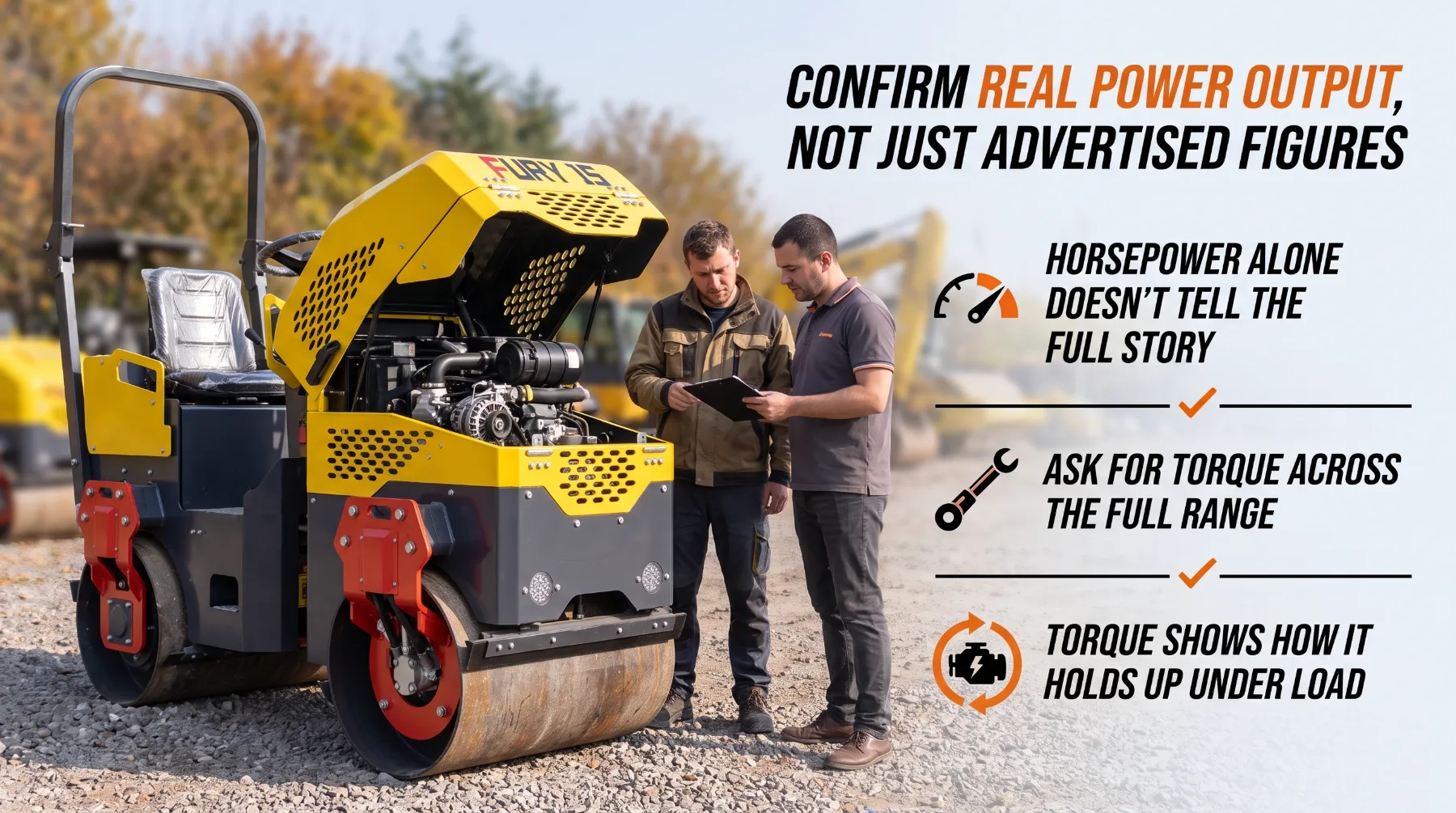
Horsepower ratings read well on a specification sheet, but the number alone does not tell you how effectively the engine will perform once the roller is working against resistance. Engine power has to reach the systems that move the machine and drive the compaction process, and losses or differences in drivetrain design can affect how that power feels at the controls. Request torque figures across the full operating range from any seller, rather than focusing only on peak horsepower. Torque helps explain how confidently the engine can maintain its output when the roller encounters heavier material, a grade, or changing ground resistance.
This is why two machines with matching horsepower ratings can behave very differently in actual use. One engine may maintain its output smoothly as the load increases, while another may drop speed noticeably and require more throttle to recover. The difference may not be obvious during a quick demonstration on flat, easy ground. A more demanding test can reveal much more about the relationship between the engine and the rest of the machine. Listen for changes in engine speed, watch how consistently the roller moves, and notice whether the machine maintains its pace when the workload increases.
When possible, operate the roller yourself rather than relying entirely on a salesperson's description. Make a demanding pass and pay attention to how the engine responds to throttle changes and increased resistance. Smooth, consistent output suggests that the powerplant and supporting systems are working together properly. Hesitation, repeated drops in engine speed, unusual vibration, visible smoke, or a laboring engine note deserves further investigation. The goal is not simply to find the machine with the largest horsepower figure, but to identify the one that delivers usable power consistently under the conditions you expect to encounter.
Inspect the Cooling System
Compaction generates sustained heat, and an engine that cannot shed that heat effectively can suffer accelerated wear and reliability problems. Unlike equipment that operates only in short bursts, a roller may spend long periods moving continuously at relatively high engine load. That makes the cooling system an important part of the overall powertrain rather than a component that can be checked casually. Determine whether the unit uses air or liquid cooling and understand how that system is designed to handle the workload you expect from the machine.
Liquid-cooled systems can provide more controlled temperature management during extended operation and demanding loads, but they also introduce additional components that require inspection and maintenance. Coolant levels must remain correct, hoses need to stay intact, and radiators must remain clear enough for adequate airflow. Air-cooled engines have their own requirements, particularly around cooling fins and airflow passages. Dirt, grass, dust, and compacted debris can restrict heat transfer and cause temperatures to rise even when the engine itself appears to be running normally.
Look closely for blocked fins, fractured hoses, damaged clamps, corroded fittings, leaking connections, or a radiator packed with dried mud and debris. Check for signs of previous overheating, such as discoloration, damaged seals, or evidence of coolant leakage around the engine. These conditions can reveal how consistently the machine was maintained before it reached you. A cooling circuit that is clean, intact, and properly maintained suggests that previous operators understood the importance of routine service. Since overheating can turn a relatively minor maintenance problem into a major engine repair, the condition of the cooling system deserves attention before you commit to the purchase.
Test Start Reliability and Watch for Warning Signs
An engine that hesitates to fire costs you productive time every morning and can become especially frustrating when the machine is needed for a short job with a tight schedule. Start reliability also provides useful information about the overall condition of the powerplant. Whenever possible, ask to start the roller from a genuinely cold condition rather than accepting a demonstration after someone has already warmed the engine. A cold start places greater demands on the battery, starter, fuel system, and engine internals, making problems easier to identify.
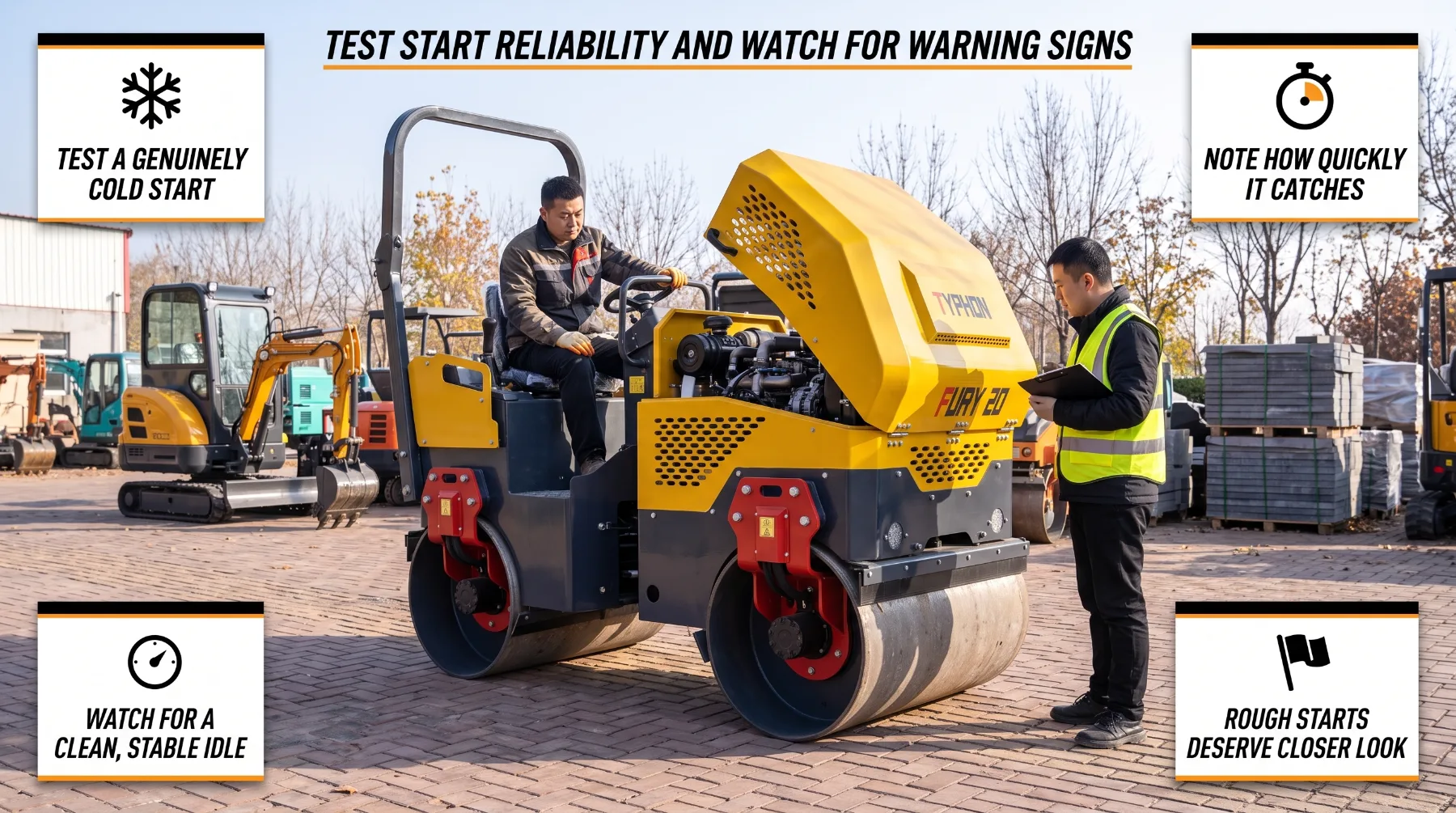
Note how quickly the engine catches and how smoothly it settles into idle. A prompt, clean start with minimal cranking can indicate healthy starting components, proper fuel delivery, and good engine condition. Extended cranking, repeated attempts before ignition, immediate stalling, or a rough and unstable idle all deserve closer examination. None of these symptoms should automatically be treated as proof of major engine failure, because batteries, fuel quality, filters, sensors, and other relatively simple components can also cause starting problems. However, they are warning signs that should not be ignored during an equipment inspection.
Once the engine is running, observe the exhaust throughout the warm-up period and while the roller is working. Blue smoke can indicate oil entering the combustion process, while persistent white smoke may point toward coolant-related problems or incomplete combustion depending on operating conditions. Dense black smoke generally suggests that the engine is receiving more fuel than it can burn cleanly or is not receiving enough air. Pay attention to whether the smoke disappears as the engine reaches normal temperature or continues under load. Combined with unusual noises, oil leaks, overheating, or poor performance, persistent exhaust problems can indicate a powerplant that requires attention. Those potential repair costs should be reflected in your offer, or they may be enough reason to walk away from the machine.
Evaluate Fuel Efficiency and Service Access
Fuel expenditure cuts into your operating budget faster than almost any other recurring cost, especially when the roller works for long periods each day. A machine that consumes slightly more fuel per hour may not seem expensive when viewed from a single shift, but the difference becomes much more significant after hundreds of operating hours. Compare consumption rates across comparable models and consider the type of work being performed rather than relying solely on the manufacturer's best-case figure. Real-world fuel use changes with engine load, travel speed, ground conditions, operator habits, and how continuously the machine is working.
Efficiency should also be considered alongside productivity. An engine that burns slightly more fuel but maintains consistent output and allows the operator to complete the work faster may produce a better overall operating cost than a lower-consumption machine that struggles under load. The objective is to find an engine that delivers the necessary compaction performance without wasting fuel simply to maintain basic operation. Looking at fuel use together with engine power, workload, and expected annual operating hours gives you a much clearer picture of what the roller will actually cost to run.
Maintenance access carries equal weight. Open the service panels and assess how readily a technician can reach the oil filter, air filter, fuel filter, belts, dipstick, coolant components, and fluid drain points. A machine can have a mechanically sound engine but still become expensive to own if routine service requires excessive disassembly or difficult access. Tight layouts can discourage operators from checking fluids or replacing filters on schedule, allowing small maintenance issues to develop into larger failures.
Straightforward service access encourages regular upkeep because the work can be completed quickly and without unnecessary disruption. Check whether inspection points are clearly visible, whether panels open without excessive effort, and whether common service components can be reached with normal tools. Think beyond the first year of ownership as well. Every filter change, oil service, inspection, and repair will eventually require someone to access these areas. A roller designed with practical service access can reduce maintenance downtime, encourage better care, extend engine life, and keep your crew working instead of waiting for repairs.
Conclusion
Evaluating a road roller's engine before purchase is not a formality. It is the most reliable way to judge whether a machine will earn its place in your fleet or drain resources from the first month of ownership. Check the engine type against your site demands, verify actual torque output, scrutinize the cooling circuit, confirm a clean cold start, and assess both fuel economy and service layout. Each checkpoint narrows the gap between a sound investment and a costly mistake. Take your time, observe carefully, and let the engine reveal what the spec sheet cannot.
Frequently Asked Questions
Is it better to choose a diesel roller over a gasoline model?
Diesel suits high-demand, multi-shift operations because of its stronger torque and lower fuel consumption over time. Gasoline models are a practical fit for lighter, shorter-duration jobs where startup ease and lower acquisition cost take priority.
What does exhaust smoke color tell me about a roller's engine condition?
Blue smoke typically indicates the engine is burning oil, white suggests coolant is entering the combustion chamber, and heavy black points to a fueling or air-intake issue. Any of these during a test run warrants a thorough mechanical inspection before you proceed.
How do I know if a roller's service access is adequate?
Open the engine panels and check whether filters, belts, and fluid points are reachable without removing major components. If basic maintenance requires excessive disassembly, technicians will defer those tasks, and deferred maintenance shortens engine life.
Equipment Guidance
Need help choosing equipment for your next job?
Contact KONSTRUCTZ support and get practical guidance before comparing machines, attachments, or jobsite requirements.Contact SupportReader Comments
Join the equipment discussion
Related Posts
No published comments yet.