


A quarry operator climbs into a wheel loader at the start of a busy shift, ready to feed a crusher that never stops running. The yard is alive with haul trucks, a ground spotter checking tire chains, and a service pickup weaving between stockpiles. A raised bucket loaded with aggregate blocks a good part of the forward view, and the corners of the machine hide more than most operators expect. A careless driver would swing into a turn on instinct and trust that the path stayed clear. The operator who knows better pauses, scans the mirrors, checks the camera feed, makes eye contact with the spotter, and eases the loader forward only after confirming every quarter is clear. That habit of seeing before moving is what keeps the yard safe, and it rests entirely on visibility and the awareness that puts it to use.
Visibility is the quality that decides whether a wheel loader works safely or becomes a hazard, because a machine this large hides people and obstacles in ways an operator cannot afford to ignore. Seeing clearly protects the crew on the ground, the equipment around the machine, and the operator behind the controls, while keeping the whole site moving at a steady pace.
Why Clear Sightlines Decide Safety
Size is the first reason visibility carries such weight on a wheel loader, because the machine's bulk creates hazards that smaller equipment simply does not. A loaded bucket rides high enough to block the forward view, the rear of the machine swings wide during turns, and the sheer mass means a collision with a person or another vehicle rarely ends well. An operator who cannot see a hazard cannot avoid it, so clear sightlines stand as the foundation beneath every safe move the machine makes.
People on the ground face the greatest risk when visibility fails, and that reality drives home why seeing clearly matters. Spotters, laborers, and workers on foot often move close to a working loader, and a machine that swings or reverses without a clear view puts them directly in harm's way. Most incidents involving heavy loaders trace back to someone the operator never saw, which is exactly the gap that good visibility closes.
Productivity gains from clear sightlines round out the case, since an operator who sees well works with confidence rather than hesitation. A driver forced to guess at what lies beyond the bucket slows down, second-guesses turns, and stalls the flow of the whole site, while one with a clear picture moves smoothly and steadily. Key takeaway: visibility protects the people around a wheel loader, prevents the collisions its size makes dangerous, and lets the operator work confidently, which is why clear sightlines decide safety.
Finding the Blind Spots Around the Machine
Blind spots ring a wheel loader on every side, and knowing exactly where they hide is the first step toward managing them. The raised bucket blocks much of the forward and downward view, the rear quarters fall away behind the engine housing and counterweight, and the areas close to the wheels vanish entirely from the operator's seat. A person crouched near a tire or standing just behind the machine can disappear completely, which is why naming these zones matters before any shift begins.
Identifying those hidden areas takes a deliberate exercise rather than a guess, so treat it as a real task. Walk the machine with a coworker who stands at various points around it while you sit in the operating seat and note where they vanish from view, then map those zones in your mind so you know precisely where extra caution is owed. This simple check reveals just how much the bucket, the frame, and the counterweight conceal from the controls.
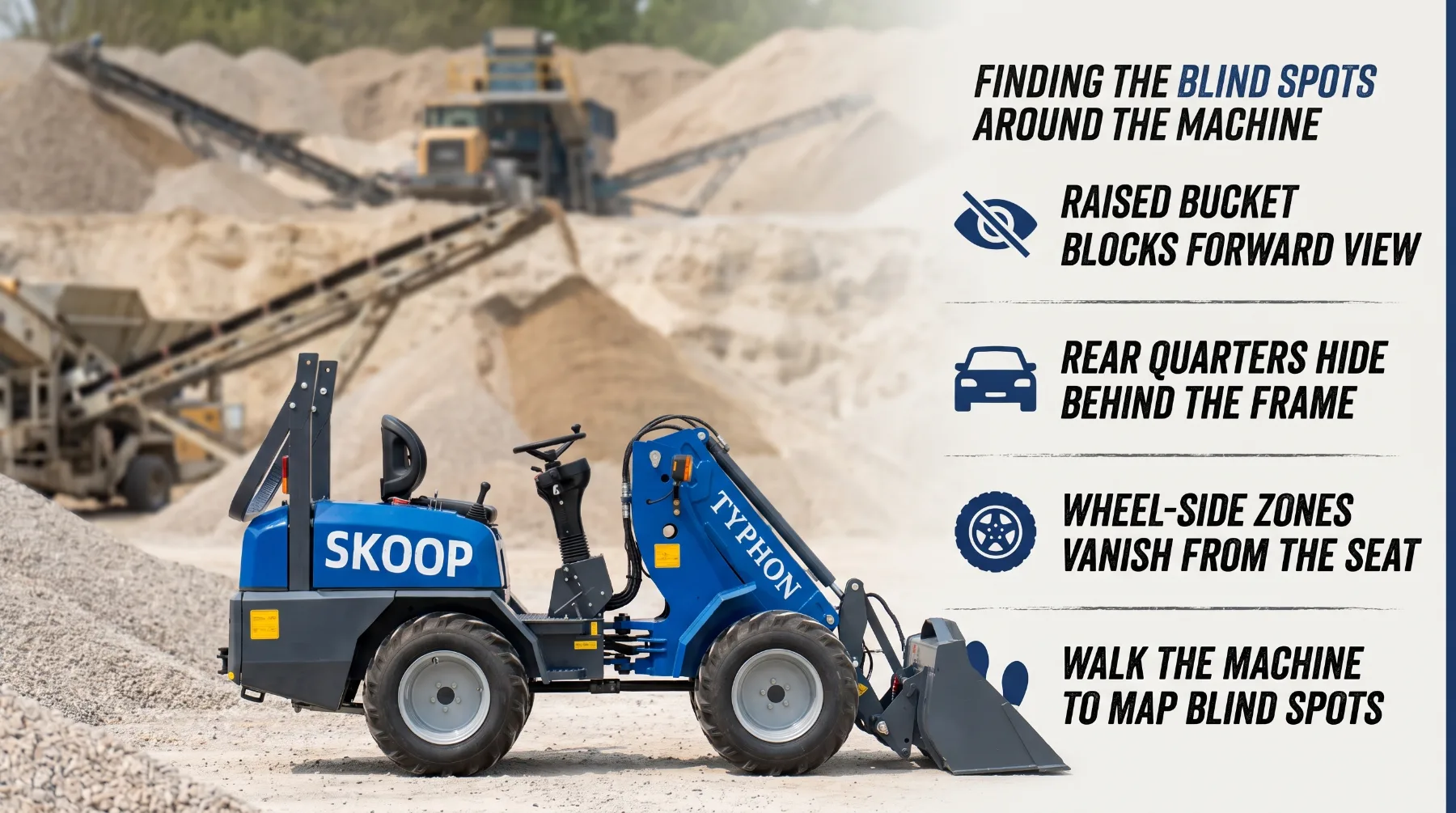
Load position changes the blind spots moment to moment, which adds a layer most operators underestimate. A bucket raised for travel swallows far more of the forward view than one carried low, and the articulation point in the middle of the machine shifts the hidden zones every time the loader turns. What this means: blind spots surround a wheel loader at the front, rear, and sides and shift with the load, so mapping them deliberately is what lets an operator account for what the machine hides.
Using Mirrors, Cameras, and Visibility Aids
Technology extends an operator's sight well beyond what the cab window alone allows, and using every aid the machine offers turns hidden zones into visible ones. Well-adjusted mirrors cover the sides and much of the rear, a rearview or surround camera brings the blind area behind the machine onto a screen in the cab, and proximity sensors warn of an object the operator has not spotted. Each aid closes a gap that the human eye cannot reach on its own.
Adjustment is what separates a useful aid from a decorative one, so set each device properly before the work starts. Angle the mirrors to cover the widest possible span of the sides and rear with minimal overlap, clean the lenses and glass so grime does not hide what they should show, and confirm the camera feed displays clearly and points where it needs to. A mirror knocked out of position or a camera caked in dust offers a false sense of security worse than none at all.
Reliance on aids demands judgment, because no camera or sensor replaces an operator's own eyes and attention. Treat these tools as a supplement that confirms what your direct view and your scanning already suggest, and never trust a screen so completely that you stop looking and listening for yourself. Key takeaway: mirrors, cameras, and sensors extend an operator's sight into the blind zones, but only when properly adjusted and treated as a supplement to active, attentive seeing rather than a replacement for it.
Organizing Site Layout and Traffic Flow
Layout shapes safety around a wheel loader long before the operator climbs aboard, because a well-planned site removes the conflicts that visibility alone cannot solve. Separating machine paths from pedestrian routes, marking clear travel lanes, and setting defined loading zones all keep people and equipment from crossing paths at the wrong moment. A site organized this way lets an operator work without constantly wondering who might step into a blind spot.
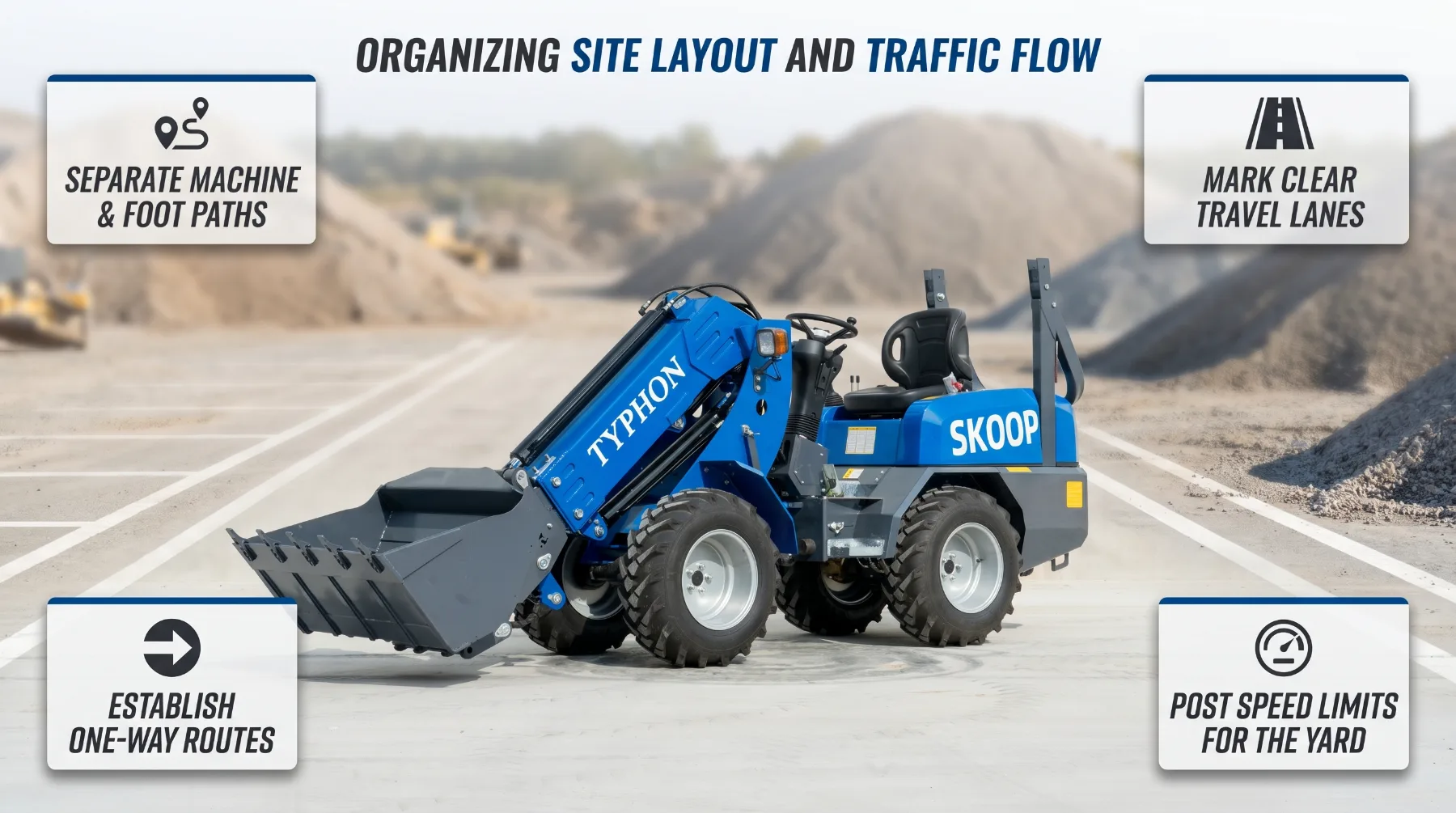
Traffic management builds on that layout by governing how machines and people share the space through the shift. Establishing one-way routes where possible, posting speed limits suited to the yard, and designating crossing points give everyone a predictable pattern to follow, so no one guesses where a loader will appear next. Keeping haul trucks, light vehicles, and foot traffic to their assigned areas reduces the surprises that lead to collisions.
Ground crews and spotters tie the whole system together, especially where sightlines stay poor no matter how well the site is arranged. A trained spotter guiding the operator through a tight or busy area supplies the eyes the machine cannot provide, provided both agree on clear hand signals or radio communication before the work starts. What this means: thoughtful site layout, managed traffic flow, and skilled spotters remove conflicts around a wheel loader, giving the operator a predictable, organized space where visibility gaps carry far less risk.
Building Operator Habits and Scanning Techniques
Habits at the controls determine whether an operator actually uses the visibility available, since the best sightlines mean nothing if no one puts them to work. Scanning constantly rather than staring straight ahead, checking the mirrors and camera before every movement, and looking in the direction of travel before committing to it all build a rhythm of seeing that catches hazards early. Operators should also make work and machine maintenance part of this routine by checking for leaks, loose parts, damaged attachments, unusual noises, and warning lights before and during operation. An operator who scans by reflex spots the wandering worker, approaching truck, or machine issue while there is still time to stop and respond.
Communication reinforces those scanning habits and fills the gaps that eyes cannot cover alone. Making eye contact with ground workers before moving, sounding the horn before starting off or reversing, and confirming a spotter's signal before a blind maneuver all keep everyone aligned on what the machine is about to do. A quick horn tap costs nothing and warns anyone nearby that the loader is coming to life.
Patience underpins every good habit, because the moments that tempt an operator to rush are exactly the ones that cause harm. Slowing down near people and structures, pausing to reposition when a load blocks the view rather than pressing on blind, and refusing to move until the path is confirmed clear all reflect the discipline that separates a safe operator from a lucky one. Key takeaway: constant scanning, active communication, and unhurried patience turn available visibility into real safety, making operator habits the force that puts clear sightlines to genuine use.
Checking Visibility Readiness Before the Shift
Preparation confirms that every visibility tool works before the machine ever moves, so open each shift with a check aimed squarely at what you need to see. Start with the cab glass, clearing dirt, mud, and condensation from the windows and windshield so nothing clouds your direct view, then confirm the wipers and washers work for the weather ahead. A cab window smeared with grime undoes the visibility the machine was built to provide.
Verifying the aids comes next, since a mirror or camera that failed overnight leaves a blind zone the operator may not notice until it is too late. Adjust and clean each mirror, power up the camera and confirm the feed is clear and correctly aimed, and test any proximity sensor or warning alarm to hear that it responds. Check that the lights, horn, and reversing signal all work, because these let others see and hear the machine as much as they let the operator see out.
Documenting the check turns a quick look into a dependable routine the whole crew can trust. Note any mirror out of adjustment, any camera gone dark, or any alarm that stays silent, fix the small issues on the spot, and report anything that needs a technician before the machine carries a load. What this means: a focused pre-shift inspection of the glass, mirrors, cameras, and warning devices confirms every visibility tool is ready, so the operator starts the shift seeing clearly rather than discovering a gap under load.
Conclusion
Visibility and operator awareness on a wheel loader come together as a system, and the whole picture holds once you address each part in turn. Start by recognizing why clear sightlines decide safety on a machine whose size hides people and hazards, then map the blind spots that ring the front, rear, and sides and shift with every load. Use mirrors, cameras, and sensors as properly adjusted supplements to your own eyes, and organize the site layout and traffic flow so conflicts never reach a blind zone in the first place. Build the scanning habits, communication, and patience that turn available sightlines into real protection, and back it all with a pre-shift inspection that confirms every window, mirror, and camera is ready. Attend to all six, and the loader works safely and smoothly rather than gambling on what the operator cannot see.
Before your next shift, clear the glass, adjust the mirrors and camera, and confirm your spotter signals so the machine performs from the first bucket. When you're ready to put a dependable, well-equipped wheel loader to work, or need help matching the right machine to your site, reach out to a trusted equipment specialist who can match reliable equipment to the results your work depends on.
Frequently Asked Questions
Why is visibility such a concern on a wheel loader?
Because the machine's size creates hazards smaller equipment does not. A raised bucket blocks the forward view, the rear swings wide during turns, and the mass means a collision with a person or vehicle rarely ends well. Workers on foot often move close to a working loader, and most serious incidents trace back to someone the operator never saw. Clear sightlines close that gap, protecting the crew while letting the operator work with confidence rather than hesitation.
Where are the worst blind spots on a wheel loader?
They ring the machine on every side. The raised bucket hides much of the forward and downward view, the rear quarters fall away behind the engine housing and counterweight, and the areas close to the wheels vanish entirely from the seat. These zones also shift as the load moves and the machine articulates through a turn. The best way to know them is to sit in the cab while a coworker stands at various points around the machine, noting exactly where they disappear from view.
Do cameras and sensors replace the need to look for myself?
No. Mirrors, cameras, and proximity sensors extend your sight into the blind zones, but they only work when properly adjusted, cleaned, and treated as a supplement. A mirror knocked out of position or a lens caked in dust offers false confidence worse than none at all. Use these aids to confirm what your direct view and active scanning already suggest, and never trust a screen so completely that you stop looking and listening for yourself.
Equipment Guidance
Need help choosing equipment for your next job?
Contact KONSTRUCTZ support and get practical guidance before comparing machines, attachments, or jobsite requirements.Contact SupportReader Comments
Join the equipment discussion
Related Posts
No published comments yet.