


Halfway through a Tuesday afternoon, a warehouse operator notices his electric forklift crawling instead of lifting, so he pulls it into the charging bay for a quick top-off. Twenty minutes later he's back on the floor, and by the next morning he does the same thing again, grabbing short charges whenever the machine feels sluggish. Three months down the road, that same battery holds barely half its old runtime, and the replacement quote lands north of $5,000. Nobody warned him that the way he charged the battery mattered more than how often he used the machine. That expensive surprise is exactly why charging habits deserve real attention long before a battery starts to fade.
Getting the most life out of a forklift battery comes down to a few simple rules followed consistently, not guesswork between shifts. A lead-acid battery has a set number of charge cycles in it, and burning through them carelessly cuts years off its service life. This guide walks through how these batteries actually work, the one-shift charging rule that protects them, the signs that tell you a charge is due, the habits that quietly destroy a battery, the right way to charge and maintain one, and the return that good care delivers. Here's what every operation running electric forklifts needs to know.
How the Battery Actually Powers Your Forklift
Most electric forklifts run on a large lead-acid battery that does double duty. Beyond supplying power, the battery's considerable weight acts as a counterbalance that keeps the machine stable while it lifts a load. That single component drives both performance and safety, so treating it as an afterthought is a mistake.
Charge cycles are the currency that matters here. Each time a lead-acid battery drains and recharges, it uses up one cycle, and a typical unit carries somewhere around 1,500 cycles before its capacity drops off sharply. Spend those cycles wisely and the battery serves for five years or more; waste them and the same battery quits in a fraction of that time.
Heat and depth of discharge shape how fast those cycles disappear. Draining a battery too far or charging it while it's already hot stresses the internal plates and shortens its usable life. Understanding that a battery is a consumable with a finite lifespan, rather than a fuel tank you refill on demand, changes how you treat it every single day.
The One-Shift Rule That Protects Battery Life
Timing is the heart of good battery care, and the standard practice is beautifully simple: charge once per shift, after the shift ends. Run the forklift through a full workday, park it at day's end, and put the battery on the charger overnight so it's fully ready for the next shift. One work cycle, one charge cycle, is the rhythm a lead-acid battery is built to handle.
Why does this single rule matter so much? A full charge cycle counts the same against the battery's lifespan whether you drain it 80 percent or 20 percent, so charging once at the end of a shift makes every cycle count for a full day of work. Grabbing short charges throughout the day burns extra cycles for the same amount of runtime, which throws away battery life for no real gain.
Consider a single-shift operation running one forklift eight hours a day. That battery gets used through the shift, charged overnight, and cooled before the next morning, which is exactly the pattern that stretches it toward its full cycle count. Match your charging to your shift schedule, and the battery lasts as long as it was designed to.
Reading the Signs That a Charge Is Due
Guessing about charge level wastes battery life, so learn to read what the machine tells you. Nearly every electric forklift carries a battery discharge indicator, usually a gauge or a set of lights that shows remaining charge much like a fuel gauge. Watching that indicator through the shift is the simplest way to know where the battery stands.
The number to respect is 20 percent. Draining a lead-acid battery below roughly 20 percent capacity, the point most indicators mark as the red zone, damages the plates and eats into the battery's lifespan. Plan your shift so the battery reaches the end of its workday right around that 20 percent mark, not far below it.
Performance drops give you another honest warning. Sluggish lifting, slower travel speed, and dimming lights all signal a battery running low, and pushing past those signs to squeeze out a few more loads does real harm. Rather than running the machine until it nearly dies, treat any noticeable slowdown near the end of a shift as your cue to wrap up and charge, which protects both the battery and your productivity.
Habits That Quietly Destroy a Battery
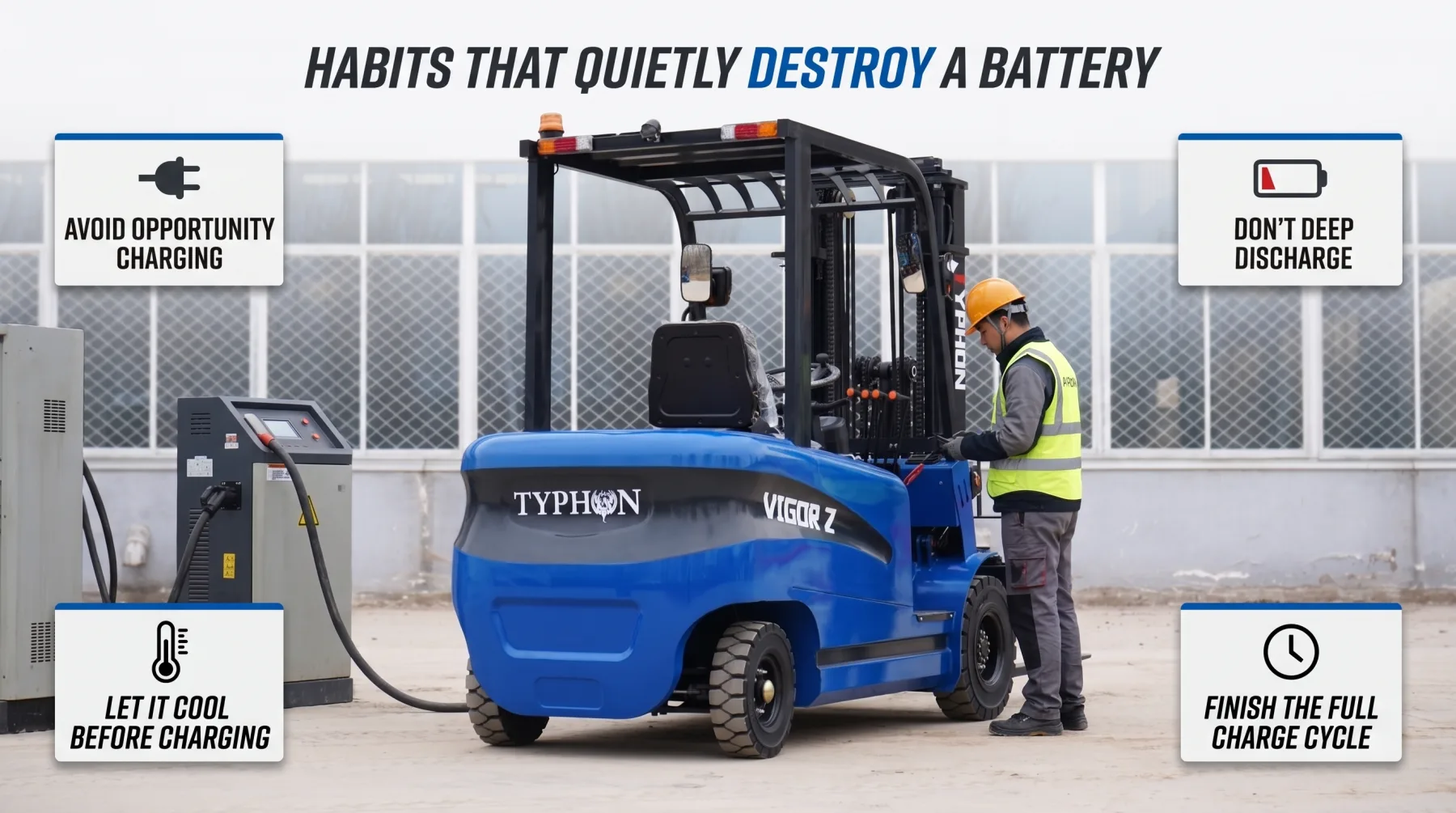
Certain routines feel efficient in the moment yet cut a battery's life dramatically, and knowing them helps you avoid the trap. The worst offenders share one trait: they trade long-term battery health for a small short-term convenience. Watch for these damaging habits:
- Opportunity charging. Plugging in for short top-offs during breaks or between loads burns extra charge cycles for minimal runtime, aging a standard lead-acid battery far faster than a single end-of-shift charge would.
- Deep discharging. Running the battery below 20 percent to finish one more job stresses the plates and permanently shrinks capacity, so the machine's convenience today costs you months of life later.
- Charging a hot battery. Putting a battery on the charger right after heavy use, while it's still warm, compounds the heat and accelerates internal wear.
- Interrupting a charge cycle. Pulling a battery off the charger before it finishes a full charge leaves it undercharged and, over time, reduces how much it can hold.
- Skipping the cooldown. Rushing a freshly charged battery straight back into service without letting it rest denies it the cooling period that protects plate life.
Opportunity charging deserves special caution, since it looks like a smart, flexible operation but quietly doubles or triples how fast you spend cycles. Unless your operation runs a battery chemistry specifically built for it, such as certain lithium-ion systems, save the charging for the end of the shift. Breaking these habits often adds years to a battery you already own.
Charging and Maintenance Done the Right Way
Proper charging follows a predictable routine, and sticking to it keeps a battery healthy for years. Start by using the charger matched to your specific battery's voltage and capacity, since a mismatched charger either undercharges the battery or cooks it. Once the machine parks for the day, connect it to that correct charger and allow a complete, uninterrupted charge cycle to finish, typically around eight hours for a standard lead-acid unit.
Cooling is the step most operations skip, and it costs them. After a charge finishes, let the battery rest and cool for several hours before returning it to work, which is another reason the overnight, once-per-shift pattern fits so well. Batteries generate heat both in use and during charging, so building in that rest period keeps internal temperatures in check and protects the plates.
Watering and cleaning round out the care a lead-acid battery needs. Check the electrolyte levels regularly and add distilled water only after charging, keeping the plates covered without overfilling. Keep the battery top clean and dry, since dirt and moisture create paths that drain charge and corrode terminals. Inspect the cables and connectors for damage during routine checks, and train operators to handle and charge batteries safely, since a well-maintained battery on a steady routine is both safer and far more dependable than one left to chance.
What Smart Battery Care Returns to Your Bottom Line
Cost is the reason all of this matters, and a forklift battery is a major investment worth protecting. Replacement units run thousands of dollars each, so every year you add to a battery's life through good charging habits is money that stays in your pocket. Stretching a battery from three years to six effectively halves that recurring expense across your fleet.
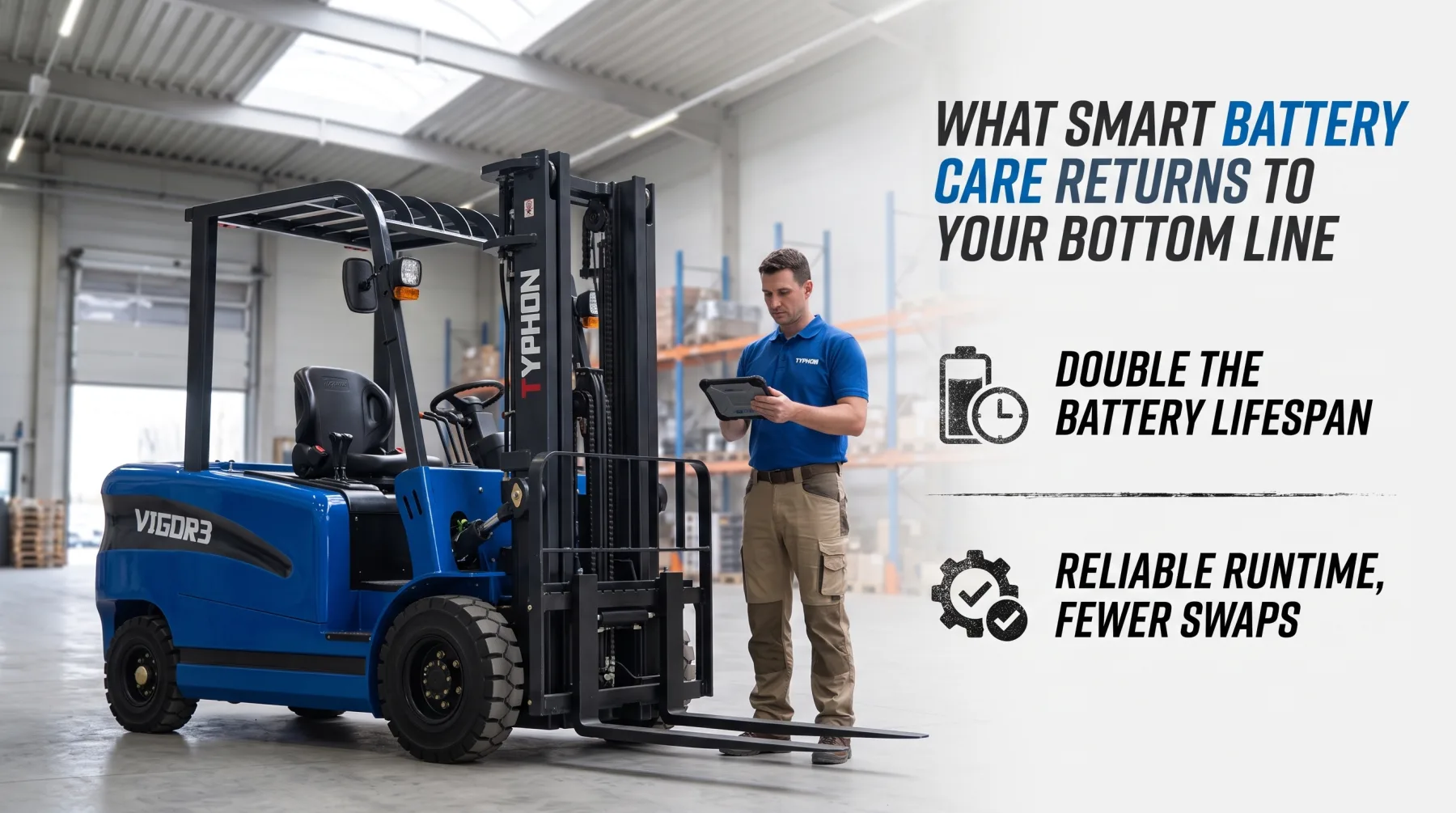
Uptime delivers the second half of the payoff. A battery charged on a proper schedule holds dependable runtime through a full shift, which means fewer machines pulled off the floor early and fewer scrambles to swap or borrow equipment mid-task. Consistent power keeps operators productive and orders moving, while a mistreated battery that fades halfway through the day drags the whole operation down with it.
Deciding how to manage batteries across a larger fleet comes down to your shift pattern. Single-shift operations thrive on the simple once-per-shift charging rule, while multi-shift facilities running machines around the clock may weigh spare batteries, a battery-swap system, or a fast-charge chemistry against the cost of overworking a single unit. Weighing your real runtime needs against the price of extra batteries keeps the spend lean either way. Whichever route fits, following a steady charging and maintenance routine protects the investment, and a well-cared-for battery pays that care back in years of reliable service.
Conclusion
Charging a forklift battery well comes down to one dependable rhythm: run it through the shift, charge it fully overnight, and let it cool before the next workday. That single-cycle-per-shift approach spends the battery's limited charge cycles wisely, while opportunity charging and deep discharging waste them and cut years off the battery's life. Watch the discharge indicator, respect the 20 percent floor, and treat sluggish lifting or dimming lights as your signal to stop and charge rather than push through. Use the correct charger, allow a complete uninterrupted cycle, build in a cooldown, and keep the battery watered and clean, and you'll protect both the machine's stability and its runtime. Good habits here translate directly into fewer replacements, steadier uptime, and real savings across a fleet. When you're ready to put dependable electric forklifts and the right battery setup to work, reach out to a trusted equipment specialist who can pair reliable machines with the results your operation depends on.
Frequently Asked Questions
How often should a forklift battery be charged?
For a standard lead-acid battery, charge it once per shift, after the shift ends, rather than topping it off throughout the day. One full charge cycle per work cycle matches how the battery is designed to perform and spends its limited charge cycles most efficiently, which stretches its overall lifespan.
Is it bad to charge a forklift battery during breaks?
Usually, yes. Opportunity charging during breaks burns extra charge cycles for very little added runtime, aging a standard lead-acid battery far faster than a single end-of-shift charge. Unless your machine uses a chemistry built for it, such as certain lithium-ion batteries, save the charging for the end of the shift.
How low can a forklift battery go before charging?
Avoid draining a lead-acid battery below about 20 percent of its capacity, the point most discharge indicators mark in red. Running it lower stresses the internal plates and permanently reduces how much charge it can hold, so plan each shift to end near that mark and charge from there.
Equipment Guidance
Need help choosing equipment for your next job?
Contact KONSTRUCTZ support and get practical guidance before comparing machines, attachments, or jobsite requirements.Contact SupportReader Comments
Join the equipment discussion
Related Posts
No published comments yet.