Choosing an electric forklift starts with the loads and the facility, not a headline capacity or the lowest advertised price. Record the load weight, dimensions and center of gravity; the maximum lift height; mast and overhead clearances; aisle width; shift pattern; and charging windows. The right truck must handle the real load at the required height, fit every part of its route, and complete the working cycle without interrupting receiving, production, or shipping.
What an Electric Forklift Is Designed to Do
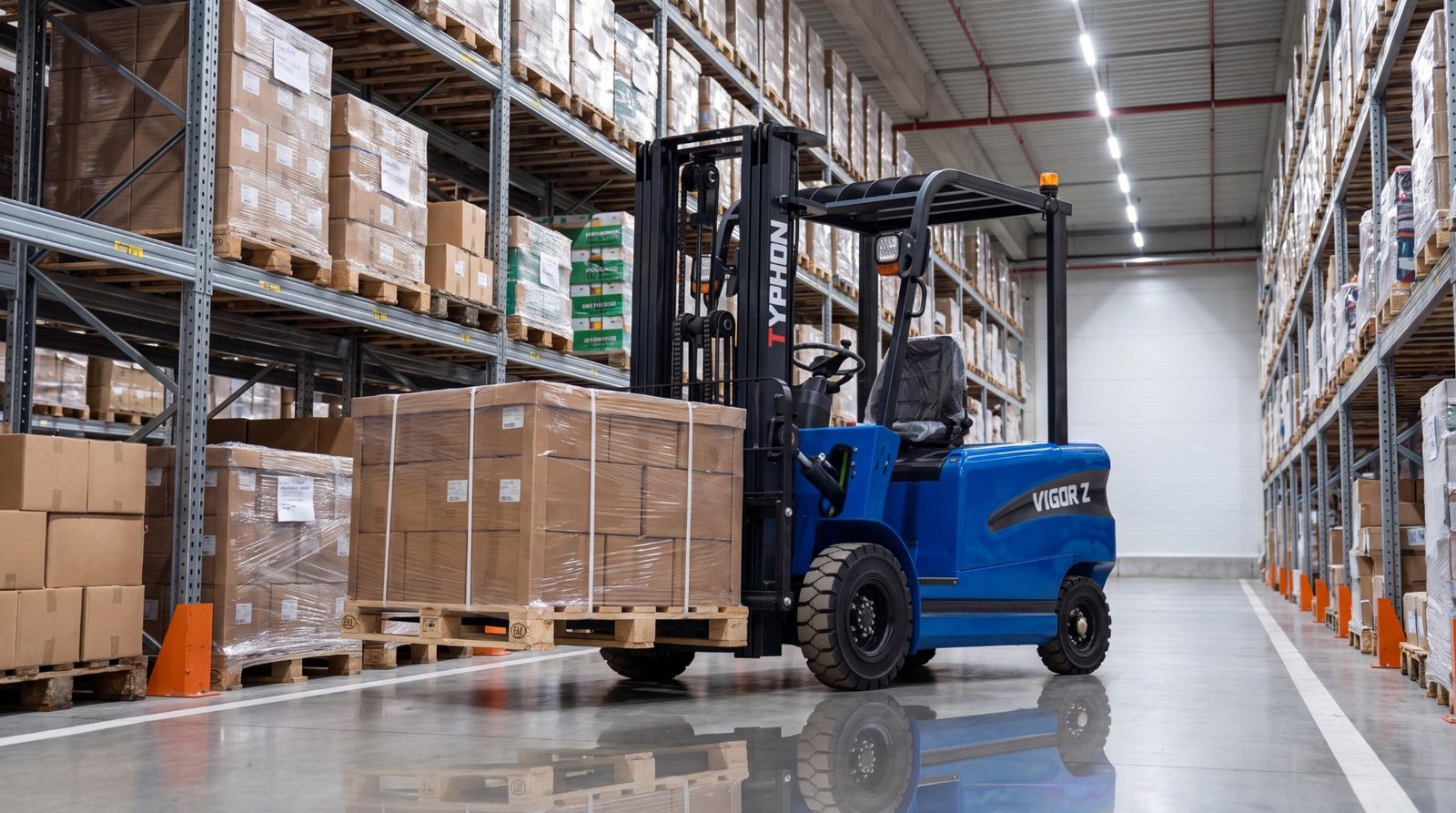
An electric forklift is a powered industrial truck that uses a battery and electric drive system to lift, carry, stack, and retrieve loads. Electric models are commonly selected for warehouses, manufacturing plants, distribution centers, food operations, and other environments where no point-of-use tailpipe emissions, controlled noise, and precise movement are important. Configurations include three-wheel and four-wheel counterbalance trucks, reach trucks, pallet trucks, stackers, and specialized narrow-aisle equipment.
An electric forklift works as a system: truck type, mast, carriage and forks, attachment, tires, battery, charger, controls, operator compartment, and service support all affect output. A nominal capacity is not useful if the truck lacks enough residual capacity at full lift, cannot turn with the real load in the available aisle, strikes an overhead obstruction, or must stop for charging during the busiest part of the shift.
Start With the Jobs, Not the Machine
List the work expected during a normal shift and during the busiest receiving or shipping period. Include loading and unloading trailers, stacking racks, feeding production, moving goods between buildings, and handling any nonstandard loads. Record trips per hour, travel distance, time spent lifting, idle periods, breaks available for charging, and the consequences of a truck becoming unavailable.
For each recurring load, record the maximum weight, dimensions, load-center position, required lift height, narrowest aisle, lowest doorway or overhead obstruction, longest route, dock or approved ramp conditions, floor limits, and attachment. Size for the most demanding routine task, not only the average pallet.
Choose the Correct Size Class
Capacity must be evaluated at the stated load center and lift height. A truck rated for a certain weight does not carry that weight under every configuration. Long loads, elevated loads, side-shifters, clamps, fork extensions, and other attachments can move the load center forward and reduce effective capacity. Select the truck using the heaviest real load, its dimensions, the maximum stacking height, the rack arrangement, and the attachments installed. Avoid using pallet weight alone when the center of gravity may be offset.
Dimensions deserve the same attention as capacity. Measure aisles, rack openings, doorways, elevators, trailers, dock areas, sprinklers, pipes, lights, and other overhead obstructions. Compare those measurements with overall width, right-angle stacking aisle, turning radius, overhead-guard height, lowered mast height, extended mast height, fork length, and the full load envelope. Verify the complete route rather than relying on a warehouse plan or the dimensions of the bare truck.
Specifications That Matter Most
Read the capacity plate, mast specifications, dimensions, battery data, and attachment information as one package. Confirm that the plate describes the truck as configured and compare the rating with the actual load center, lift height, attachment, tire setup, surface, and duty cycle.
- Rated capacity at the stated load center and the residual capacity at the required lift height.
- Mast type, lowered mast height, free lift, maximum fork height, and overhead guard height.
- Turning radius, right-angle stacking aisle requirement, truck width, and fork dimensions.
- Battery voltage, amp-hour capacity, chemistry, charging method, connector, and expected duty cycle.
- Tire type and suitability for indoor floors, loading docks, yards, ramps, and debris exposure.
- Travel speed, gradeability, braking, visibility, lighting, alarms, and operator-assist features.
Residual capacity is particularly important. The data plate should reflect the mast, attachment, tire, and configuration installed on the truck. Never guess capacity from a similar model or remove an attachment without confirming how the data plate applies. Warehouse measurements should include the full turn and load, not only the bare truck.
Power Source and Daily Operating Cycle
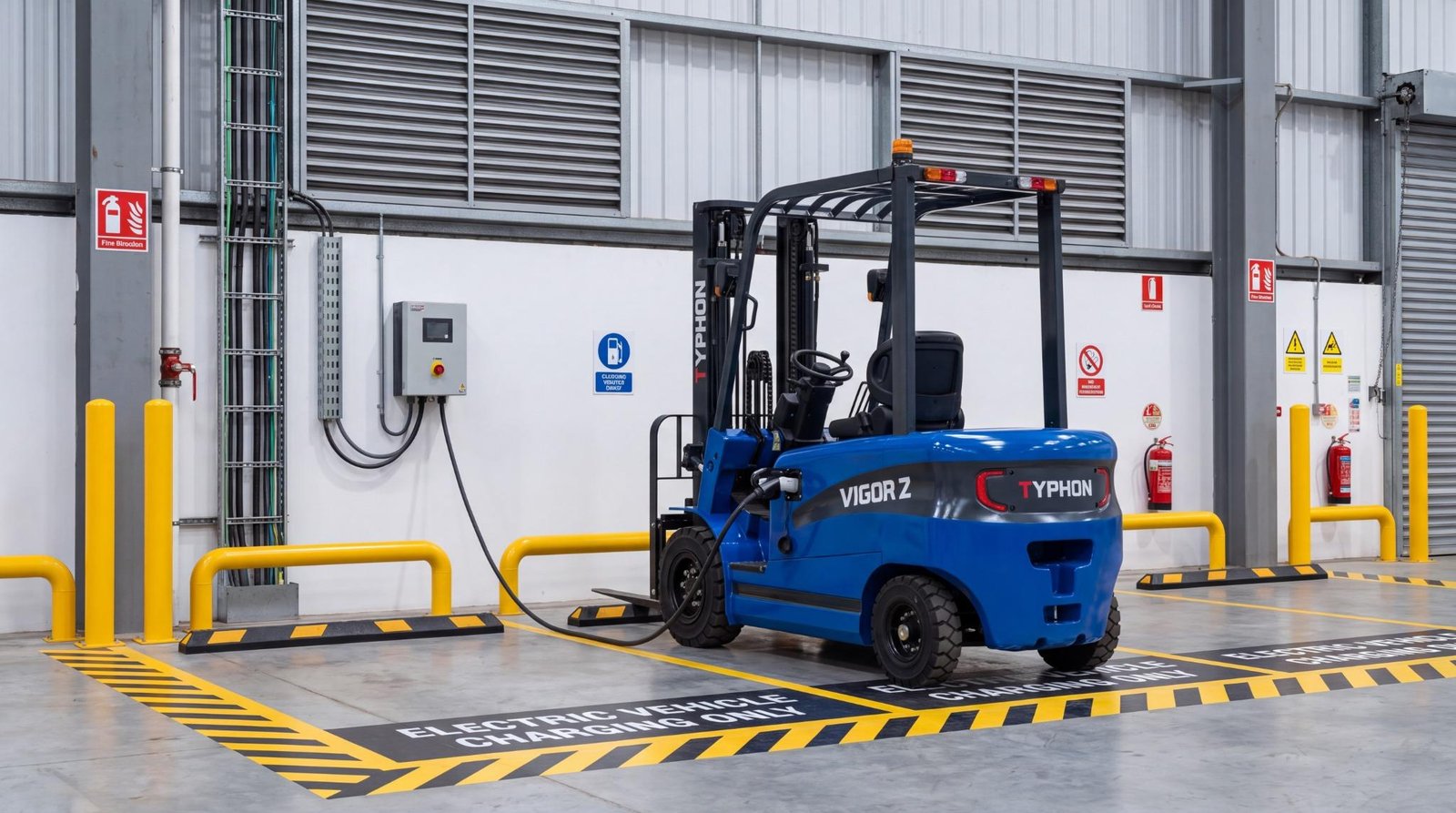
Battery selection should match the shift pattern. Lead-acid batteries require an appropriate charging area, ventilation practices, watering and maintenance procedures, and time for charging and cooling. Lithium-ion systems can support opportunity charging and reduced routine battery maintenance, but the charger, battery management system, temperature limits, and facility electrical supply must match. Evaluate peak shift demand, breaks, multi-shift operation, charger availability, and the consequences of a truck running out of energy during receiving or shipping peaks.
Estimate energy demand across the whole shift: travel, lifting, attachment use, idle time, peak periods, breaks, and end-of-shift charging. Compare usable battery capacity and the charging plan rather than relying on an advertised runtime. A truck that fits the load and aisle but cannot cover the required duty cycle is not a complete match.
Battery Health and Replacement Planning
For a new battery, compare the written warranty, expected service conditions, temperature limits, charger requirements, and the process for diagnosing a capacity problem. For a used truck, request battery age, chemistry, rated capacity, available service or cycle data, fault history, and a qualified capacity assessment when possible. Dashboard hours alone do not show remaining battery health.
Plan for declining capacity and eventual replacement in the ownership budget. Confirm the cost and availability of a compatible replacement, the support available for the battery-management system, and how the operation will continue while a battery or charger is out of service. Lead-acid and lithium-ion systems have different inspection, charging, storage, and emergency procedures, so follow the documentation for the installed system.
Attachments and Compatibility
Forklift attachments can improve handling but also change capacity, visibility, weight, and load-center position. Choose the attachment before finalizing the truck rating.
- side shifter
- fork positioner
- paper roll clamp
- carton clamp
- rotator
- push-pull attachment
- approved fork extensions
- specialized forks
Verify carriage class, mounting interface, hydraulic functions, electrical controls, attachment weight, visibility, and the change in load center and residual capacity. Obtain the manufacturer’s written approval where required and make sure the truck’s capacity plate reflects the installed configuration. Operators also need training on the attachment’s effect on handling and capacity.
Match the Machine to the Worksite
Indoor warehouses may require non-marking tires, low noise, tight turning, high free lift, and a mast that clears doorways or sprinklers. Loading docks introduce edges, dock plates, trailers, and changing floor heights. Outdoor yards add rain, grade, surface joints, debris, and longer travel. Confirm that the electric truck is approved and equipped for every area in which it will operate, rather than assuming an indoor model can handle occasional outdoor work without consequences.
Walk the full operating route with the real load dimensions in mind. Check floor loading, dock plates, trailer floors, ramps approved for travel, thresholds, rack end protection, blind intersections, pedestrian crossings, doors, and charging access. Plan how a disabled truck can be recovered without blocking an aisle, dock, or emergency route.
Operator Experience, Controls, and Comfort
The best electric forklift is one that trained operators can control smoothly and consistently. Evaluate fork-tip and load visibility, entry and exit, control effort, display clarity, steering response, braking, seat and armrest adjustment, vibration, noise, and the ease of checking surroundings. Fatigue can reduce precision during repeated pallet cycles, so ergonomics and predictable controls have operational value.
Test the truck with the intended attachment and a representative load in the actual or a measured-equivalent aisle. Include right-angle stacking, placement at the highest rack position, reversing, braking, dock or approved ramp travel, and repeated cycles. A short drive with an empty truck will not reveal the visibility, clearance, response, or energy use that matters during a shift.
Ownership Cost and Long-Term Value
Electric forklifts avoid engine oil and exhaust-system service, yet ownership still includes batteries, chargers, drive tires, load wheels, mast chains, forks, hydraulic components, brakes, contactors, cooling fans, and electronic diagnostics. Battery replacement can be a major lifecycle expense. Compare energy use, charging losses, facility demand, maintenance agreements, and the value of cleaner indoor operation and lower noise.
Estimate ownership cost over a realistic period. Include the truck, battery, charger, electrical installation, energy, scheduled maintenance, tires and wear parts, attachment service, battery testing or watering where applicable, planned battery replacement, service agreements, and expected downtime. Compare proposals on cost per productive hour rather than truck price alone.
Serviceability and Parts Support
Confirm local capability to service the specific battery chemistry, drive system, controller, mast, and charger. Inspect access to the battery compartment, connectors, fuses, controller diagnostics, hydraulics, mast chains and rollers, carriage, forks, tires, and brakes. Ask which diagnostic software and components are available locally, who can service the battery-management system, and what records are required for warranty coverage. Qualified personnel should review the charger and facility electrical installation.
Safety and Training Considerations
Forklifts have different steering, stability, braking, and load-handling behavior than automobiles. Operators must be trained and evaluated for the truck and workplace. Loads should remain stable and within the data-plate capacity, forks should be positioned correctly, travel routes should separate pedestrians where possible, and dock conditions should be controlled. Seat belts or operator-restraint systems must be used as designed. Never lift people on forks or an improvised platform.
Use the operator’s manual and workplace program as the controlling sources for machine-specific procedures. Evaluate pedestrian traffic, blind intersections, racks, dock edges, trailers, approved ramps, overhead clearance, floor conditions, charging hazards, and emergency routes. Keep the overhead guard, restraint system, interlocks, alarms, lights, capacity plate, and warning labels in place and functional. Do not make modifications that affect capacity or safe operation without the required written approval and updated markings.
Pre-Purchase Inspection and Demonstration
1. Confirm the model, serial number, capacity plate, manuals, keys, battery, charger, connectors, forks, and installed attachments.
2. Inspect forks and locking pins, carriage, mast channels, chains and rollers, hoses, cylinders, welds, overhead guard, restraint, tires, wheels, and visible battery components.
3. Power up the truck according to the manual and review fault codes, warning indicators, battery state, leaks, unusual noise, steering, braking, horn, lights, alarms, and control response.
4. Operate every function through a normal range in a clear area with a qualified operator, then test with a representative load.
5. Verify attachment functions, fork and load visibility, residual capacity, right-angle stacking clearance, and stability.
6. Review battery and charger documentation, delivery, warranty, service contacts, parts ordering, training, and the procedure for reporting shipping damage.
For used equipment, request truck and battery service history, operating hours, available battery health or cycle data, charger information, and fault records. Look for fork damage or excessive wear, mast or chain wear, uneven tires, hydraulic leaks, damaged connectors, battery corrosion, structural repairs, and improvised wiring. Use qualified technicians to assess the truck and battery when their condition cannot be confirmed.
Common Buying Mistakes
- Selecting capacity without checking load center and lift height.
- Ignoring lowered mast height and overhead obstructions.
- Underestimating aisle width with the real pallet and load.
- Buying a battery or charger that cannot support the shift schedule.
- Adding an attachment without an updated capacity evaluation and data plate.
- Failing to plan pedestrian routes, dock safety, and operator training.
Do not treat the truck as an isolated purchase. Plan the charger and facility electrical work, charging or battery-handling area, ventilation and watering where required, pedestrian controls, dock and trailer procedures, rack protection, recovery plan, operator training, personal protective equipment for battery tasks, and local service support before the truck enters operation.
A Practical Decision Process
1. Document maximum load weight, dimensions, load center, lift height, and cycles per shift.
2. Measure aisles, rack openings, doors, overhead clearances, docks, trailers, approved ramps, and the charging location.
3. Select the truck and mast configuration that provides documented residual capacity while fitting the route.
4. Choose the battery, charger, tires, forks, and attachments as part of the same configuration.
5. Compare ergonomics, serviceability, parts support, energy use, battery replacement, and downtime—not price alone.
6. Run a realistic demonstration with the intended load, aisle, lift height, and repeated work cycle.
7. Document the final truck, capacity plate, attachment, battery, charger, training, delivery, and maintenance package.
Frequently Asked Questions
How large should my electric forklift be? Choose a truck with documented residual capacity for the heaviest load at its actual load center, attachment, and maximum lift height. It must also fit the right-angle stacking aisle, mast and overhead clearances, approved routes, and required duty cycle without unnecessary bulk.
Should I buy a new or used electric forklift? A new truck and battery can provide clearer capacity documentation, warranty coverage, and predictable battery condition. A used package may reduce initial cost, but price the truck, battery, and charger separately and verify battery capacity, fault history, configuration, data plate, and charger compatibility before comparing value.
Which attachment should I buy first? Start with the attachment required by the loads handled most often. Confirm its mounting and hydraulic requirements, effect on visibility and load center, manufacturer approval, residual capacity, and capacity-plate update before use.
How do I compare two trucks with similar ratings? Run the same load through the same aisle, lift height, dock or approved ramp, and repeated shift cycle. Compare residual capacity, mast clearance, visibility, steering and braking, measured energy use, battery and charger terms, diagnostics, service response, and total ownership cost.
What information should I provide when requesting a quote? Share the load weight, dimensions and load center; maximum lift height; aisle width; lowered mast and overhead clearances; shift length; trips per hour; battery and charger requirements; facility voltage; floor, dock and approved ramp conditions; tires; and attachments.
Build the Complete Forklift Package
A well-chosen electric forklift has documented capacity for the real load, fits the complete route, covers the duty cycle, and has a compatible battery, charger, attachment, training, and service plan. Compare the configured system and its lifetime operating cost—not an isolated capacity number or truck price.
Safety Resources
Equipment Guidance
Need help choosing equipment for your next job?
Contact KONSTRUCTZ support and get practical guidance before comparing machines, attachments, or jobsite requirements.Contact SupportReader Comments
Join the equipment discussion
Related Posts
No published comments yet.