


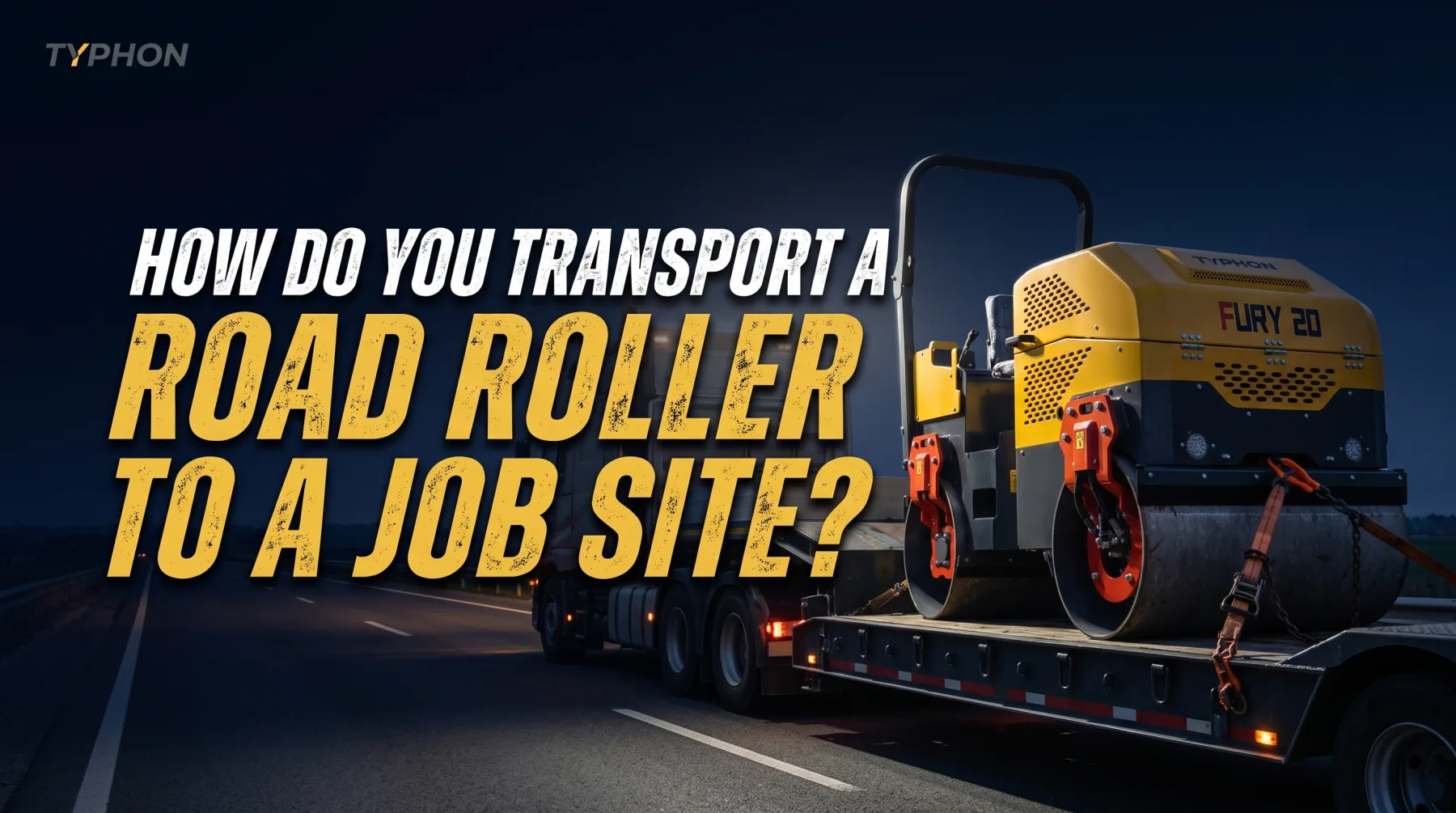
Late on a Thursday, a paving contractor books a driveway job two counties over and figures the haul will handle itself. Borrowing a friend's utility trailer, he runs the ride-on roller up a pair of thin ramps and tosses two ratchet straps across the drum before pulling onto the interstate. Barely eight miles in, the machine creeps sideways on a long curve, the trailer starts to sway, and he fights the wheel onto the shoulder with his pulse hammering. Nothing tipped that day, but the margin was frighteningly thin. That close call is precisely why moving a road roller deserves far more planning than most crews give it.
Hauling a heavy vibratory machine safely rests on four pillars: pairing the right gear to the load, loading with patience, restraining the roller properly, and staying inside the law on every mile. This guide covers the trailer and tow vehicle you'll need, a safe loading sequence, the tie-down habits that keep the machine planted, the permit thresholds that catch unprepared haulers, a clean unloading routine, and whether owning your transport equipment beats renting it. Read on before the roller ever leaves your yard.
Picking Gear That Matches the Machine
Weight drives every decision, so pull your machine's operating figure before you touch anything else. A compact roller may weigh a couple thousand pounds, while a full-size double drum runs several times heavier, and that number shapes the trailer, the truck, and the whole plan around it. Read the operating weight off the data plate or spec sheet, then add fuel and any attachments so you're working from a real loaded figure rather than a hopeful guess.
Trailers have to carry that load with margin to spare. Line up the trailer's gross vehicle weight rating against the roller's weight plus a comfortable buffer, and never load right to the edge of the rating. Deck length carries equal weight in the decision, since the drums need to sit over the axles with room left to strap both ends down. Low-deck flatbeds and equipment trailers make loading a heavy, low-clearance roller far easier than a tall utility trailer ever could.
Tow capability finishes the trio, and skimping here invites trouble on the first grade. Confirm your truck's tow rating clears the combined weight of the loaded trailer and machine, then verify the hitch class, ball size, and brake connections all match. Underpowering the tow vehicle brings on swaying, weak braking, and an overheating transmission when the road climbs. Get all three pieces cooperating, and the trip stays controlled from the yard gate to the site entrance.
Driving the Roller Onto the Trailer Without Incident
Groundwork prevents most loading mishaps, so set the stage before the machine moves an inch. Park the trailer on firm, level pavement or packed dirt, chock the trailer wheels so it can't drift, and inspect your ramps closely. Ramps must carry a rating for the machine's weight and sit square against the deck, since a ramp that buckles or shifts under a heavy drum turns a routine load into a rollover in seconds.
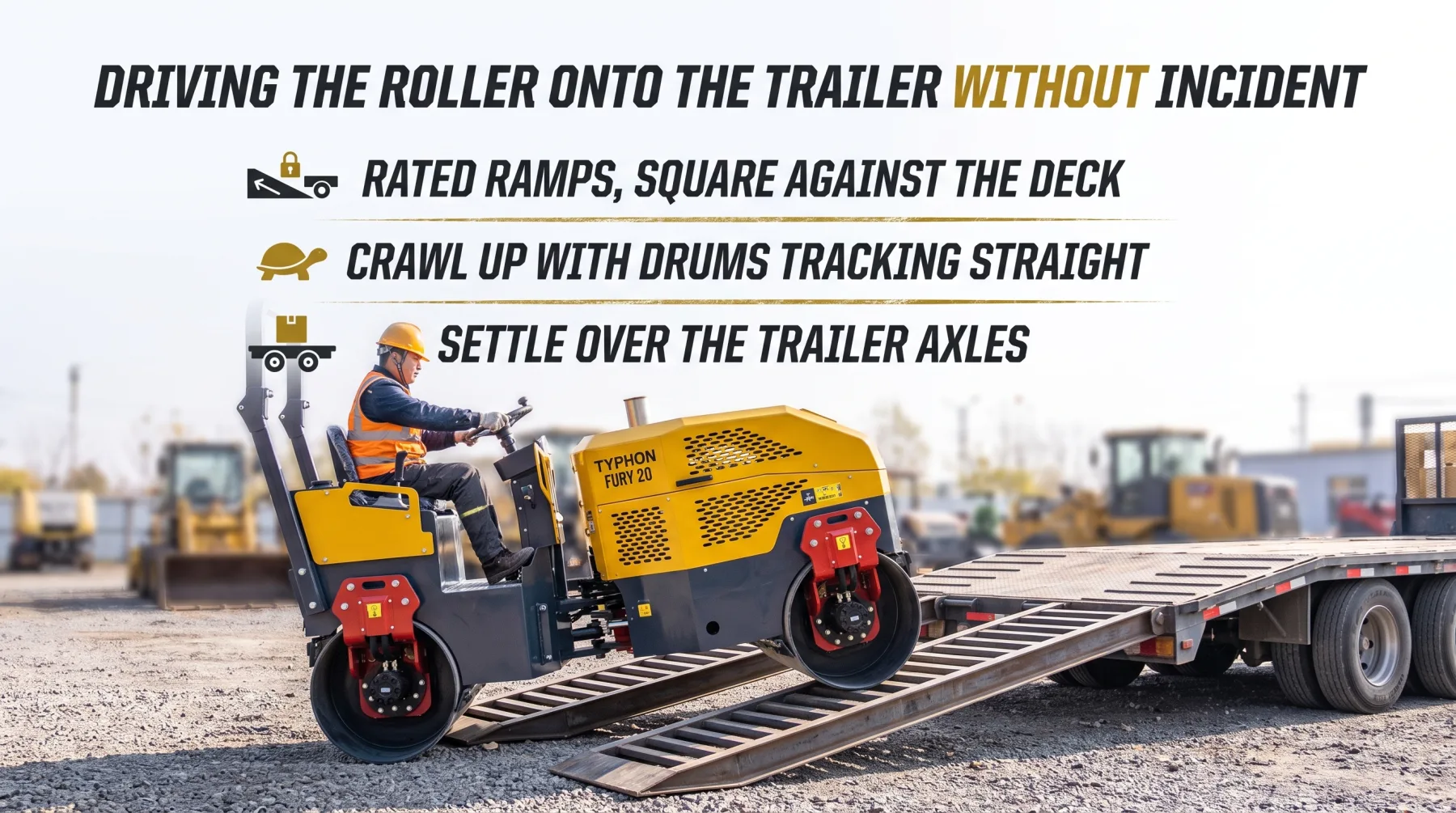
Deliberate, low-speed movement sits at the heart of a safe load. Center the roller dead ahead of the trailer, then crawl up the ramps with the drums tracking perfectly straight and your hands steady on the controls. Because a roller carries its mass high and centered over the drums, an off-center approach or a sudden lurch can upset the balance in a heartbeat. Settle the machine over the axles rather than at the nose or tail of the deck, which holds the tongue weight in a safe range and keeps the trailer towing true.
Rushing the load to shave a few minutes ranks among the costliest habits on any site. Gunning the roller up the ramps, angling the approach, or skipping the wheel chocks are the exact shortcuts that flip machines and hurt operators. Heavy vibratory rollers give almost no warning before they tip, so treat every load with equal care whether it's your first haul of the day or your last. Once the machine sits centered and level, kill the engine, set whatever brake the roller carries, and lower the drums before climbing down to strap it.
Locking the Load Down Correctly
A loaded roller is only as secure as the chains restraining it, so choose gear built for the job. Reach for rated tie-down chains or heavy-duty straps, not the light ratchet straps meant for lawn gear and furniture, since a shifting roller generates forces those lighter straps simply can't hold. Federal cargo rules generally call for at least four tie-downs on heavy equipment, with the combined working load limit of your restraints reaching no less than half the machine's weight, so read the ratings stamped on your gear before trusting it.
Anchor points decide whether the setup holds or fails. Hook your chains to the roller's designated tie-down points, the reinforced loops the manufacturer built for exactly this purpose, and never to hydraulic lines, control levers, or anything that could bend or snap under strain. Route the chains to the trailer's frame-mounted D-rings at opposing angles so the machine can't creep forward, backward, or sideways. Pulling from four corners at crossing angles pins the roller in place far better than four straps all running the same direction.
Use this quick pre-haul securing checklist before you pull out:
- Verify the machine sits centered over the axles with the engine shut off.
- Connect rated chains or straps to the roller's designated tie-down points only.
- Run restraints to opposing corners so the load can't shift in any direction.
- Tension each chain or strap firmly, checking that none are twisted or frayed.
- Recheck every connection after the first few miles, since loads settle in transit.
Retensioning matters far more than most crews expect. Chains and straps loosen as the trailer flexes and the machine beds into the deck, so pull over inside the first ten or fifteen miles and recheck every point. A restraint that felt drum-tight in the yard can go slack on the highway, and catching that slack early beats discovering it after the load has already moved.
Staying Legal on Weight and Width
Regulations govern every haul, and learning them ahead of time spares you fines and roadside shutdowns. Most compact and mid-size rollers on a properly matched trailer stay under the thresholds that trigger special permits, yet heavier machines and wide double drums can push you into oversize or overweight territory quickly. Two figures carry the most weight here, total loaded weight and overall width, so measure both before you plan a single route.
Width tends to catch haulers off guard. Wide drums can shove your loaded trailer past the standard legal width, often near 8.5 feet in many regions, which flags the trip as an oversize load and calls for permits, marker flags, or even an escort on certain roads. Weight follows the same logic, since the combined figure of truck, trailer, and machine has to stay within your license class and the axle limits along your route. Crossing county or state lines can shift the rules mid-drive, so confirm the regulations for every jurisdiction you'll pass through rather than assuming one permit covers the whole trip.
Paperwork and licensing deserve their own check before departure. Confirm your driver's license class covers the loaded combination you're towing, keep any required permits in the cab, and verify your trailer's lights, brakes, and safety chains meet the standards for the weight you're moving. One quick call to your state's transport authority clears up the gray areas long before they turn into expensive roadside lessons.
Backing the Roller Off Safely
Site conditions shape a safe unload every bit as much as they shape the load, so scout the drop point before you back in. Look for firm, level ground clear of traffic, soft shoulders, overhead lines, and drop-offs. Rolling a heavy machine onto soft or sloped ground invites the same tip-over risk a bad load creates, so spend the extra minute finding stable footing even if it means repositioning the whole trailer.
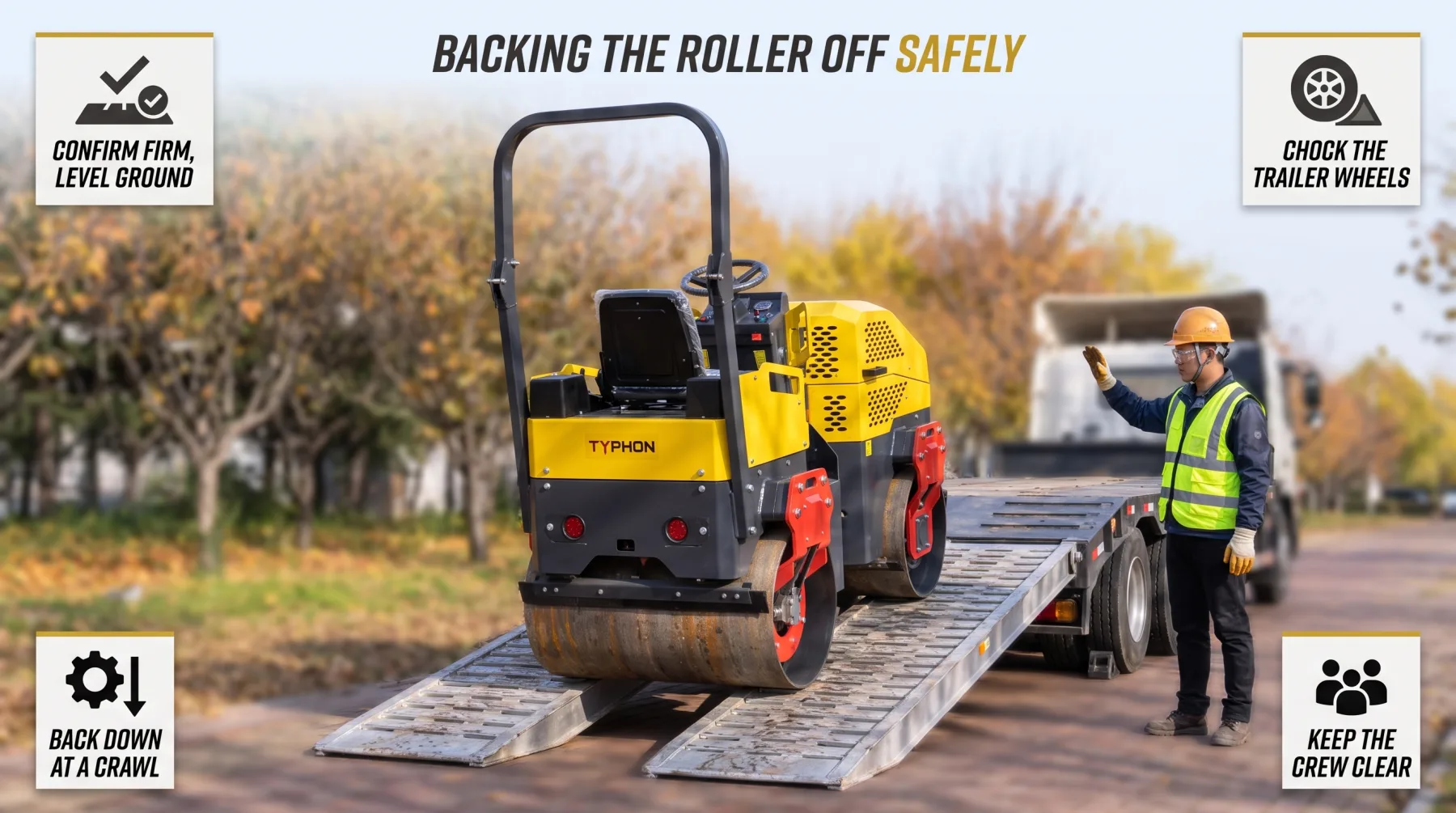
Reversing the process demands the same patience you showed on the way up. Chock the trailer wheels, set your rated ramps square and firm, and release the tie-downs only after the trailer is secured and the ground is confirmed solid. Start the roller, ease it backward down the ramps at a crawl with the drums tracking straight, and keep the ground crew well clear of the machine's path and any pinch points. A roller drifting off-center or moving too fast can jackknife against the ramps or slide off the edge before the operator reacts.
Clear communication keeps everyone safe through the unload. Post a spotter when sightlines tighten, make eye contact before the machine moves, and never allow anyone to stand below or behind the roller as it descends. Once every drum reaches solid ground and the machine sits clear of the trailer, park it, set the brake, and lower the drums before you break down the ramps and stow the chains. A careful unload sends the crew into the workday without a scare and leaves the machine ready to compact.
Weighing Ownership Against Renting Your Transport Setup
Cost is the first question every contractor raises, and the truck-and-trailer decision hinges on how often you actually haul. Buying a proper equipment trailer and a capable tow vehicle carries a real upfront price, plus registration, insurance, and upkeep that follow season after season. That investment only earns back if the roller moves regularly, so tally your honest haul frequency before committing to owning the gear outright.
Frequent movers usually finish ahead by owning their setup. When your crew shuttles the roller between jobs several times a week, hauling on your own schedule with your own equipment beats paying rental fees or waiting for a transport company to squeeze you in. Ownership also means the right trailer stands ready at all times, sized correctly for your machine and fitted with the tie-down points and ramps you already trust. Those savings and that reliability compound across a busy stretch of the calendar.
Occasional haulers often come out better renting. If the roller relocates only a handful of times a year, renting a trailer for those windows, or hiring a hauling company for the heaviest loads, sidesteps ownership costs that would otherwise sit idle in the yard. Measuring your real haul frequency against the price of owning keeps the spend lean either way. Whichever path suits your operation, following safe transport practices and keeping your trailer, straps, and tow vehicle well maintained protects both your investment and everyone sharing the road.
Conclusion
Moving a road roller to the job site rests on a dependable process from the yard gate to the drop point. Begin by matching the trailer's weight rating and your truck's tow capacity to the machine's loaded figure, then load it slow and centered over the axles with rated ramps and chocked wheels. Restrain the roller with rated chains at four opposing corners, recheck the tension after the first few miles, and confirm your width and weight stay inside the permit thresholds for every route. Unload on firm, level ground with the patience you used loading, keeping the crew clear of the machine's path. Choose between owning and renting your gear based on how often you truly haul. Measure your machine, match your equipment, and never let a deadline talk you into skipping a step. When you're ready to put a dependable road roller to work, reach out to a trusted equipment specialist who can pair a reliable machine with the results your projects depend on.
Frequently Asked Questions
What size trailer do I need to transport a road roller?
Match the trailer's gross vehicle weight rating to the roller's operating weight plus a margin, and pick a deck long enough for the drums to sit over the axles with room to strap both ends. A low-deck flatbed or equipment trailer makes loading a heavy, low-clearance machine far easier and safer.
Do I need a permit to haul a road roller?
Often not for compact machines, but heavier rollers and wide double drums can push your loaded trailer past legal weight or width limits, which triggers oversize or overweight permits. Measure your total loaded weight and overall width, then confirm the rules for every jurisdiction on your route before driving.
How do I keep a road roller from shifting during transport?
Use rated tie-down chains or heavy-duty straps connected to the roller's designated tie-down points, never to hydraulic lines or controls. Run at least four restraints to opposing corners so the machine can't move in any direction, tension each one firmly, and recheck them all within the first ten to fifteen miles.
Equipment Guidance
Need help choosing equipment for your next job?
Contact KONSTRUCTZ support and get practical guidance before comparing machines, attachments, or jobsite requirements.Contact SupportReader Comments
No published comments yet.