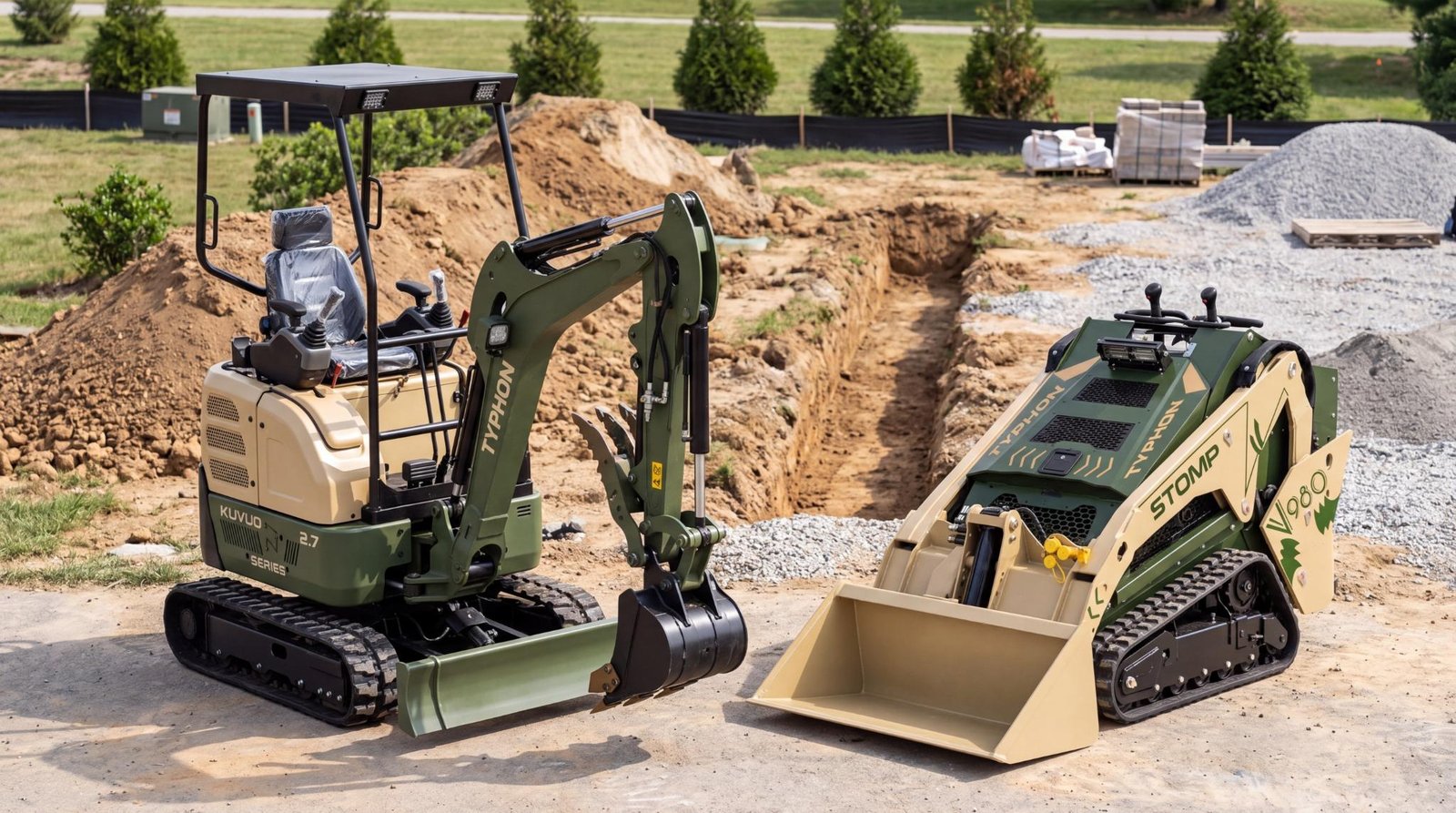
Mini excavators, skid steers, and compact track loaders are among the most useful compact machines on construction, landscaping, utility, farm, and property-improvement projects. They often appear on the same jobs because they solve different parts of the workflow. A mini excavator reaches below grade, places material precisely, and works around obstacles with a rotating upper structure. A skid steer or compact track loader carries, pushes, grades, loads, and powers a broad range of front-mounted attachments. The better machine depends less on which one is stronger and more on what percentage of the project involves excavation, material movement, finishing, and attachment work.
This comparison helps buyers decide which machine should come first. It also explains when renting the second machine, purchasing both, or pairing one carrier with several attachments can create a more efficient equipment plan.
The Basic Difference
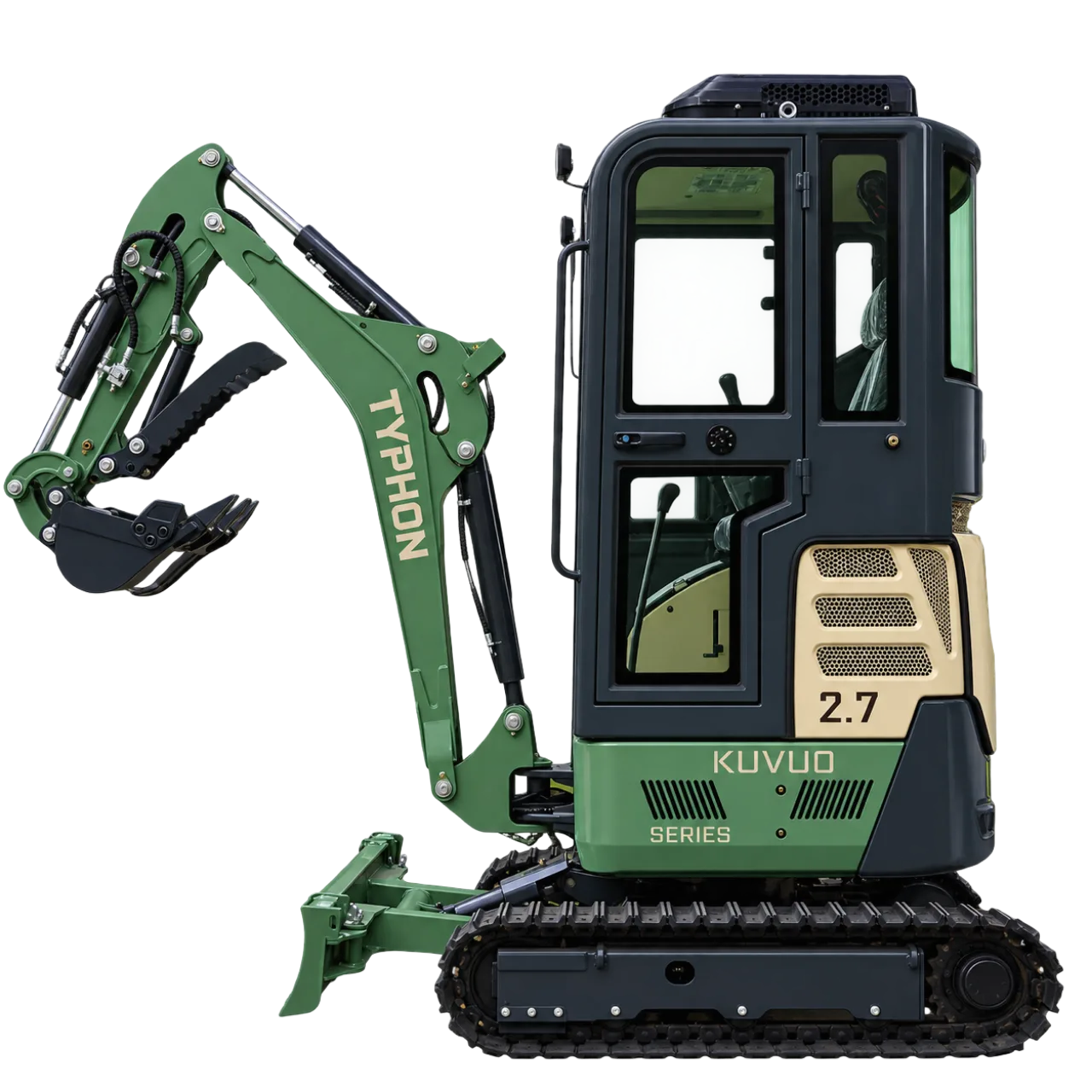
A mini excavator is organized around a boom, arm, bucket, and rotating house. It can dig beside the machine, reach over obstacles, swing spoil to either side, and work at different depths without repeatedly repositioning the undercarriage. A dozer blade supports light backfilling, stabilization, and grading, but the excavator is primarily a digging and placement machine.
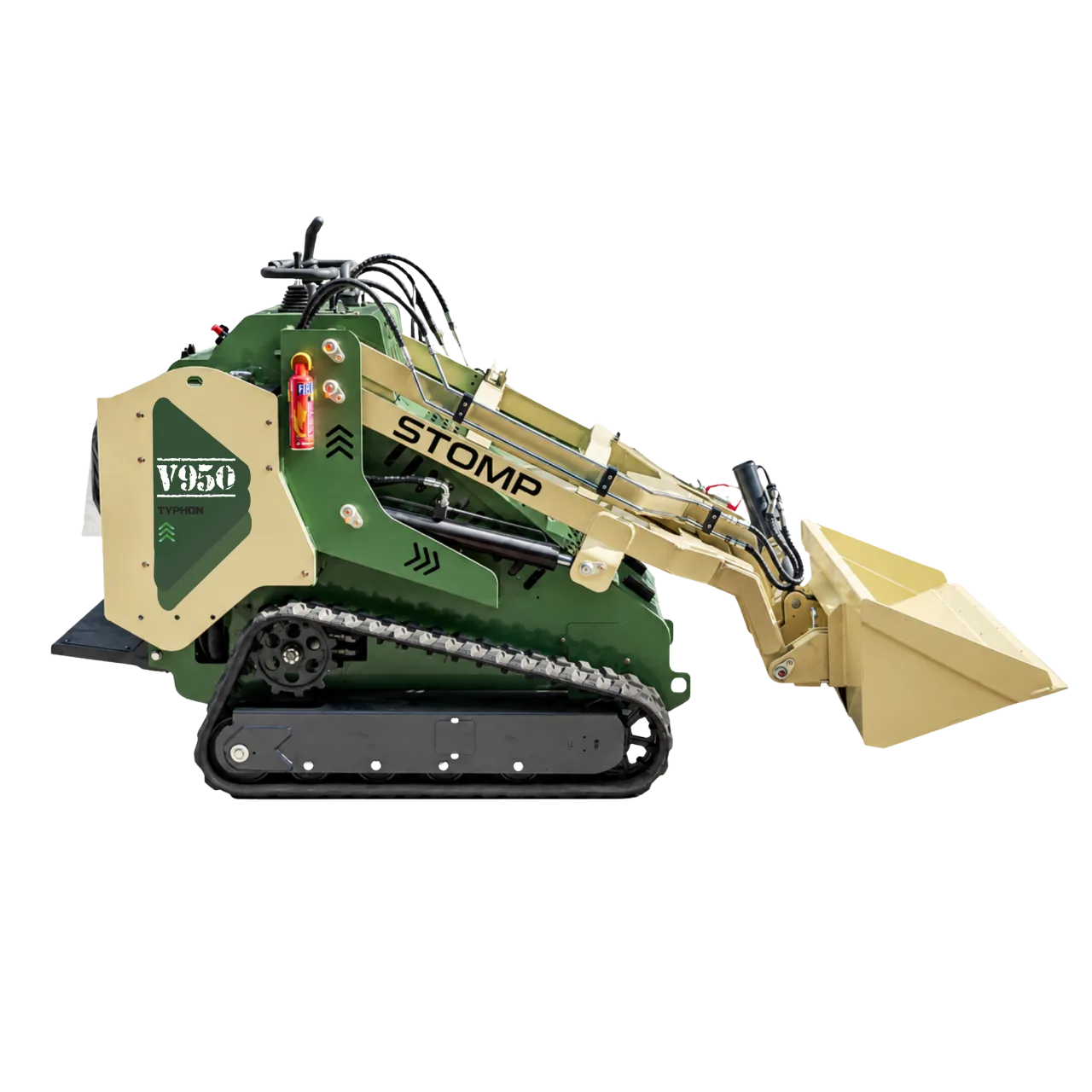
A skid steer or compact track loader is organized around a rigid chassis, lift arms, and a quick-coupler at the front. Wheeled skid steers can turn tightly and work efficiently on firm surfaces; compact track loaders use a tracked undercarriage that can improve flotation and traction on soft ground. Both carry material over short distances, push into piles, load trucks or containers, and operate tools such as buckets, forks, augers, trenchers, breakers, sweepers, brush cutters, and snow equipment. They normally reposition more often during digging than an excavator but can complete a broader variety of surface tasks.
Digging and Trenching Performance
For foundations, drainage, utility lines, planting, stump work, and work below grade, the mini excavator is generally the more natural choice. The boom and arm allow the operator to control depth, reach, and bucket angle while the house rotates to place spoil. Offset boom or swing features can help the machine dig close to walls or fences. The excavator can remain in one position while loading spoil to the side, which reduces ground disturbance in confined areas.
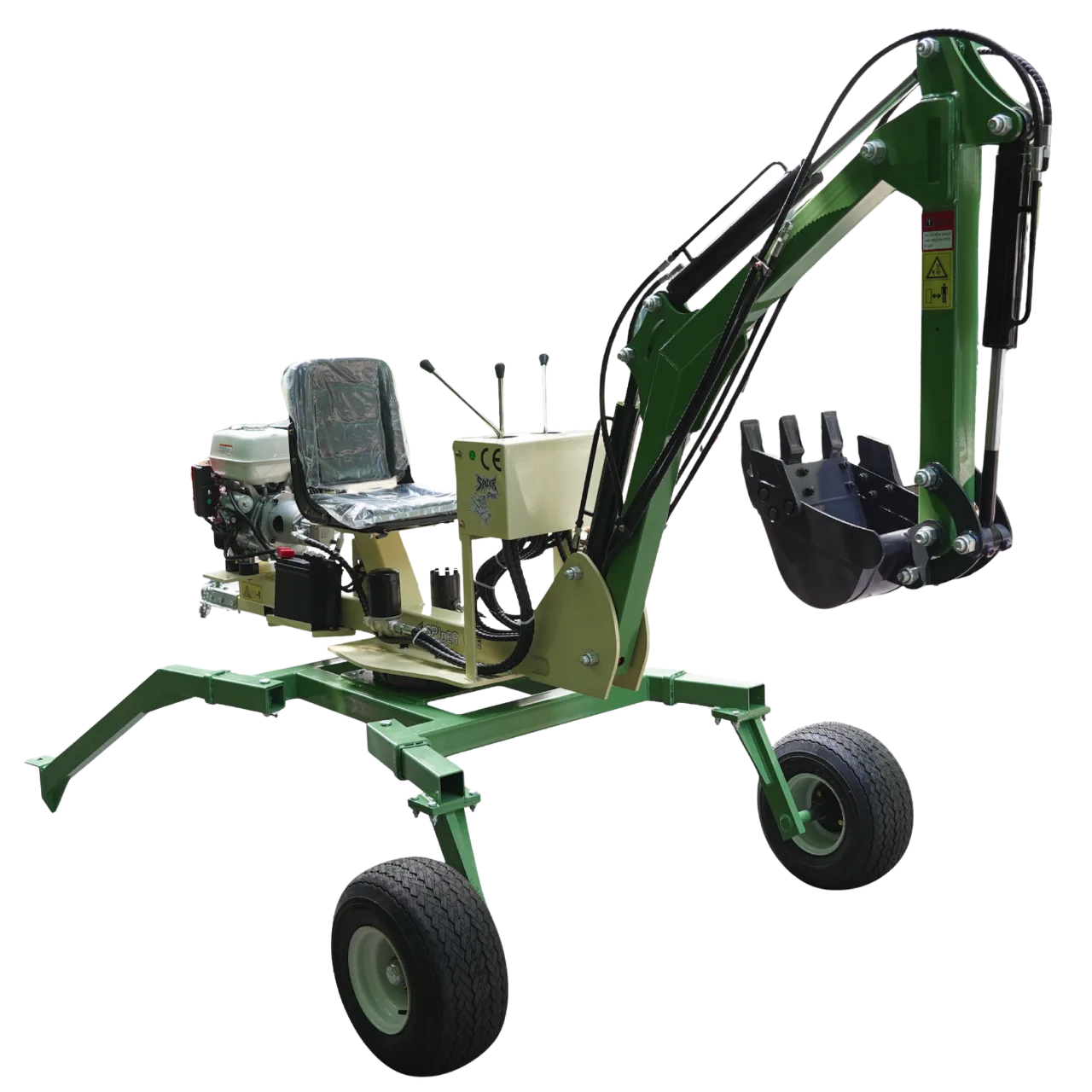
A skid steer or compact track loader can dig with a bucket and operate a trencher or backhoe-style attachment. This can be effective for shallow excavation, straight utility runs, soil removal, and sites where one carrier must handle several tasks. However, a compact-loader bucket approaches the ground from the front and the machine must travel into and away from the cut. For deep, precise, irregular, or obstacle-filled excavation, a dedicated mini excavator usually provides better control.
Loading, Carrying, and Cleanup
The compact loader has a clear advantage when the job involves repeated loading and carrying. Its bucket remains in front of the machine, travel cycles are quick, and the loader can push into loose material, carry it across a site, dump into trucks, spread it, and return for another load. Vertical-lift models can provide useful reach near full lift height, while radial-lift machines often feel strong in digging and mid-height work.
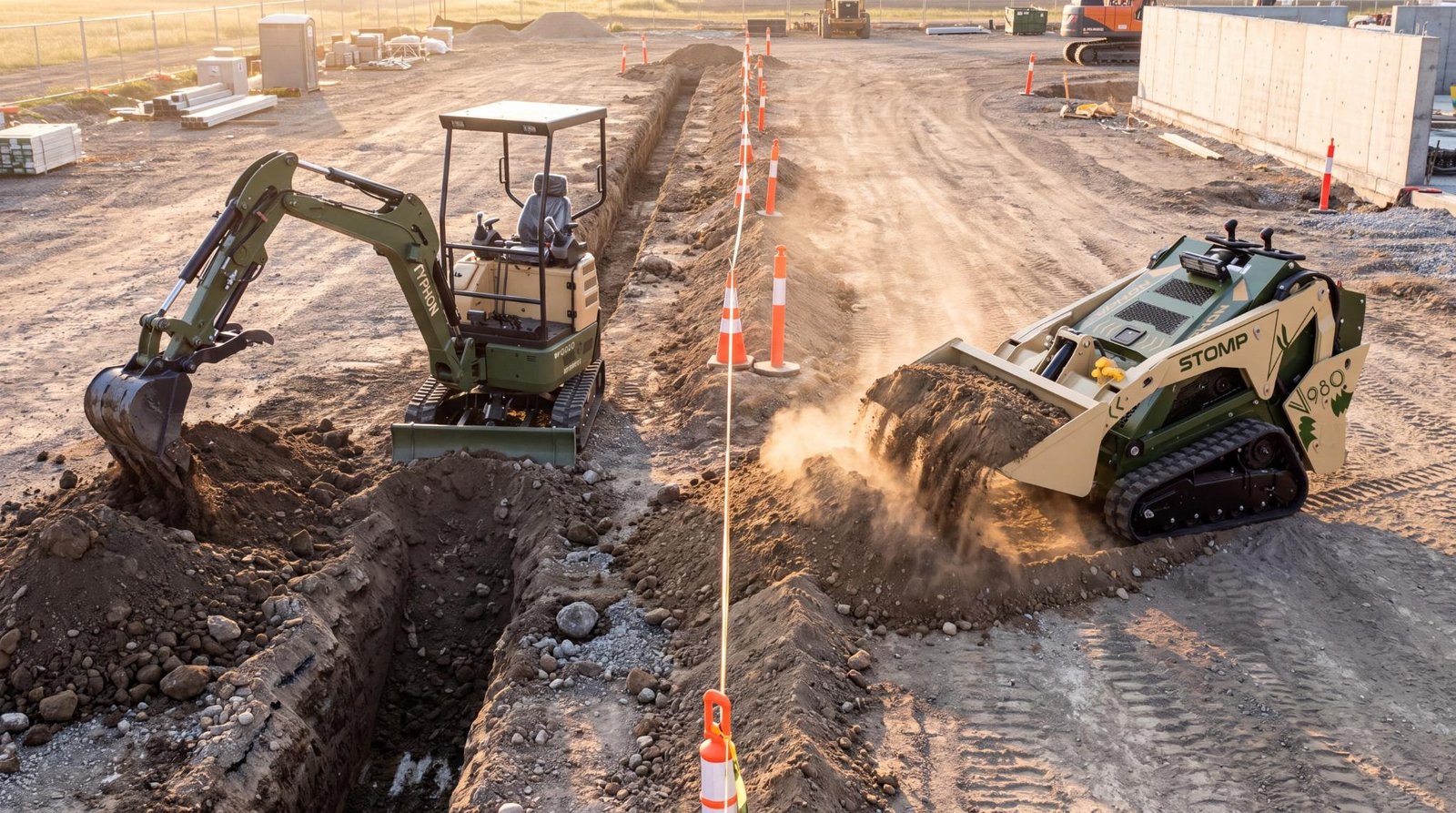
A mini excavator can load trucks and move material within its swing radius, but it is not designed to carry a full bucket over distance. Repeatedly tracking back and forth is slower and adds undercarriage wear. On an excavation project, the excavator may create the spoil pile while a compact loader or dumper transports it. This division of labor keeps both machines working in their strongest roles.
Grading and Surface Finish
Skid steers and compact track loaders are widely used for rough grading, spreading aggregate, backdragging soil, preparing driveways, and cleaning finished areas. A bucket, land plane, grading attachment, or power rake can produce a consistent surface when the operator understands material behavior and works in controlled passes. The machine’s ability to carry material also helps correct low spots efficiently.
Mini excavators can shape slopes, pull material, compact lightly with the bucket, and finish around structures. A grading bucket or tilt bucket improves versatility. Yet final flatwork across a broad area usually requires more repositioning than a compact loader. The excavator excels where the grade has complex contours, narrow access, drainage transitions, or edges that require precise bucket control.
Attachments and Versatility
Both machines can use attachments, but the attachment ecosystems emphasize different work. Mini excavator tools commonly include digging and grading buckets, hydraulic thumbs, grapples, augers, breakers, rippers, compactors, tilt buckets, and specialized vegetation tools. These tools benefit from the excavator’s reach and rotation.
Compact-loader attachments include buckets, forks, grapples, trenchers, augers, sweepers, brush cutters, mulchers, snow tools, breakers, planers, mixers, land planes, and many other front-mounted implements. Hydraulic flow, pressure, electrical controls, coupler type, attachment weight, and machine stability must be checked for either loader undercarriage. A long attachment list has value only when the tools match the machine and the buyer’s actual jobs.
Access and Maneuverability
Mini excavators are available in very narrow classes and can work with the house rotating inside or close to the track width. Zero-tail-swing or reduced-tail-swing designs are useful near walls and traffic, although operators must still watch the boom, counterweight, blade, and attachment. Rubber tracks distribute weight and can cross soft ground, but tight turns may damage turf.
Skid steers and compact track loaders turn within a small area, but the front attachment and turning action need clearance. Wheeled machines work efficiently on firm ground, while tracked loaders can improve traction and flotation on softer surfaces. Either undercarriage can mark sensitive finished surfaces during repeated skid turns. Measure gates and passages with the actual attachment installed; the carrier width alone does not tell the full story.
Stability, Slopes, and Ground Conditions
Each machine has a different stability profile. Mini excavators work best when the undercarriage is positioned correctly, the blade is used according to the manual, the load remains close, and the operator accounts for slope, swing direction, reach, and attachment weight. Excavating near an unsupported edge requires careful planning because soil can collapse beneath the tracks.
Skid steers and compact track loaders should travel with loads low, avoid sharp turns with raised loads, and operate within the manufacturer’s ratings. Slopes, side loads, uneven ground, and compact attachments change stability. A tracked undercarriage may provide better traction in some conditions, but traction does not remove rollover risk. For each machine, the operator’s manual and site-specific training control the safe operating method.
Transport and Storage
Compare operating weight, attachment weight, trailer capacity, axle ratings, tow-vehicle limits, tie-down points, legal width, and loading angle. A machine that fits the job may still require a transport upgrade. Mini excavators often travel with a bucket attached and additional tools secured separately. Compact-loader owners may need space for several bulky attachments, which can make logistics more complex than moving the carrier alone.
Storage should protect the machine and tools from theft, weather, contamination, and unauthorized use. Plan space for charging equipment, fuel, grease, filters, spare teeth, cutting edges, and attachment stands. Good storage and organization reduce setup time and protect couplers and hydraulic connections.
Operating Cost and Utilization
The correct financial question is not which machine has the lower purchase price. Compare cost per productive hour for the work you expect. A mini excavator can reduce labor and hand digging dramatically on trenching and foundation work. A skid steer or compact track loader can replace separate loading, grading, sweeping, pallet-handling, and snow machines when attachments are used regularly.
Track undercarriage wear, tires, cutting edges, bucket teeth, pins, bushings, hydraulic hoses, filters, fuel or charging cost, transport, insurance, and downtime. Equipment that works only a few days per month may be better rented unless ownership improves scheduling, wins jobs, or creates a new service that can be sold consistently.
Which Machine Fits Common Jobs?
- Utility trenching with varying depth and obstacles: mini excavator first.
- Moving gravel, mulch, soil, or demolition debris across a site: compact loader first.
- Residential foundation or drainage excavation: mini excavator first, with a compact loader or dumper supporting spoil movement.
- Driveway repair and aggregate spreading: compact loader first.
- Tree planting and stump removal: mini excavator often leads; a compact loader supports hauling and cleanup.
- Warehouse or yard pallet movement: compact loader with forks, when approved for the application, or a dedicated forklift.
- Brush cutting and land cleanup: choice depends on terrain, attachment type, reach, and whether material must be carried away.
- Mixed landscaping business: evaluate the percentage of excavation versus material-handling work and the attachments used every week.
When Owning Both Makes Sense
A two-role system becomes valuable when excavation and material movement happen at the same time. The mini excavator opens the trench or removes soil while a skid steer or compact track loader carries spoil, places bedding material, handles pallets, and restores the surface. Neither operator waits for the other machine to change roles. This can shorten project duration and reduce hand labor.
Owning both also improves scheduling for contractors with overlapping crews. However, two machines require more transport, storage, maintenance, training, insurance, and capital. Before purchasing the second machine, compare utilization with rental availability and the cost of delays caused by not having it.
Decision Checklist
1. Write down the five jobs that produce the most revenue or consume the most labor.
2. Estimate the percentage of time spent digging below grade, carrying material, grading, lifting, and using powered attachments.
3. Measure access points, working clearance, ground conditions, and transport limits.
4. List the required depths, dump heights, load weights, and attachment hydraulic needs.
5. Price the complete package, including transport and the first attachments.
6. Test both machine types on a realistic task or review detailed demonstrations.
7. Choose the machine that improves the largest portion of the workflow, then plan how to rent or add the second machine when needed.
Frequently Asked Questions
Can a compact loader replace a mini excavator? A skid steer or compact track loader can handle shallow digging, augering, and trenching with suitable attachments, but it does not provide the same reach, rotation, below-grade control, or trench-side positioning as a dedicated excavator.
Can a mini excavator load trucks? Yes, when reach and dump height match the truck. It is efficient for loading from a stationary spoil pile but is not intended to carry material long distances.
Which machine is easier for a beginner? Neither should be operated without training. Control familiarity varies by person, and the worksite hazards are different. A supervised, machine-specific learning process is more important than choosing based on perceived simplicity.
Which machine causes less lawn damage? It depends on weight, tires or tracks, soil moisture, turning technique, and the number of travel passes. Rubber tracks distribute weight but can tear turf during sharp turns. Plan travel routes and use ground protection where necessary.
Which machine should a landscaping company buy first? A company focused on excavation, drainage, planting, and retaining-wall preparation may benefit most from a mini excavator. A company focused on materials, grading, cleanup, snow, and attachments may use a skid steer or compact track loader more frequently.
Which Machine Should You Choose?
Choose a mini excavator when precision digging, reach, rotation, and work below grade dominate the schedule. Choose a skid steer or compact track loader when loading, carrying, grading, and attachment versatility dominate. For many contractors, the best answer is a planned combination: own the machine that works most often and rent or add the second machine when utilization supports it.
Equipment Guidance
Need help choosing equipment for your next job?
Contact KONSTRUCTZ support and get practical guidance before comparing machines, attachments, or jobsite requirements.Contact SupportReader Comments
Join the equipment discussion
Related Posts
No published comments yet.