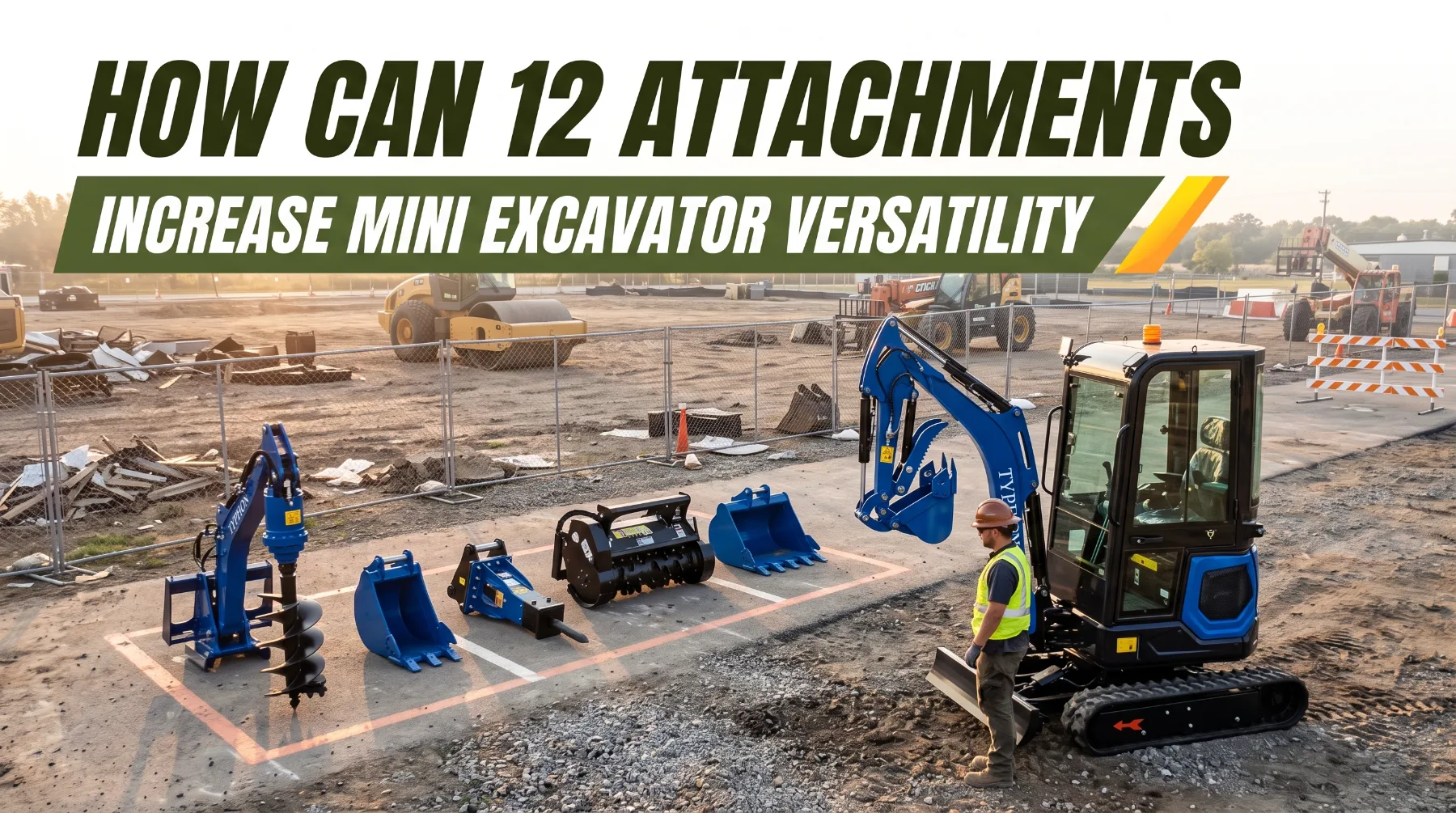
A landscaper drives onto a job with a single mini excavator on the trailer, facing tasks that would normally require several different machines. There is a fence line to auger, an old concrete pad to break up, a trench to dig for irrigation, and a pile of brush to clear. Instead of hauling separate equipment for each task, the operator swaps from a bucket to an auger, then a breaker, then a grapple, completing the work from one machine. That versatility comes from attachments, the tools that expand a mini excavator far beyond basic digging.
A mini excavator becomes far more capable when the right attachment is matched to the job. Its hydraulic system can power tools for digging, grading, breaking, drilling, clearing, and material handling. Here are some important mini excavator attachments commonly used to handle different jobs and expand the machine’s capabilities.
The Standard Digging Bucket
The standard digging bucket is the everyday workhorse for mini excavators, handling general excavation, trenching, soil removal, and spoil loading. Its curved design and toothed edge cut into soil efficiently, while different widths allow it to suit narrow trenches or larger earthmoving tasks. Durable, deep, and versatile, it remains the go-to attachment for most routine digging jobs.
Key takeaway: The standard digging bucket is the all-purpose foundation of a mini excavator's toolkit, handling general excavation, trenching, and loading across the widest range of everyday jobs.
The Grading Bucket
The grading bucket, also called a ditching or clean-up bucket, is built for finishing work rather than digging. Its wide, flat, toothless edge smoothly levels ground, shapes slopes, spreads material, and cleans up trenches. Some models offer hydraulic tilting, allowing operators to form slopes and contours without repositioning the excavator, making them useful for landscaping, drainage, and surface preparation.
Key takeaway: The grading bucket's wide, toothless edge smooths, levels, and shapes surfaces, making it the tool of choice for finishing work after the rough digging is done.
The Auger
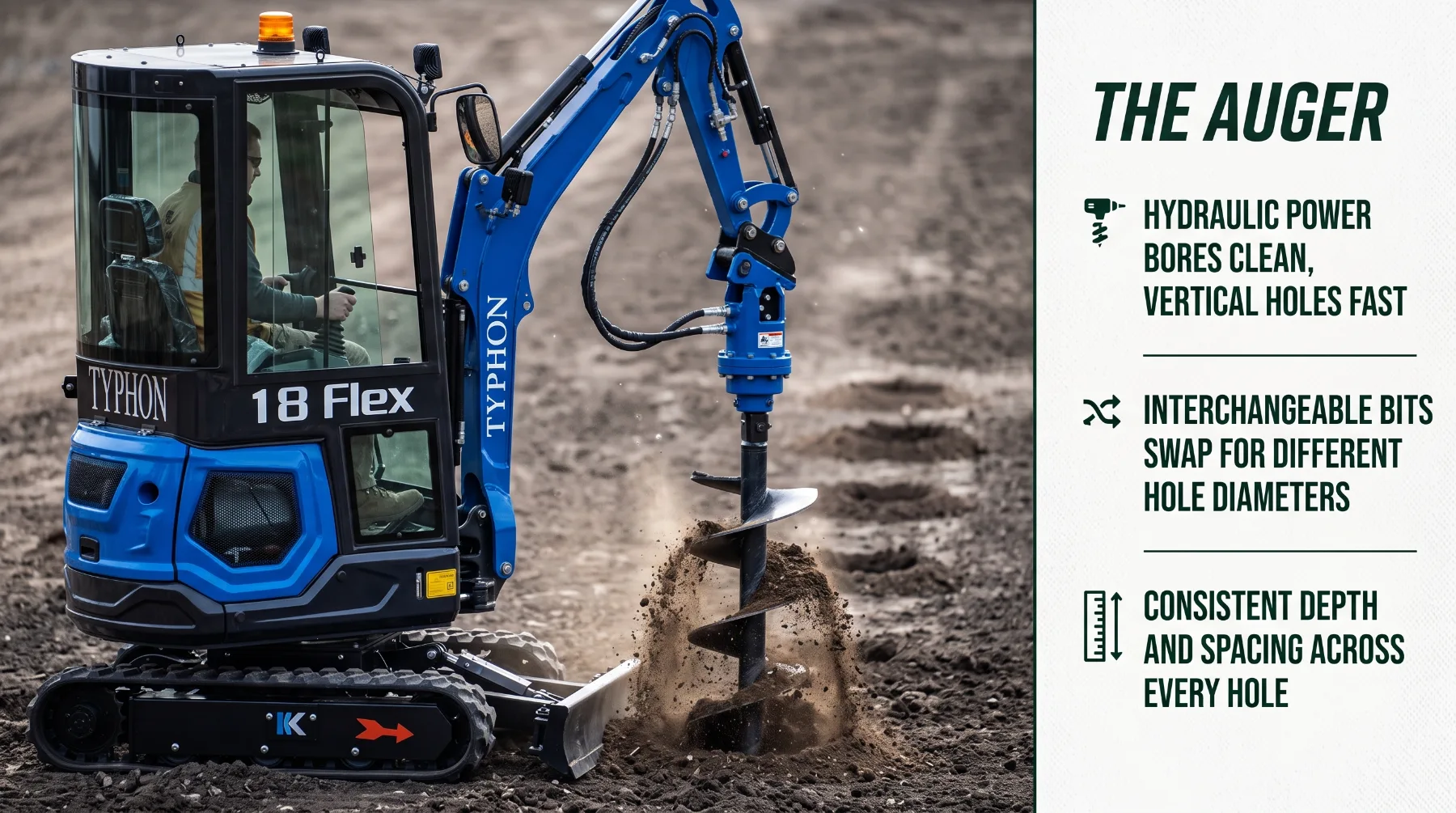
An auger turns a mini excavator into a fast, precise hole-digging machine. Powered by the excavator's hydraulics, this large drill bit spins into the ground to bore clean, vertical holes for fence posts, deck footings, sign poles, and tree planting. What might take an afternoon with a hand tool becomes a matter of minutes, and the holes come out straight and consistent every time.
Augers come with interchangeable bits in different diameters, so the same drive unit can bore a narrow post hole or a wide footing simply by swapping the bit. Depth and width stay uniform across a whole run of holes, which matters when a fence or foundation depends on even spacing and consistent footing. For any job that involves setting posts or footings, an auger saves hours of hard labor.
Key takeaway: An auger bores clean, consistent vertical holes for posts, footings, and planting in minutes, replacing hours of manual digging with fast, repeatable results.
The Hydraulic Breaker
The hydraulic breaker, sometimes called a hammer, brings serious demolition power to a compact machine. It uses the excavator's hydraulic flow to drive a heavy steel point that pounds rapidly, shattering concrete, rock, asphalt, and masonry. This is the tool for tearing out old slabs, breaking up foundations, and busting through rock that a bucket could never move.
Its strength lies in concentrating force into a single striking point, delivering repeated, powerful blows that crack tough material apart. On confined demolition and renovation jobs where a full-size breaker cannot fit, a mini excavator with a hydraulic hammer reaches into tight spaces and does the work cleanly. Matching the breaker size to the machine's hydraulic capacity matters, since an oversized hammer strains the system while a well-matched one works efficiently.
Key takeaway: The hydraulic breaker drives a powerful striking point that shatters concrete, rock, and asphalt, bringing demolition capability to spaces too tight for larger equipment.
The Grapple
A grapple gives a mini excavator the ability to grab, hold, and move awkward material that no bucket could manage. With two hydraulic jaws that open and close, it clamps onto logs, brush, rocks, demolition debris, and scrap, lifting and placing them with real control. This turns the machine into a capable handler for land clearing, cleanup, and sorting work.
The grip is what unlocks the versatility. Instead of scooping loose material, the grapple secures irregular objects firmly, so an operator can stack logs, load brush, clear storm debris, or sort rubble with precision. Some grapples rotate, adding even more control over how material is positioned. For land clearing and site cleanup, a grapple often does in minutes what would otherwise take a crew with hand tools.
Key takeaway: The grapple's hydraulic jaws grip and move logs, brush, rocks, and debris that a bucket cannot handle, making it invaluable for land clearing and cleanup.
The Ripper
A ripper is built for ground too hard or stubborn for a bucket alone. This single, heavy tooth, shaped like a curved claw, concentrates the machine's force into one point to tear through compacted soil, frozen ground, tree roots, and soft rock. Where a bucket would bounce off or struggle, the ripper drives in and breaks the material loose so it can be dug out.
The power comes from focusing everything into that lone tooth. Dragging it through hardpan, shale, or root-bound earth fractures the material apart, loosening it enough for a bucket to finish the job. This makes the ripper a valuable first step on tough sites, turning ground that would stall a standard bucket into workable material. It is a simple tool, but on the right job it makes the difference between digging and being stopped cold.
Key takeaway: The ripper concentrates force into a single heavy tooth to break up compacted soil, frozen ground, roots, and soft rock that a bucket cannot penetrate.
The Thumb
A thumb turns an ordinary bucket into a gripping tool, adding a hinged, claw-like arm that closes against the bucket to hold material. With the thumb clamped down, the operator can grab rocks, logs, stumps, and debris, then dig with the same bucket once it opens back up. It effectively gives the machine a hand without swapping tools.
The real advantage is versatility within a single setup. On a cleanup or landscaping job, an operator can dig a hole, then grip and place a rock or root without changing attachments, moving fluidly between digging and handling. Hydraulic thumbs move under the operator's control for precise gripping, while simpler mechanical ones lock into set positions. Either way, the thumb extends what the bucket alone can do, which is why it is one of the most popular additions to a mini excavator.
Key takeaway: A thumb adds a gripping claw that works with the bucket, letting an operator dig and then grab rocks, logs, and debris without swapping attachments.
The Trenching Bucket
A trenching bucket is a narrow, purpose-built tool for cutting clean, precise trenches for utilities, drainage, and irrigation. Much slimmer than a standard bucket, it digs a tight, consistent channel exactly wide enough for a pipe or cable, without moving more soil than the job requires. This keeps trenches neat and reduces the backfill needed afterward.
The narrow profile is exactly what these jobs call for. Running a water line, laying electrical conduit, or installing drainage all benefit from a trench that is uniform in width and depth, and a trenching bucket delivers that cleanly pass after pass. Because it removes only the material needed, the operator spends less time digging and less time backfilling. For any utility or drainage work, it is the efficient, tidy choice over a wider general-purpose bucket.
Key takeaway: The trenching bucket's narrow profile cuts clean, consistent channels for utilities and drainage, moving only the soil needed and cutting down on backfill.
The Mulcher or Forestry Head
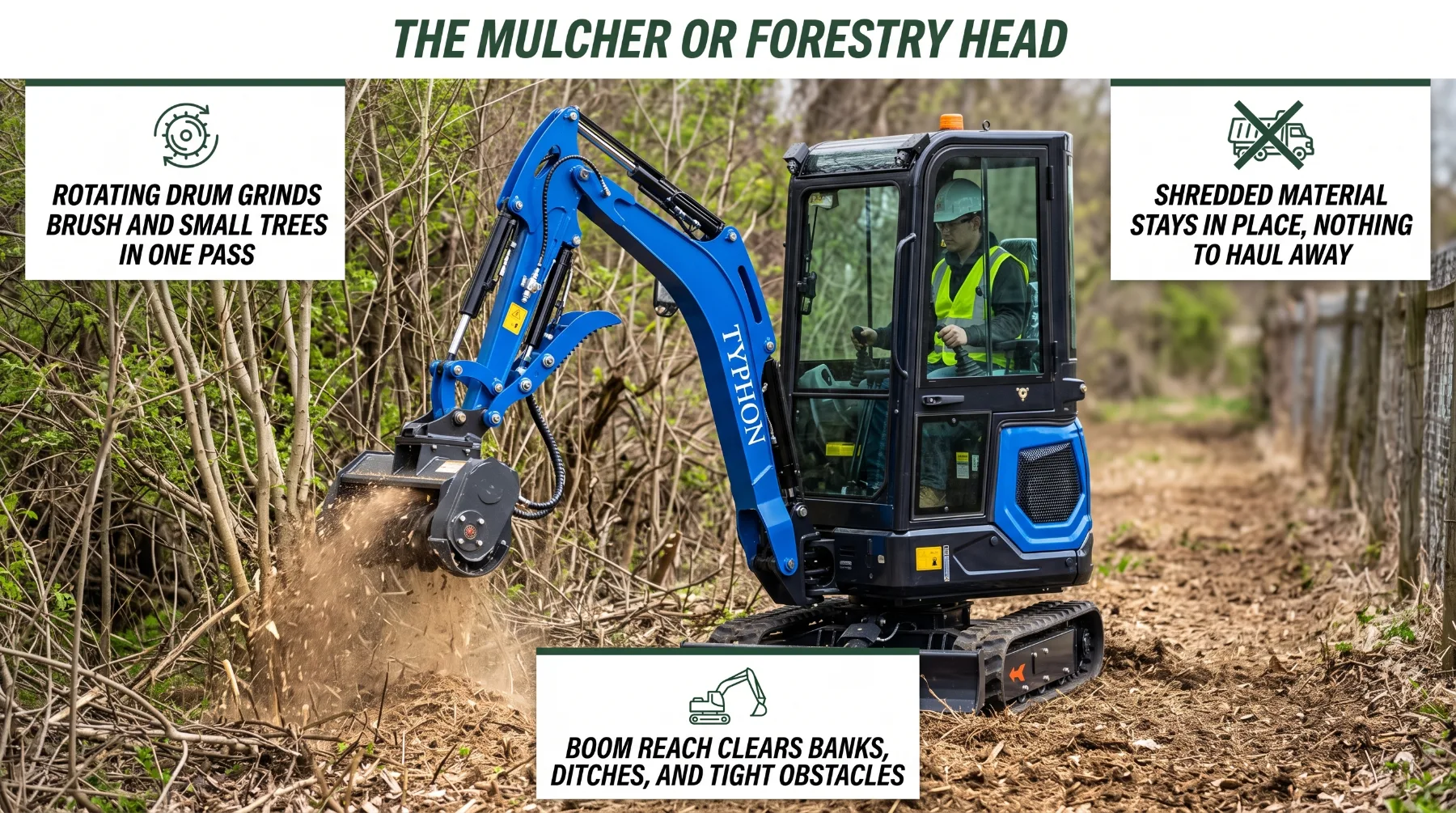
A mulcher, also called a forestry head, gives a mini excavator serious land-clearing power. Fitted with a rotating drum of teeth or blades, it grinds brush, saplings, and small trees into mulch in a single pass, clearing overgrown ground quickly and leaving the shredded material behind as ground cover. This turns a slow, labor-heavy job into fast, controlled work from the cab.
The cutting drum handles vegetation that would otherwise demand chainsaws, hauling, and disposal. Clearing a fence line, reclaiming overgrown land, or managing brush along a trail all become far quicker, since the mulcher shreds and spreads the material in place with nothing to haul away. The reach of the excavator arm lets the operator work up banks, into ditches, and around obstacles that a walk-behind or dedicated machine could not manage. For land management and clearing, it is a powerful way to extend what a compact machine can accomplish.
Key takeaway: The mulcher grinds brush, saplings, and small trees into mulch in a single pass, turning slow land clearing into fast, controlled work with nothing to haul away.
Conclusion
The twelve attachments here show why a mini excavator is far more than a digging machine. With the right tool on the arm, one compact excavator can excavate and grade, bore holes and break concrete, grip logs and shred brush, compact trenches and cut clean utility channels, all from a single machine that fits on one trailer. Each attachment solves a specific problem, and together they let a contractor take on a range of work that would otherwise require several dedicated machines, more transport, and a bigger crew. The operations that get the most from a mini excavator are the ones that build a thoughtful set of attachments around it and match the right tool to each task. Chosen well, attachments turn a modest machine into one of the most flexible and cost-effective assets on any jobsite.
Frequently Asked Questions
How do I know which attachments my mini excavator can use? The key factors are machine size, weight, and hydraulic capacity. Hydraulic attachments such as augers, breakers, mulchers, and grapples need the correct auxiliary flow and pressure, while buckets, rippers, and thumbs depend more on machine weight and arm strength. Check the manufacturer's specifications for your model, since an oversized attachment can strain the hydraulics or affect balance. A quick coupler also makes switching between compatible tools much faster.
Are attachments worth the investment for a small operation? For many small operations, attachments can increase the value of one excavator by allowing it to handle different jobs without additional machines. Instead of renting separate equipment, you can switch between tools such as grading buckets, augers, and thumbs as needed. Focus on attachments you will use regularly rather than buying every option. This can reduce transport, storage, and equipment costs while expanding the range of work your excavator can handle.
How long does it take to change a mini excavator attachment? With a quick coupler, many attachments can be changed in just a few minutes, while hydraulic tools can connect through the auxiliary lines. Without a coupler, removing and reinstalling pins takes more time and physical effort. Faster changes make it easier to switch between digging, boring, breaking, and gripping tasks without losing significant time between jobs.
Equipment Guidance
Need help choosing equipment for your next job?
Contact KONSTRUCTZ support and get practical guidance before comparing machines, attachments, or jobsite requirements.Contact SupportReader Comments
No published comments yet.