Backhoe vs Mini Excavator vs Skid Steer: Which Machine Should You Choose in 2026?
Choosing the right machine for construction, landscaping, farming, utility work, or property development is not always simple.
Jun 30, 202617 min read
Backhoe vs Mini Excavator vs Skid Steer: Which Machine Should You Choose in 2026?
Backhoe vs Mini Excavator vs Skid Steer: Which Machine Should You Choose in 2026?
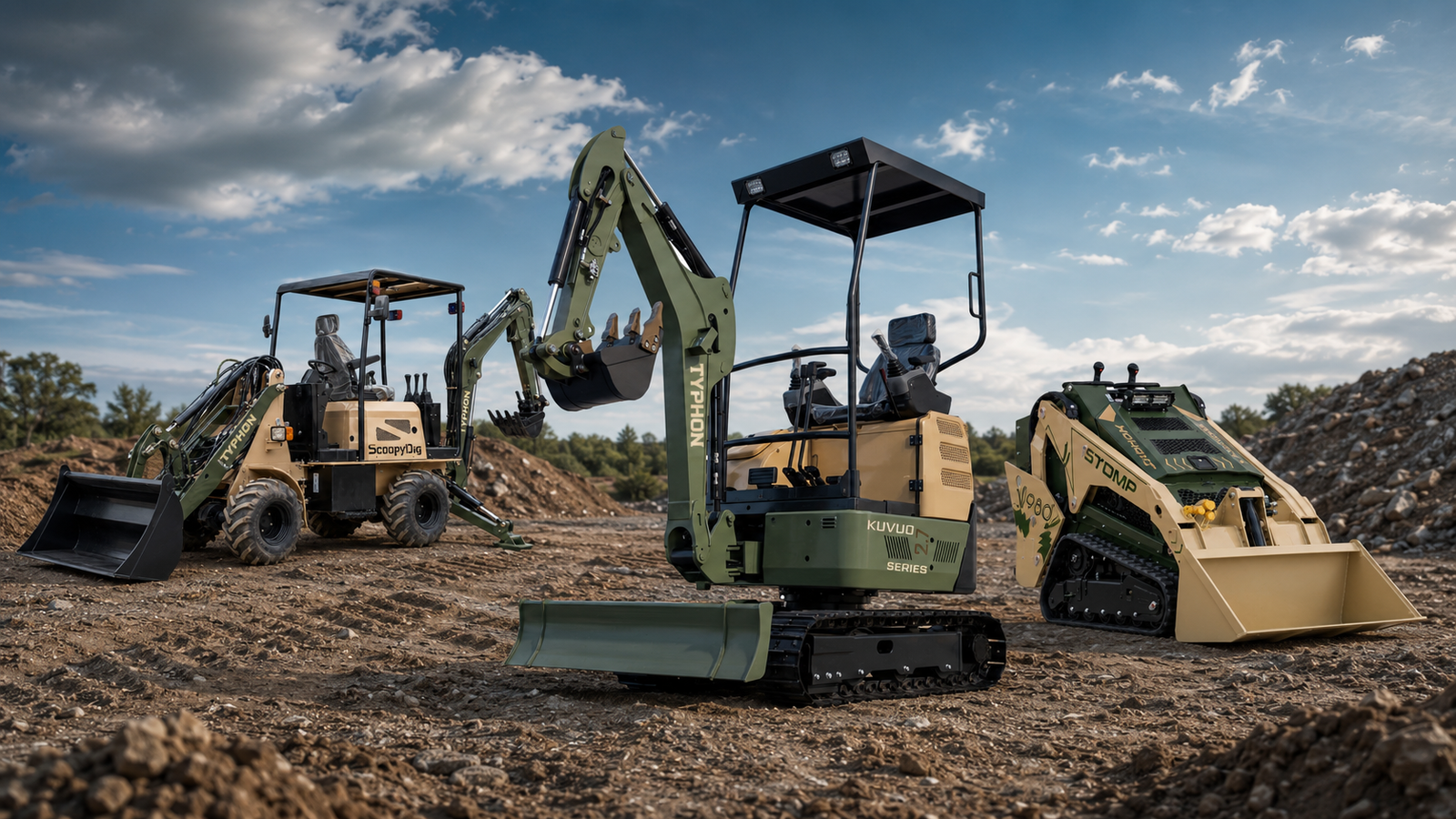
Choosing the right machine for construction, landscaping, farming, utility work, or property development is not always simple. Many buyers look at three popular options first: the backhoe loader, the mini excavator, and the skid steer loader. All three machines are useful. All three can work on compact jobsites. All three can handle more than one type of task when paired with the right attachments. But they are not the same machine, and choosing the wrong one can cost you time, fuel, labor, maintenance money, and productivity.
In 2026, this comparison is more important than ever because equipment buyers are looking for machines that can do more work with fewer operators. The backhoe loader market is still growing, with one 2026 market report projecting the global market to grow from USD 11.79 billion in 2026 to USD 24.30 billion by 2034. That demand is driven by infrastructure work, urban construction, agriculture, utility projects, and the need for versatile equipment that can dig and load on one jobsite. At the same time, skid steers and mini excavators continue to be popular because many contractors prefer compact machines that are easier to transport, easier to fit into tight spaces, and easier to pair with specialized attachments.
So, which one should you choose in 2026: a backhoe, a mini excavator, or a skid steer? The best answer depends on the type of work you do most often. A backhoe is best when you need one machine that can dig, load, backfill, and move around larger sites. A mini excavator is best when digging precision, trenching, tight access, and low ground damage matter most. A skid steer is best when you need fast material handling, grading, cleanup, and attachment versatility.
This guide breaks down the strengths, weaknesses, jobsite uses, ownership factors, and buying advice for each machine.
Quick Answer: Which Machine Is Best?
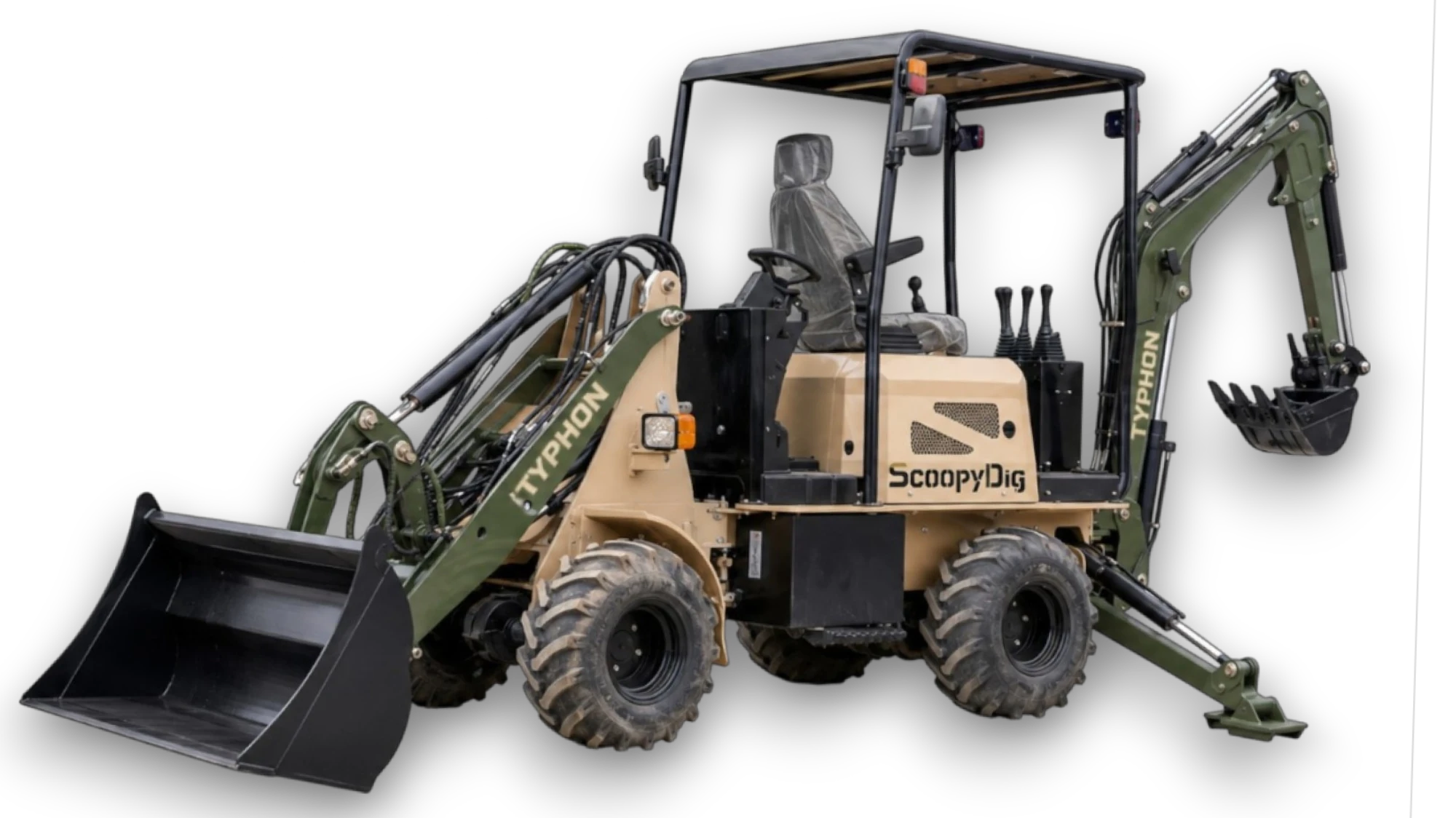
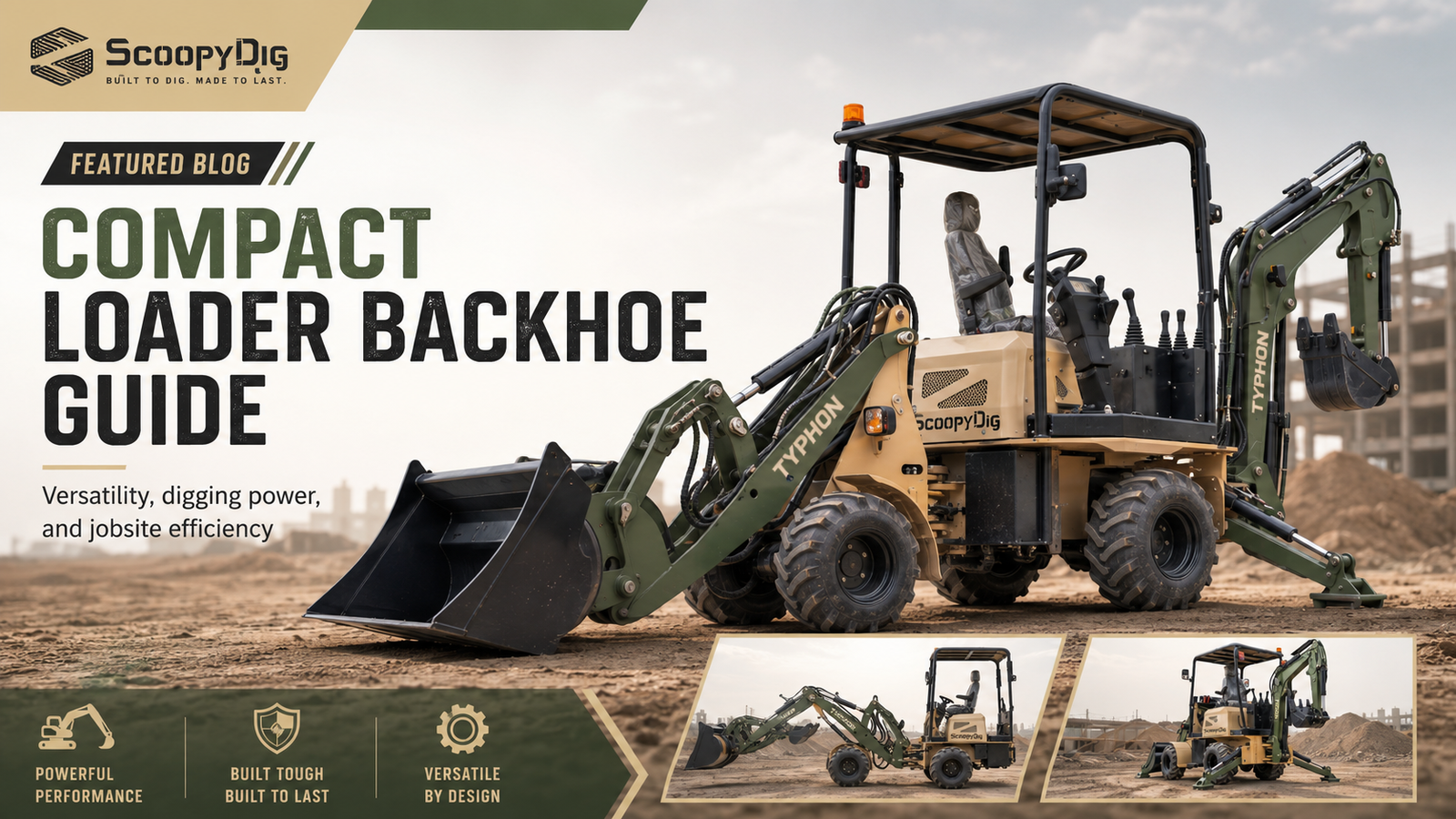
Choose a backhoe loader if you need one machine for digging, trenching, loading, backfilling, road work, utility jobs, and general construction. A backhoe is like a combination of a loader and an excavator because it has a front loader bucket and a rear digging arm. This gives it strong value for contractors who need versatility from one machine.
Choose a mini excavator if your main work is digging, trenching, grading small areas, foundation work, landscaping, drainage, stump removal, or work in tight areas. Mini excavators are built to dig with precision and rotate 360 degrees, which makes them very effective when the operator needs to work from one position without constantly moving the machine.
Choose a skid steer loader if your main work is moving dirt, gravel, pallets, mulch, feed, debris, snow, or construction material. Skid steers are also excellent attachment platforms. With the right attachment, a skid steer can grade, sweep, trench, drill, lift, grapple, break concrete, and clean jobsites.
What Is a Backhoe Loader?
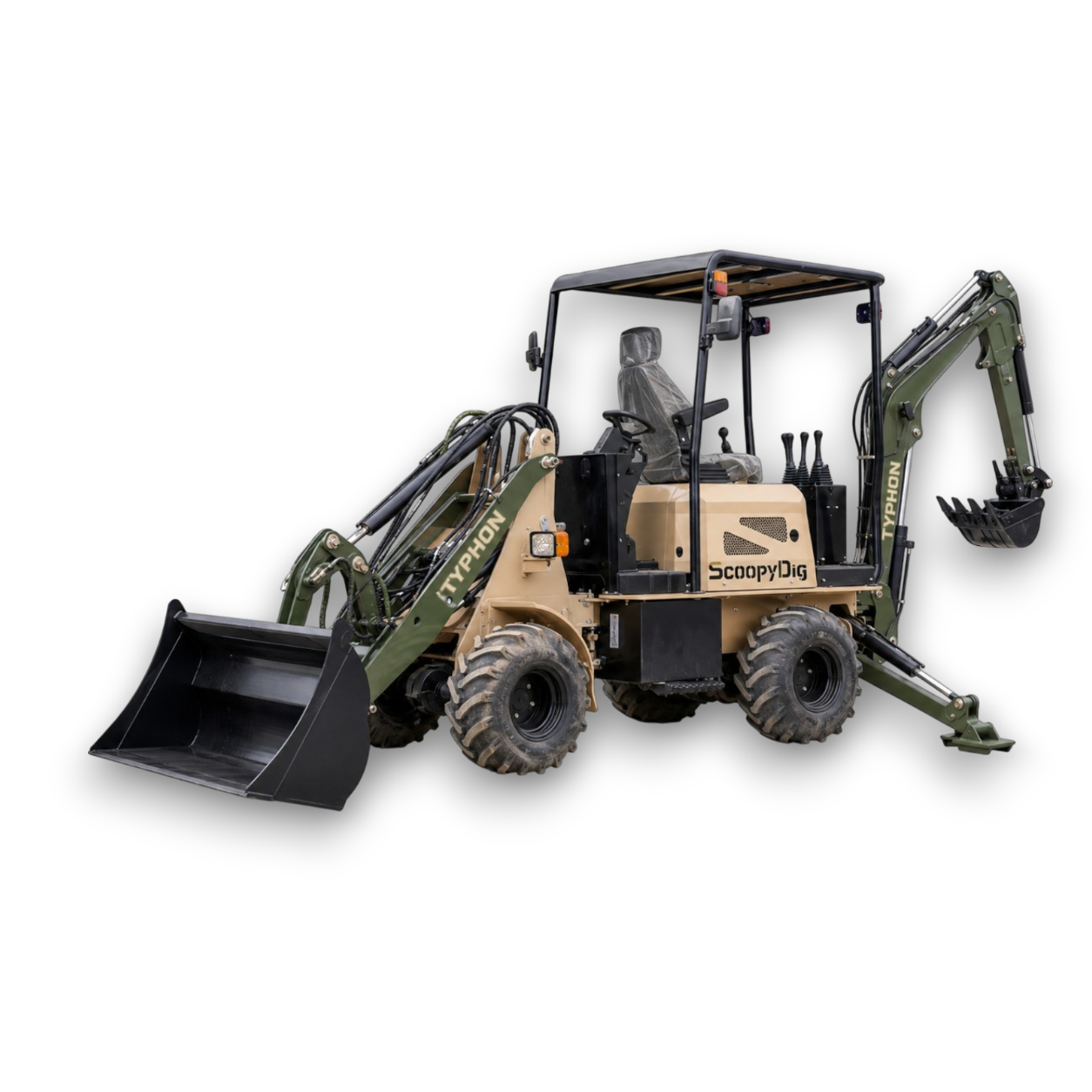
A backhoe loader is a multi-purpose construction machine with a loader bucket on the front and a digging arm on the rear. The front side is used for loading, carrying, spreading, backfilling, and cleanup. The rear side is used for digging, trenching, utility work, foundation digging, and excavation. This dual design is the main reason many contractors still value backhoes.
A backhoe is useful when one operator needs to perform different tasks without switching machines. For example, the operator can dig a trench with the rear boom, turn the seat around, use the front loader to move dirt, then backfill the trench after pipe or drainage work is completed. This makes the backhoe especially useful for utility contractors, municipalities, road crews, farms, and general contractors.
Backhoes are also more road-friendly than most mini excavators and skid steers. Many backhoe loaders can travel between nearby jobsites without always needing a trailer. That matters for road repair, municipal maintenance, utility crews, and contractors who work across multiple small sites in one day.
The main weakness of a backhoe is size. Compared with a mini excavator or skid steer, a backhoe usually needs more working room. It is not always the best choice for narrow residential gates, small landscaping jobs, backyard work, or indoor demolition. It is also not as specialized as a mini excavator for precise digging, and it is not as fast as a skid steer for tight-area material handling.
What Is a Mini Excavator?
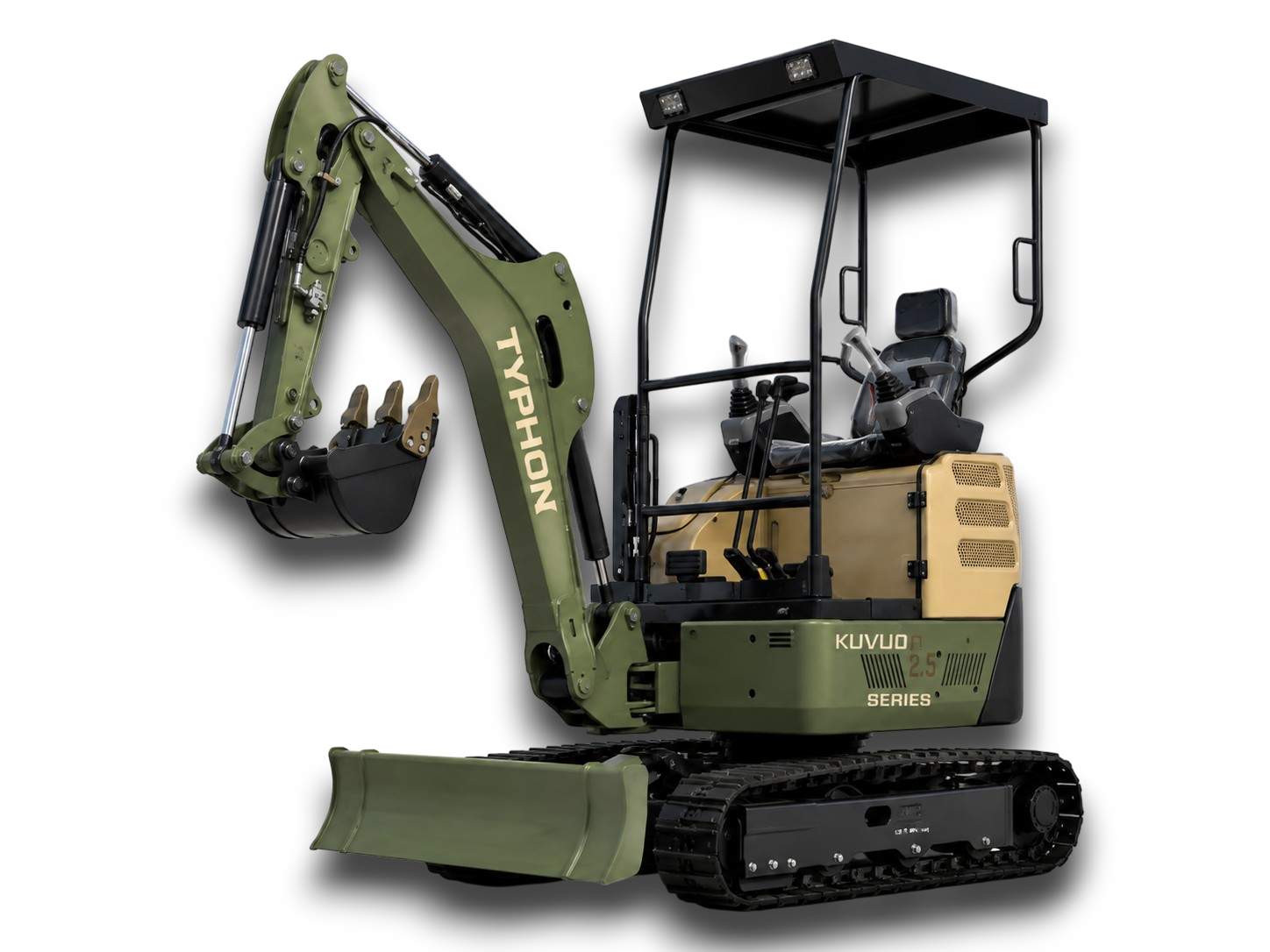
A mini excavator is a compact digging machine with tracks, a boom, an arm, a bucket, and a rotating upper structure. The biggest advantage of a mini excavator is its ability to dig accurately in tight spaces. Because the house can rotate 360 degrees, the operator can dig, swing, dump, and reposition material without turning the entire machine around.
Mini excavators are especially useful for trenching, drainage, landscaping, small foundations, retaining walls, pool work, pipe installation, tree work, demolition, and farm projects. They are also good for jobs where ground protection matters. Bobcat notes that mini excavators, with tracked undercarriages, are better suited for challenging ground conditions because they offer strong stability, lower ground pressure, and better performance on soft ground, slopes, roots, rocks, or stumps.
Another major advantage is control. Mini excavators are designed for smooth digging and careful bucket movement. For jobs around utilities, foundations, fences, walls, gardens, and tight property lines, that control can be more valuable than raw machine size.
The weakness of a mini excavator is that it is not a high-speed material handling machine. It can move soil and lift objects, but it is slower than a skid steer when carrying material across a site. It also does not have a front loader bucket like a backhoe. If you need to move many loads of gravel, mulch, pallets, or debris, a skid steer or backhoe will usually be faster.
What Is a Skid Steer Loader?
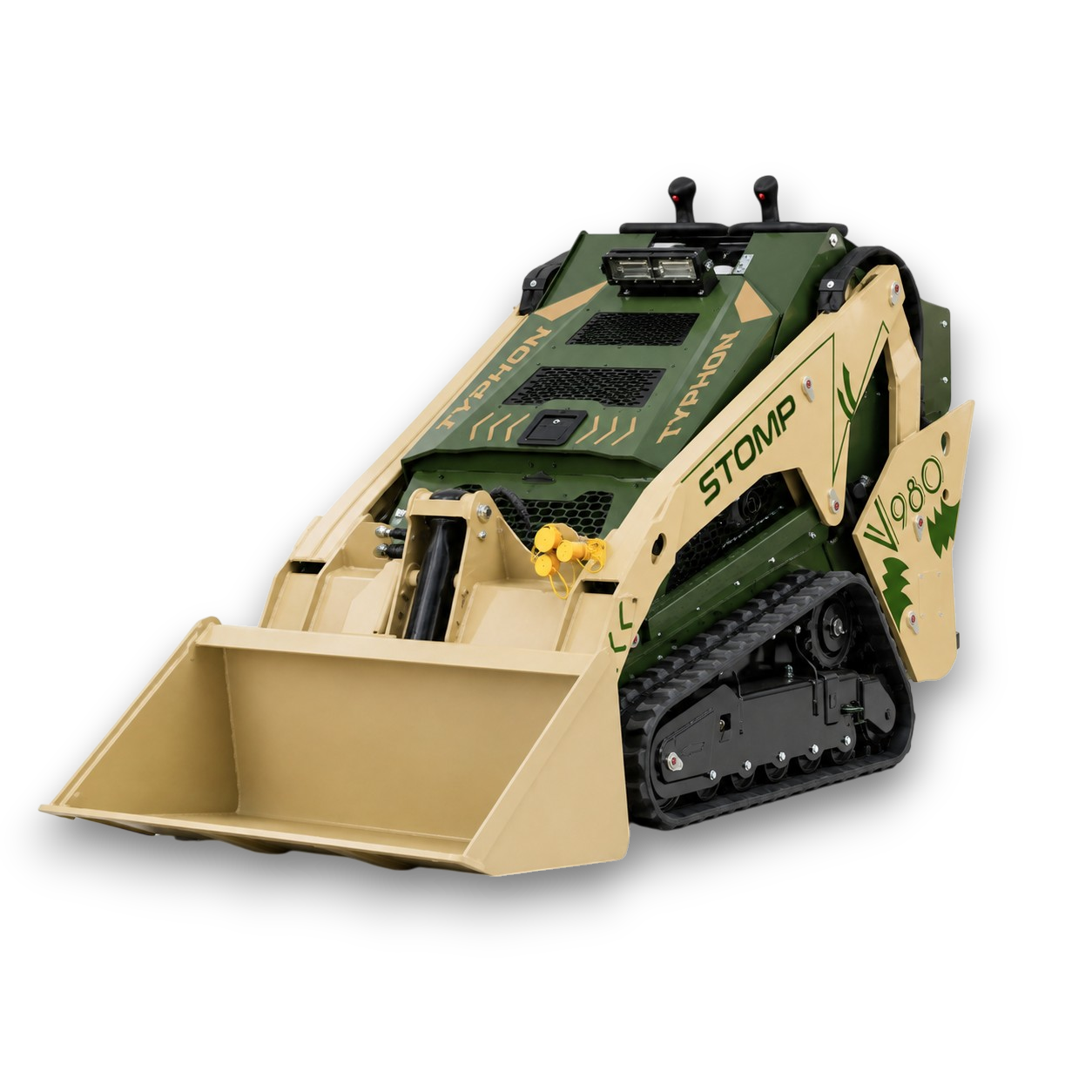
A skid steer loader is a compact machine designed for lifting, pushing, carrying, grading, and using attachments. It is called a skid steer because the wheels on each side can move at different speeds, allowing the machine to turn sharply. This makes skid steers very maneuverable on firm ground and compact jobsites.
Skid steers are popular in construction, farming, landscaping, snow removal, road maintenance, demolition cleanup, and material handling. A skid steer can use many attachments, including buckets, pallet forks, augers, trenchers, grapples, brush cutters, hydraulic breakers, sweepers, snow blowers, and grading tools.
Bobcat describes skid steers as strong choices for firm, stable surfaces where speed and maneuverability matter. They are commonly used for moving dirt, loading, grading, and frequent repositioning. A skid steer is usually the best option when your work involves fast movement across a jobsite and many different above-ground tasks.
The weakness of a skid steer is digging depth. A skid steer can trench with a trencher attachment or dig shallow material with a bucket, but it cannot match the digging depth, reach, visibility into a trench, or precision of a mini excavator. It may also struggle more on very soft or muddy ground if it is a wheeled model. For soft ground, a compact track loader may be better than a wheeled skid steer, but that becomes a different cost and maintenance decision.
Backhoe vs Mini Excavator: Which Is Better?
A backhoe and a mini excavator can both dig, but they are built for different styles of work.
A backhoe is better when the job requires digging and loading in the same machine. For example, utility crews often need to open a trench, move spoil piles, carry material, backfill, and clean the site. A backhoe handles that full cycle well because it has both a rear boom and a front loader.
A mini excavator is better when the job requires precision digging in a smaller space. For example, residential drainage, backyard trenching, retaining wall work, pool preparation, septic lines, and landscaping often favor a mini excavator. The 360-degree rotation allows the operator to work efficiently from one position, and the tracked base gives good stability.
In simple terms, choose a backhoe when the job is mixed: digging plus loading plus travel plus cleanup. Choose a mini excavator when the job is digging-focused and space is limited.
If your company does a lot of utility, road, farm, or municipality work, a backhoe may be the stronger single-machine option. If your company does a lot of landscaping, residential construction, drainage, small foundations, or tight-space digging, a mini excavator may be the smarter investment.
Backhoe vs Skid Steer: Which Is Better?
A backhoe and a skid steer are both versatile, but they solve different problems.
A backhoe is better when digging depth and rear excavation are important. It has a dedicated digging boom and can open trenches, dig around utilities, perform foundation work, and handle deeper excavation tasks. It also has a front loader, so it can still move dirt and material.
A skid steer is better when speed, attachments, and material handling are more important. It can quickly move around a site, load trucks, carry pallets, spread gravel, clean debris, and switch attachments. For landscaping companies, farms, construction cleanup crews, and snow removal contractors, a skid steer may be used every day.
The backhoe is more like a two-in-one machine. The skid steer is more like a compact power unit for attachments. DOZR describes backhoes as machines with a front loader and rear digging boom, while skid steers are compact and highly maneuverable machines that can use many attachments for grading, digging, material handling, snow removal, and trenching.
Choose a backhoe if digging and loading are both central to your work. Choose a skid steer if most of your work is loading, carrying, grading, cleanup, and attachment-based productivity.
Backhoe vs Mini Excavator vs Skid Steer: Which Machine Should You Choose in 2026?
This is one of the most common compact equipment comparisons. Many contractors eventually own both because they work well together. The mini excavator digs. The skid steer moves material.
Bobcat notes that some operators prefer a dedicated excavator paired with a loader instead of relying on one larger compromise machine. In that setup, the excavator handles trenching, digging, and stump removal, while the loader handles material movement, loading, and finish grading.
A mini excavator is better for trenching, digging footings, working below ground level, removing stumps, shaping slopes, and working around tight spaces. A skid steer is better for carrying material, grading, pushing, loading trucks, handling pallets, sweeping, brush cutting, and snow removal.
If you can only buy one machine, ask yourself this: Do you dig more, or do you move material more?
If you dig more, buy a mini excavator. If you move material more, buy a skid steer. If you do both every day and have the budget, owning both can be a strong long-term solution.
Jobsite Comparison
For utility trenching, a mini excavator is excellent because of its digging accuracy and 360-degree rotation. A backhoe is also strong because it can dig and backfill with one machine. A skid steer is useful for cleanup, carrying pipe, moving gravel, and using a trencher attachment, but it is not the best deep-digging option.
For landscaping, mini excavators are great for retaining walls, drainage, grading small areas, digging around trees, and working through tight access points. Skid steers are excellent for moving soil, mulch, stone, pallets, and brush. Backhoes can work in landscaping, but they may be too large for many residential jobs.
For farming, skid steers are often used daily for feed, pallets, manure, gravel, brush, and general chores. Mini excavators are useful for drainage, small ponds, fence lines, and stump removal. Backhoes are useful for farms that need digging, loading, and road repair from one machine.
For road work and municipal maintenance, backhoes are very strong because they can travel, dig, load, backfill, and support many public works tasks. Skid steers are useful for road cleanup and attachment work. Mini excavators are useful for precision repairs and tight-area digging.
For construction cleanup, skid steers are usually the fastest. They are compact, quick, and excellent with buckets, grapples, forks, and sweepers. Backhoes can also clean and load, but they need more space. Mini excavators are not usually the fastest cleanup machine unless the job involves sorting, pulling, or digging.
Attachment Versatility
Attachments are a major reason buyers choose compact equipment in 2026. Backhoes, mini excavators, and skid steers can all run attachments, but skid steers are usually the most attachment-friendly.
A skid steer can use a wide range of tools: buckets, forks, grapples, augers, trenchers, brush cutters, brooms, snow blowers, hydraulic breakers, grading blades, soil conditioners, and more. This makes it a strong machine for contractors who want one compact platform for many daily jobs.
Mini excavators can use buckets, hydraulic thumbs, breakers, augers, rippers, grading buckets, compactors, and grapples. They are very useful when the attachment works with digging, demolition, lifting, or ground shaping.
Backhoes can also use attachments on both ends. The front loader can use buckets, forks, brooms, and other tools. The rear boom can use buckets, hydraulic hammers, compactors, augers, and thumbs. A 2026 backhoe buyer’s guide from Equipment World notes that buyers are looking beyond basic forks and buckets, with tools such as brooms, hydraulic hammers, snowplows, and compactors also in demand.
When comparing attachment value, think about hydraulic flow, coupler type, attachment cost, and how often you will really use each tool. A machine with many possible attachments is only valuable if those attachments match your daily work.
Hydraulics and Power in 2026
Hydraulic performance matters more than many buyers realize. Horsepower is important, but hydraulic flow and pressure decide how well a machine can run demanding attachments. A skid steer with weak auxiliary hydraulics may not perform well with a brush cutter, cold planer, trencher, or hydraulic breaker. A mini excavator with poor hydraulic response may feel slow when using a thumb, breaker, or grading bucket. A backhoe with adjustable auxiliary flow can be more productive with different tools.
Modern backhoes are becoming smarter in this area. Caterpillar’s next-generation 440 and 450 backhoe loaders, announced in late 2025, use a load-sensing piston pump designed to deliver full hydraulic lifting and digging forces at any engine speed, with a variable-flow pump that adjusts hydraulic power to work demand. The system also allows operators to adjust loader and backhoe auxiliary flow to match attachment specifications.
For buyers, this means you should not choose only by engine horsepower. Check hydraulic flow, hydraulic pressure, attachment compatibility, control feel, service access, and cooling capacity. If the machine will run attachments often, hydraulics should be one of your top buying factors.
Cost and Ownership
The cheapest machine is not always the best machine. The right choice should be based on total cost of ownership, not only purchase price.
A skid steer may have a lower entry price than a backhoe or larger mini excavator, depending on size and configuration. It can also be easier to trailer and easier to use across many jobs. However, tires, attachments, hydraulic wear, and ground conditions can affect long-term cost.
A mini excavator may cost more than some skid steers, but it can save labor and time on digging-heavy jobs. Tracks, undercarriage parts, pins, bushings, hydraulic cylinders, and hoses must be maintained. If your work requires accurate digging, the time saved may justify the cost.
A backhoe can cost more upfront and may use more fuel than smaller compact equipment, but it can replace multiple machines on certain jobs. If you need a loader and excavator function in one machine, a backhoe may reduce the need to transport two separate units.
Rental demand also matters. In the U.S., United Rentals announced a USD 4.8 billion deal to acquire H&E Equipment Services in 2025, citing demand for equipment rentals in more U.S. markets; Reuters also reported that industrial equipment demand remained strong from commercial construction firms due to infrastructure spending and production delays. This shows why many contractors are still renting before buying, especially when they are unsure which machine fits their workload.
Transport and Access
Backhoe vs Mini Excavator vs Skid Steer: Which Machine Should You Choose in 2026?
Transport is one of the biggest practical differences.
Mini excavators and skid steers are usually easier to transport than backhoes, especially in smaller weight classes. This matters for small contractors who move between residential jobs, farms, landscaping sites, and local projects. A compact machine with the right trailer can be more flexible and less expensive to move.
Backhoes are larger, but many models can travel on roads for short distances. This makes them useful for municipalities, utility crews, and road maintenance teams. If you are working across a town or large property, road travel can be a real advantage.
Access is also important. A mini excavator may fit into backyards, narrow side yards, and tight gates where a backhoe cannot go. A skid steer can also work in tight spaces, but it needs enough room to turn and maneuver. If the ground is soft, a wheeled skid steer may leave more marks than a tracked mini excavator.
Operator Skill and Comfort
Operator experience affects productivity. A skilled operator can make any machine more valuable, but each machine has a different learning curve.
A skid steer is often easy to understand for loading and carrying, but precise grading and attachment work take practice. A mini excavator requires good control of boom, arm, bucket, swing, and blade. A backhoe requires the operator to manage both loader and excavator functions, often switching between front and rear operation.
Comfort is also important. Long workdays require good visibility, simple controls, a comfortable seat, climate control in cab models, and easy maintenance checks. Modern skid steers, mini excavators, and backhoes are all improving in operator comfort, but buyers should still test the cab or operator station before purchasing.
Which Machine Should You Buy First?
If you are a small contractor buying your first machine, start with the work you do most often.
Buy a mini excavator first if your daily work is trenching, drainage, foundations, landscaping, retaining walls, demolition, or digging in tight spaces. It will help you complete jobs that are hard to do by hand and difficult to do with a loader.
Buy a skid steer first if your daily work is moving material, grading, cleanup, loading trucks, handling pallets, farm chores, snow removal, or attachment-based work. It will become one of the most useful machines on your site because it can handle many daily tasks.
Buy a backhoe first if you need one larger, road-capable machine that can dig and load without requiring two separate machines. It is a strong first choice for utility work, municipal projects, farms, road crews, and contractors who need mixed-duty capability.
Best Choice by Business Type
For landscaping businesses, the best setup is often a mini excavator plus a skid steer. The mini excavator handles drainage, digging, retaining walls, and tight access. The skid steer handles soil, mulch, gravel, pallets, grading, and cleanup.
For utility contractors, a backhoe or mini excavator can both work well. Choose a backhoe if you need digging, loading, and backfilling in one machine. Choose a mini excavator if precision, tight spaces, and trench control are more important.
For farmers, a skid steer is often the most useful daily machine because it handles material, feed, pallets, manure, brush, and general lifting. A backhoe is better if the farm also needs regular trenching, drainage, and road repair. A mini excavator is ideal if the farm needs ditching, stump removal, and precise digging.
For small construction companies, the best choice depends on whether the work is above ground or below ground. If you mostly move material, grade, and clean up, choose a skid steer. If you mostly dig footings, trenches, and foundations, choose a mini excavator. If you need both in one machine and have the space, choose a backhoe.
For rental businesses, all three machines can be valuable. Skid steers rent well because of attachment versatility. Mini excavators rent well because many homeowners and contractors need compact digging power. Backhoes rent well for utility, farm, and general construction jobs where customers need one machine for multiple tasks.
Final Verdict: Backhoe, Mini Excavator, or Skid Steer?
There is no single best machine for every buyer. The best machine is the one that matches your work, ground conditions, transport setup, budget, attachments, and operator skill.
Choose the backhoe loader if you want one machine that can dig, load, backfill, travel around a larger site, and handle mixed construction work. It is the best all-around choice for utility crews, road maintenance, farms, municipalities, and contractors who need both loader and excavator functions.
Choose the mini excavator if your work is mostly digging, trenching, drainage, foundation work, landscaping, or tight-space excavation. It gives you better precision, lower ground pressure, and stronger digging control in compact spaces.
Choose the skid steer loader if your work is mostly material handling, grading, loading, cleanup, farm chores, snow removal, or attachment-based productivity. It is fast, compact, versatile, and highly useful for daily jobsite work.
For many businesses, the long-term best setup is not choosing only one. A mini excavator and skid steer together can outperform one larger machine on many compact jobsites. The mini excavator digs while the skid steer moves material. But if your budget only allows one machine, choose based on your most common task: digging, loading, or doing both.
In 2026, equipment buyers should think beyond horsepower and price. Look at real jobsite needs, hydraulic power, attachment compatibility, transport, ground conditions, service access, fuel use, and operator comfort. The right machine will not just complete the job. It will complete the job faster, safer, cleaner, and with better long-term value.
Equipment Guidance
Need help choosing equipment for your next job?
Contact KONSTRUZ support and get practical guidance before comparing machines, attachments, or jobsite requirements.Contact Support




No published comments yet.